Description
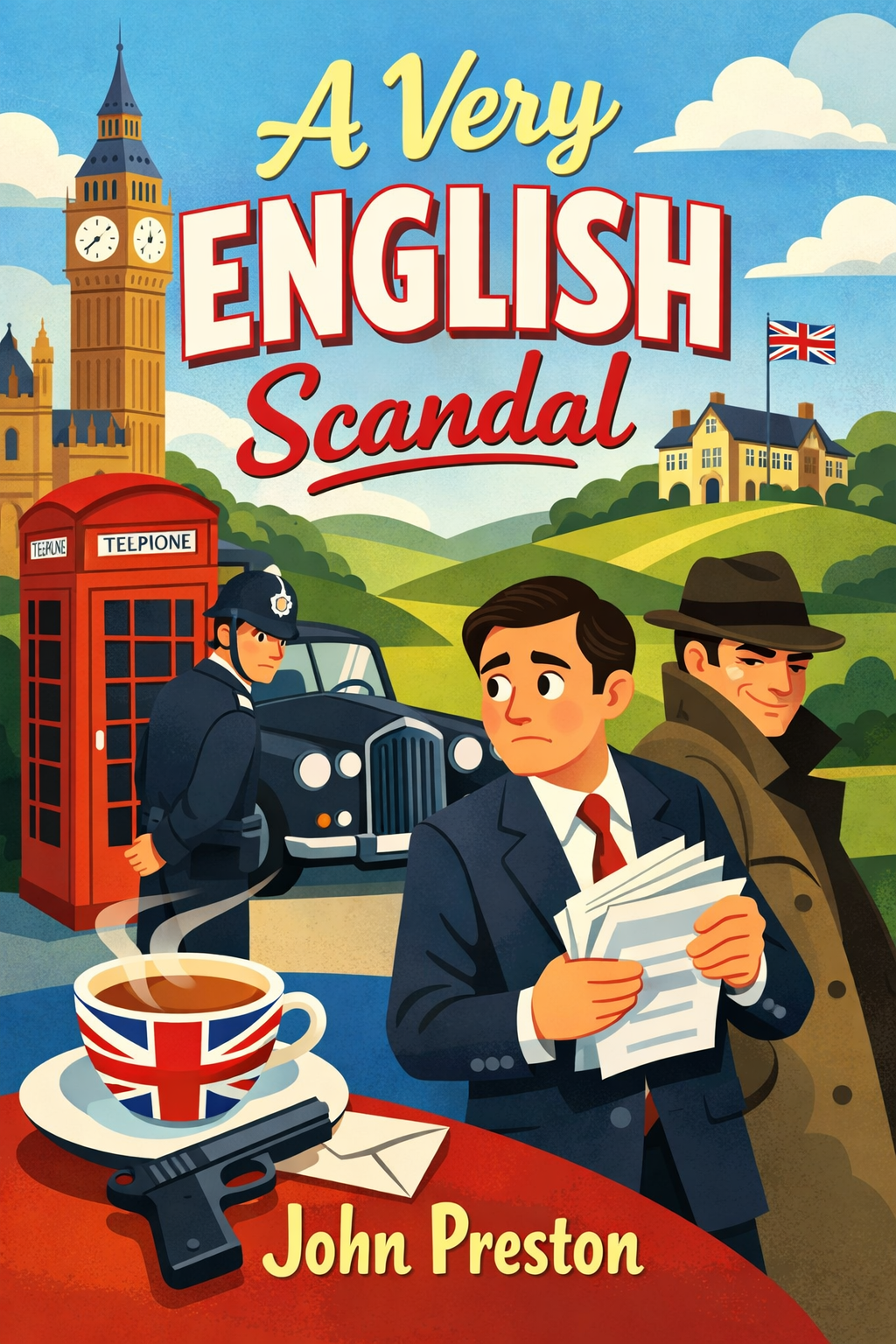
In the seemingly tranquil world of 1960s British politics, where respectability was the ultimate currency, a secret was festering that would eventually explode into one of the nation’s most sensational scandals. At its heart was Jeremy Thorpe, the charismatic and rising leader of the Liberal Party, a man tipped by many as a future Prime Minister. His public image was one of wit, charm, and progressive values. But Thorpe harbored a dangerous secret: a homosexual relationship with a younger man named Norman Scott, at a time when such acts were not only socially ruinous but illegal.
The story begins with an unlikely connection. Scott, a stable hand with a history of emotional instability, met Thorpe and the two began an affair. For Thorpe, it was a perilous indulgence; for Scott, it became the central, defining relationship of his life. When Thorpe, fearing for his career, ended the affair and cut off financial support, Scott felt betrayed and abandoned. He began a persistent, increasingly public campaign to be heard, writing letters and telling anyone who would listen about his relationship with the powerful politician. He wasn’t seeking fame, but rather validation and the pension documents he believed Thorpe owed him. To Thorpe, however, Scott was no longer a former lover but a ticking bomb, a direct threat to everything he had built.
As Thorpe’s star ascended within the Liberal Party, Scott’s whispers grew louder. The pressure transformed paranoia into a chilling conviction: Scott had to be silenced permanently. What follows is a narrative that shifts from a private tragedy to a dark political thriller. Thorpe, it is alleged, did not merely hope the problem would go away. He is said to have confided in a circle of close allies, and together they embarked on a conspiracy to murder Norman Scott. The plot reads like a poorly written crime novel, involving a hired hitman, a borrowed car, and a remote moor in Devon. The execution was as botched as the plan was monstrous. The hired gun, Andrew Newton, confronted Scott on a lonely road but succeeded only in killing Scott’s dog, a Great Dane named Rinka, before his gun jammed. The “hit” was a farcical failure, but it left a corpse—a canine one—and a terrified, now truly vengeful, Scott.
The aftermath was a slow-motion unraveling conducted in the full, blinding glare of the British media. The initial police investigation was curiously hesitant, hinting at high-level reluctance to pursue a sitting MP. But the story was too lurid to bury. The press, led by determined journalists, began to piece together the connections between the shooting on the moor, the eccentric Norman Scott, and the lofty Jeremy Thorpe. The scandal broke wide open, stripping away the veneer of the political class. Thorpe was forced to resign as party leader. The eventual trial in 1979 was a national spectacle, a circus of aristocratic witnesses, bizarre evidence (including the famous claim about “bunnies” that sent the courtroom into laughter), and the unprecedented sight of a former party leader in the dock accused of conspiracy to murder.
The trial laid bare not just the alleged plot, but the hypocrisy and fear surrounding homosexuality in Britain. The defense painted Scott as a fantasist and a liar, exploiting the pervasive prejudices of the era. Yet, the sheer weight of circumstantial evidence and the testimony of those involved in the plot was damning. In a stunning conclusion, Thorpe and his co-defendants were acquitted. The jury, perhaps unable to reconcile the image of the statesman with that of a would-be murderer, found reasonable doubt. Legally, he was free. But in every other sense, he was destroyed. His political career was over, his reputation in tatters.
This is more than a tale of a failed murder plot. It is a poignant exploration of the devastating clash between public duty and private desire in an intolerant age. It examines the corrupting nature of power and the lengths to which the establishment would go to protect its own. Norman Scott, often dismissed as a hysterical nuisance, emerges as a tragically persistent figure whose search for simple acknowledgment nearly cost him his life and did bring down a giant. The legacy of the scandal lingered, contributing to the changing social attitudes that would eventually lead to the decriminalization and acceptance Thorpe so desperately feared. The story remains a gripping and sobering reminder of how the relentless pursuit of power can curdle into something truly sinister, and how the truth, no matter how inconvenient or sordid, has a stubborn habit of finding the light.