Description
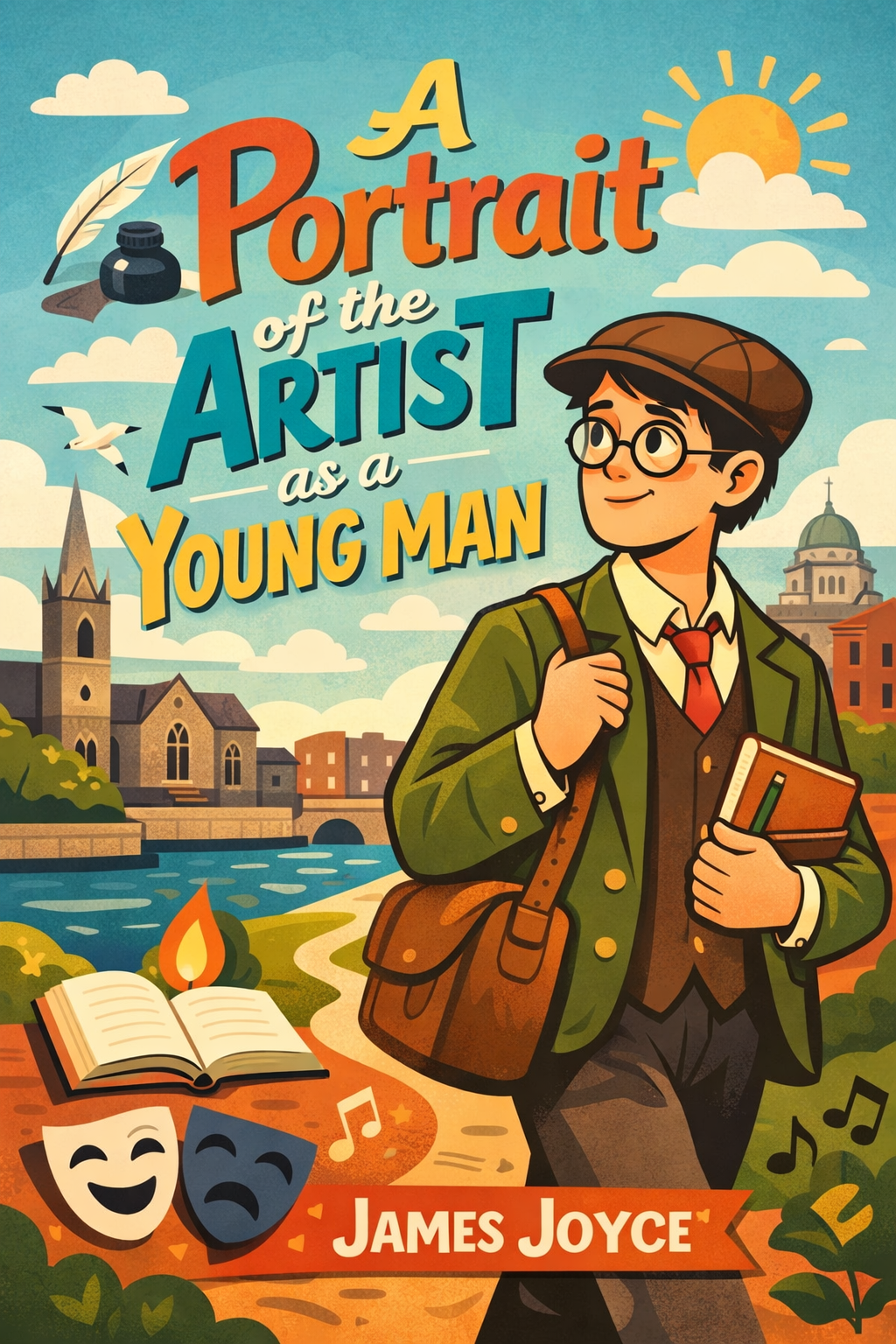
We follow the formative years of Stephen Dedalus, from his earliest childhood memories to his decisive departure from Ireland. The narrative begins with the sensory impressions of infancy, a world of simple comforts and childish fears, and moves into his time at Clongowes Wood College. Here, the young Stephen is a sensitive boy, acutely aware of the school’s harsh hierarchies and the looming presence of religious authority. A pivotal moment occurs when he is unjustly punished by a prefect; he gathers the courage to report the injustice to the rector, experiencing his first taste of personal agency against an imposing system. This early victory, however, is set against his family’s declining fortunes, forcing a move to a less prestigious Dublin day school.
At Belvedere College, Stephen’s intellectual and emotional life intensifies. He achieves academic success, winning a literary prize, yet this triumph is shadowed by the gnawing squalor of his home life and his father’s financial failures. The stirrings of adolescence pull him in conflicting directions. He is devout, even considering a priestly vocation, but also feels the powerful, confusing call of physical desire. This tension erupts when he succumbs to his urges and visits a brothel in Dublin’s nighttown. This plunge into sensual experience initiates a period of hedonistic rebellion, a deliberate flouting of the moral code that has shaped him. He abandons prayer and piety for a life of secret sin, but this liberation is short-lived. The Catholic guilt ingrained in him resurfaces with terrifying force during a school retreat, where a graphic sermon on hellfire and eternal damnation paralyzes him with fear.
Consumed by terror and remorse, Stephen throws himself into a regime of extreme penitence. He seeks absolution through confession and embarks on a brutal course of self-mortification, denying himself all pleasure in a desperate bid for spiritual purity. His religious zeal becomes all-consuming, and he is again tempted by the idea of the priesthood, seeing it as a path to order and esteem. Yet, this phase too proves unsustainable. He comes to understand that his piety is rooted not in genuine love of God, but in fear and a desire for spiritual prestige. He rejects this form of servitude as he rejected the servitude to his senses, recognizing both as limitations on his spirit.
This double rejection clears the way for his true calling. Walking by the sea, he sees a young girl wading in the water, and in this ordinary moment, he experiences an epiphany. He perceives her not as an object of sin or a symbol of purity, but as a living image of mortal beauty. This vision crystallizes his purpose: to become a priest of eternal imagination, to translate the raw truth of life into art. At university, he refines this aesthetic philosophy through debates with friends, articulating a theory of art that separates it from moral instruction or kinetic desire, championing instead the static, radiant quality of true aesthetic apprehension.
His final transformation is into a self-declared exile. He realizes that to achieve his artistic destiny, he must free himself from the “nets” of Irish society: the strands of nationality, language, and religion that seek to bind him. In a series of profound conversations with a friend, he declares his intent to fly by those nets. The book concludes with the young artist poised on the brink of departure, his diary entries capturing his resolve to forge in the smithy of his soul the uncreated conscience of his race. He leaves behind family, faith, and homeland, embracing uncertainty and solitude for the sake of his creative freedom, ready to encounter the reality of experience and to express it in a new, unfettered way.