Description
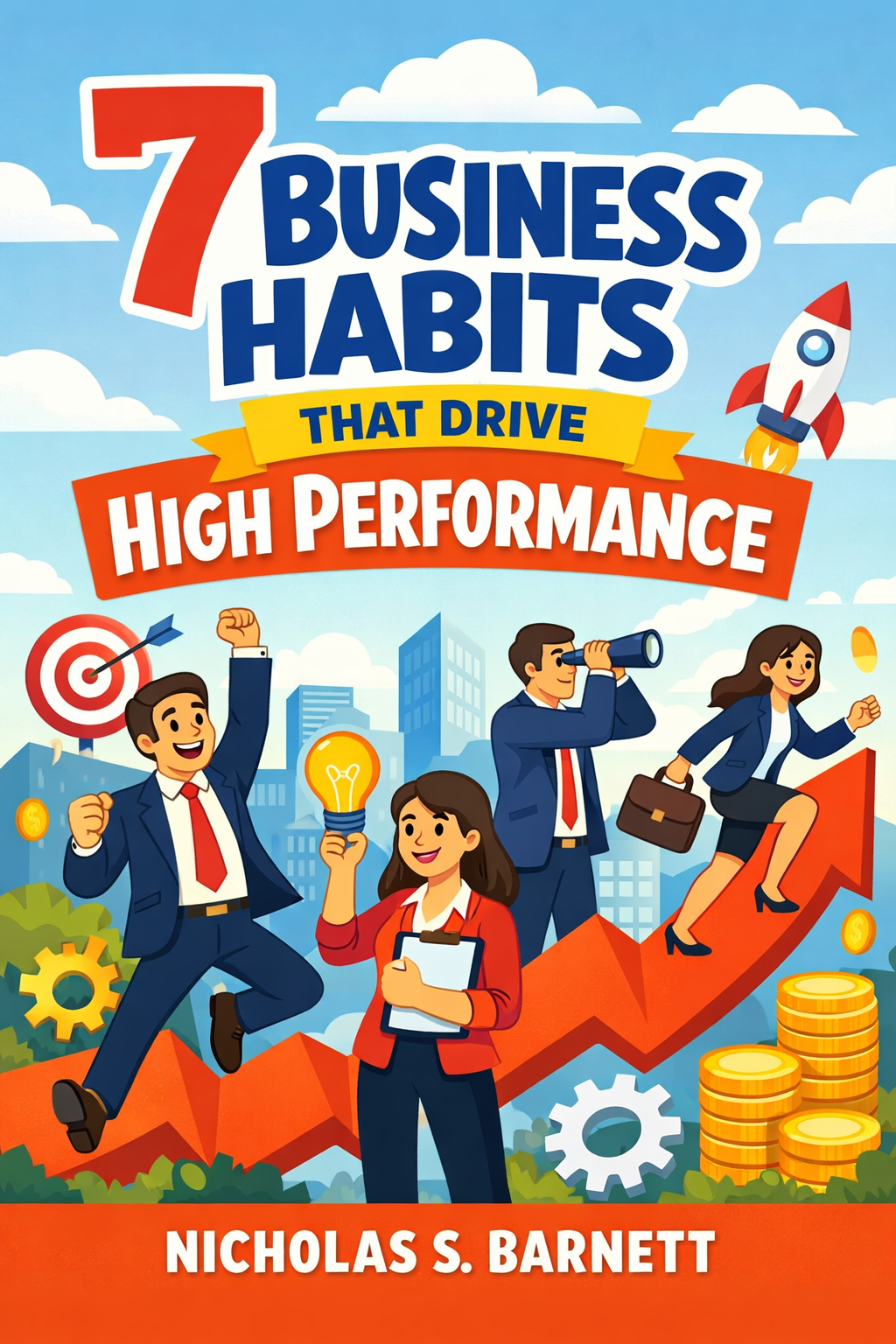
What distinguishes a truly great business from a mediocre one? Beyond profit and product, the answer lies in a set of deeply ingrained habits. High performance isn’t a random occurrence; it’s the result of deliberate, everyday practices that shape an organization’s culture and trajectory. This exploration uncovers the seven core habits that drive the world’s most successful companies, offering a blueprint for transforming your own organization from the inside out.
The journey begins with the power of a magnetic vision. While many leaders treat their long-term vision as a mere compass pointing the way, high-performing leaders understand it must act as a magnet—a compelling picture of the future that actively draws people in. This vision provides more than direction; it provides inspiration and meaning, which modern employees increasingly seek. The most effective visions are not vague, impossible ideals but specific and achievable aspirations that feel relevant to the company’s unique role. Crucially, this vision cannot be crafted in an executive vacuum. It gains its true magnetic force when shaped collaboratively, drawing input from people at all levels through surveys and dialogues. When everyone feels ownership of the destination, the entire organization moves toward it with shared energy.
With a magnetic vision established, a crystal-clear strategy provides the goalposts. Strategy translates the inspiring “where” into the practical “how.” High-performing businesses ensure every employee understands not just the company’s aims, but the specific, tangible actions required to win. Shockingly, in low-performing organizations, most employees are unclear on the strategy. To combat this, the best companies distill their strategic priorities onto a single, memorable page, ensuring focus and urgency. This clarity is supported by a robust internal communications function, an area often neglected in favor of customer-facing marketing. Investing in ensuring every team member is on the same page is a non-negotiable habit for aligning effort and accelerating progress.
A brilliant strategy, however, is powerless without the people to execute it. The third habit addresses the common failure to fully harness employee potential. Most companies focus heavily on recruiting talent but then neglect the continuous development of those they hire. There’s a pervasive fear of investing in people who may leave, but high-performing organizations flip this logic. They worry more about the cost of *not* developing someone who stays. This mindset shift is enforced culturally, sometimes holding managers accountable for upskilling their existing teams before seeking new hires. Development, crucially, must go beyond technical skills to include essential leadership competencies like communication and integrity. When senior leaders visibly engage in their own growth, it sets a powerful tone, encouraging a company-wide culture of learning and evolution.
Recognizing and celebrating this human potential forms the fourth critical habit. There is profound power in appreciation. Much like a kindergarten teacher’s gold star, genuine recognition from leadership fulfills a deep human need and fuels further effort. In high-performing companies, leaders make a consistent habit of acknowledging achievements. This gratitude need not be grandiose or expensive; often, a timely, specific, and sincere “thank you”—especially when delivered publicly—has the greatest impact. These acts of celebration, whether a spontaneous commendation or a thoughtful gesture of thanks, create reservoirs of goodwill and loyalty. They signal to employees that their contributions are seen and valued, motivating them to consistently go above and beyond.
This leads naturally to the fifth habit: genuinely caring for employee well-being. High performance is unsustainable in a climate of burnout and neglect. Employees are astute judges of whether their leaders truly care about them as people, not just as productivity units. Looking after employees means fostering an environment of physical and psychological safety, promoting work-life balance, and providing support during personal challenges. Companies that master this habit understand that employee well-being is not a distraction from performance but its very foundation. When people feel cared for, they bring more of their whole, engaged selves to work, driving innovation, collaboration, and resilience.
The focus then turns outward to the lifeblood of any business: its customers. The sixth habit is the disciplined cultivation of core customer loyalty. While chasing new customers is often glamorized, high-performing businesses understand that their most valuable assets are their existing, loyal patrons. These core customers provide predictable revenue, valuable feedback, and powerful word-of-mouth advocacy. The habit involves systematically identifying these key relationships, understanding their needs deeply, and creating exceptional, personalized experiences that transcend mere transactions. This focus on depth over breadth in customer relationships builds a stable, growing foundation that is far more efficient and profitable than a constant, costly chase for new prospects.
Finally, the seventh habit is the continuous optimization of enabling systems, particularly information technology. In a digital age, IT is not a back-office cost center but a primary engine for performance. High-performing businesses treat their IT infrastructure as a strategic asset, constantly refining it to enhance efficiency, enable data-driven decisions, improve customer experiences, and empower employees. This goes beyond mere upgrades; it involves aligning technology directly with strategic goals, ensuring it removes friction, provides insightful analytics, and adapts swiftly to new opportunities. A sleek, intuitive, and powerful technological environment allows every other habit—from clear communication to customer personalization—to operate at its highest potential.
Together, these seven habits form a virtuous cycle. A magnetic vision and clear strategy provide purpose and direction. Investing in, celebrating, and caring for people unleashes their potential to execute the strategy. Focusing on loyal customers ensures market stability and growth, while robust systems underpin and accelerate everything. Adopting these routines requires consistent intention, but the reward is the creation of an organization that doesn’t just perform but excels, endures, and stands apart.