Description
At its core, this book presents a radical shift in how we perceive and engage with conflict. It moves away from the common view of disagreement as a destructive force to be avoided or won, and instead frames it as an inevitable, and even valuable, part of the human experience. The central argument is that our instinctive reactions—fight, flight, or freeze—are outdated survival mechanisms ill-suited for the complex social and professional landscapes we navigate today. True resilience, therefore, is not about building an emotional armor to deflect conflict, but about developing the internal skills to move through it with intention, empathy, and a clear sense of self.
The journey begins with self-awareness, the foundational pillar of conflict resilience. Before we can hope to understand another person’s perspective in the heat of disagreement, we must first understand our own internal landscape. The text guides readers through identifying their personal conflict triggers—those specific words, tones, or situations that instantly provoke a defensive reaction. It delves into the physiology of conflict, explaining how our bodies enter a state of heightened alert, flooding with stress hormones that hijack our prefrontal cortex, the brain region responsible for rational thought and empathy. By learning to recognize the early physical signs of this reaction—a quickened pulse, clenched jaw, shallow breath—we gain a critical window of opportunity to intervene before our reactive brain takes full control.
This self-knowledge is then paired with practical techniques for self-regulation. The book introduces accessible, evidence-based methods for calming the nervous system in real time. These are not abstract concepts but concrete tools: focused breathing exercises to lower the heart rate, grounding practices to reconnect with the present moment, and simple mental reframes to create a sliver of space between a triggering event and our response. The goal is not to eliminate emotion, which is both impossible and undesirable, but to prevent emotion from becoming the sole driver of our behavior. This cultivated pause is where choice enters, and where conflict transformation becomes possible.
With a calmer internal state, we can then turn our attention outward with greater clarity. The second major section of the book focuses on the art of communication and perspective-taking. It dismantles the adversarial posture of most conflicts, where each party is primarily invested in proving their own point. Instead, it advocates for a stance of curiosity. The resilient individual learns to listen not to rebut, but to comprehend. The book provides a powerful framework for this, emphasizing the skill of reflective listening—paraphrasing and validating the other person’s feelings and position without necessarily agreeing with them. This simple act of feeling heard can dramatically de-escalate tension, as it addresses a fundamental human need.
The text further explores the concept of separating positions from interests. A position is a fixed demand or solution, while an interest is the underlying need, fear, or desire that the position is meant to address. In a workplace dispute, for example, a position might be “I must work from home on Fridays.” The underlying interests could be a need for focused, uninterrupted time, a desire to manage childcare, or a value placed on personal autonomy. Conflicts often become intractable when we battle over positions. Resilience involves the patience and skill to dig beneath these positions to uncover the shared or compatible interests that lie underneath, creating the potential for collaborative problem-solving.
Crucially, the book does not present conflict resilience as a path to always achieving harmony or agreement. It acknowledges that some conflicts are rooted in fundamental value differences or involve parties who are not acting in good faith. Therefore, a key component of resilience is knowing your own boundaries and having the courage to uphold them. This involves distinguishing between flexible preferences and non-negotiable core values. The resilient person can engage empathetically, explore creative solutions, and still say, with calm firmness, “This is a line I cannot cross.” It frames boundary-setting not as an aggressive act, but as an essential act of self-respect that actually preserves the possibility of a relationship, even if in a altered form.
The final synthesis of these skills is presented as a sustainable practice, not a one-time achievement. Conflict resilience is likened to a muscle that strengthens with consistent use. The book encourages readers to conduct informal “post-conflict autopsies” after disagreements, not to assign blame, but to learn. What triggered me? Where did I lose my calm? When did I stop listening? What might the other person’s interests have been? This reflective practice embeds the lessons from both successful and difficult interactions, building a personal repertoire of effective responses.
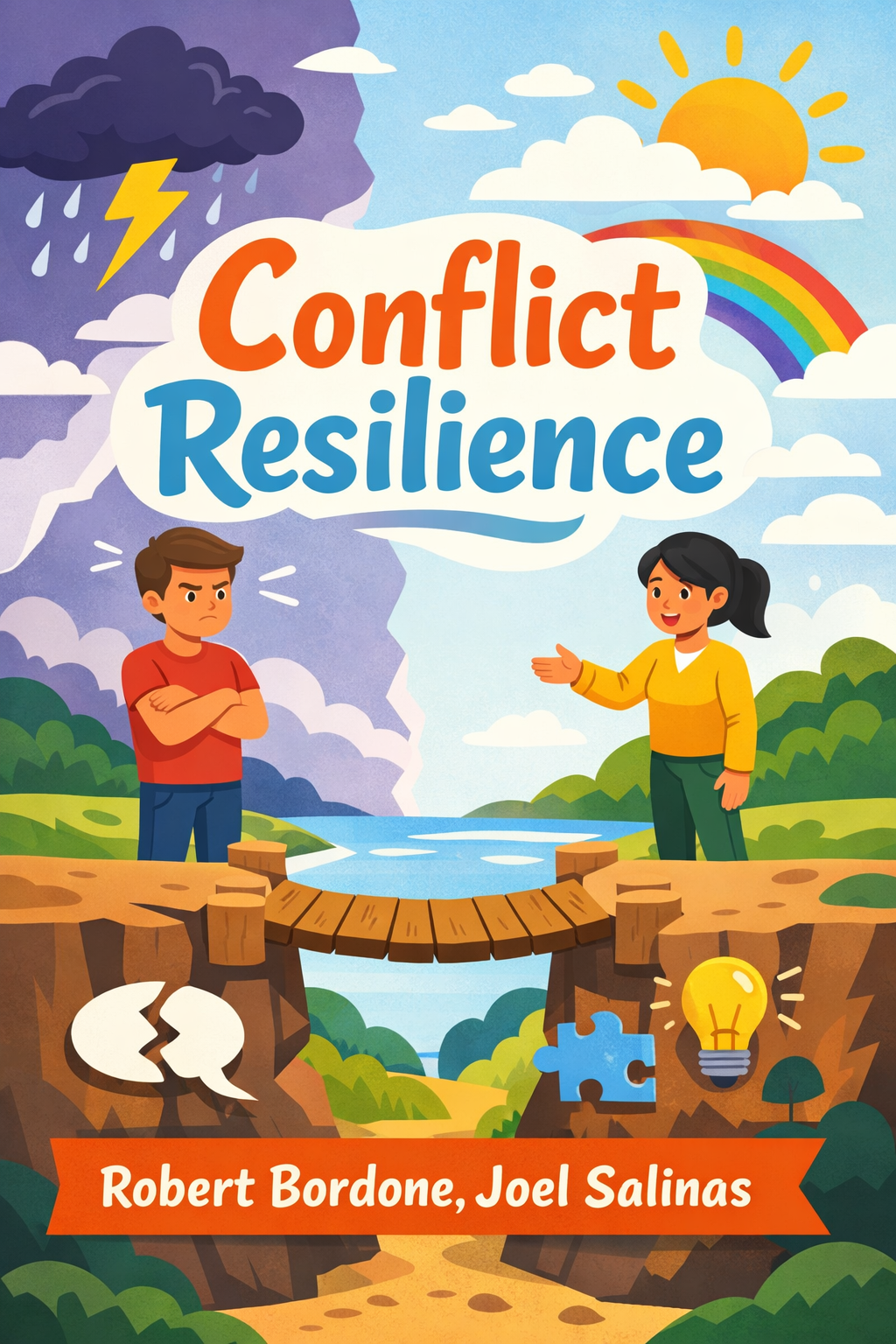
Ultimately, this guide offers more than a set of conflict management tips; it proposes a philosophy for engaged living. By embracing conflict as a source of information and potential growth, we shed the exhausting burden of avoidance and fear. We become less brittle and more adaptable. The result is not a life free of disagreement, but a life where we can navigate disagreement with confidence, preserve our integrity, deepen our connections, and often emerge on the other side with a better outcome than we could have imagined when the conflict began. It is the art of staying grounded in the storm, and in doing so, sometimes discovering that the storm itself clears the air.