Description
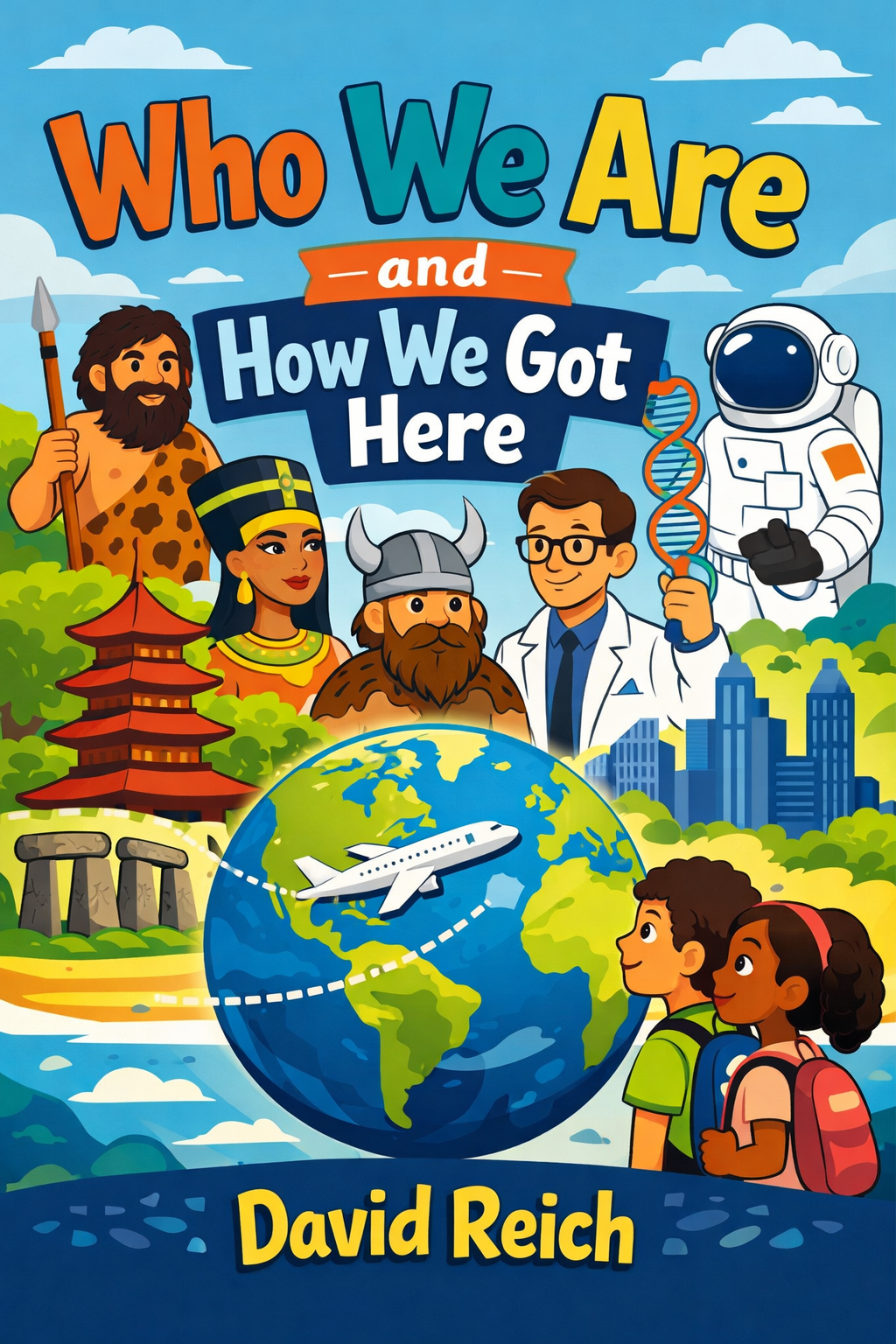
Who We Are and How We Got Here presents a revolutionary account of human history, not through pottery shards or ancient texts, but through the silent language of DNA. The book charts the emergence of a powerful new tool—the study of ancient genomes—that allows scientists to read the biological stories of people who died thousands of years ago. This isn’t just an update to the history books; it’s a fundamental rewriting of the narrative of our species. The author, a pioneering figure in this field, acts as both guide and storyteller, explaining how technological breakthroughs enabled the extraction of genetic material from long-cold bones, and how the subsequent data avalanche has overturned settled truths.
The narrative dismantles long-held, simplistic models of human ancestry. For decades, the story was told of distinct populations evolving in isolation, giving rise to the major groups we see today. Ancient DNA reveals a far more dynamic, interconnected, and messy reality. It shows that the deep past was characterized by repeated, dramatic migrations and population turnovers. Waves of people moved, often replacing or mixing thoroughly with those who came before. The idea of a “pure” or unchanging population stretching back into deep time is a myth. The genetic evidence demonstrates that we are all, without exception, the products of complex mixtures from multiple, now-vanished ancestral streams.
A central and compelling theme is the discovery of “ghost populations”—entire groups of ancient humans who left no direct linguistic or cultural descendants, but whose genetic legacy lives on in people today. Scientists infer their existence only because their distinctive DNA appears in the genomes of later populations. This is like finding a ghostly fingerprint on a historical document, proving a contributor whose own writings have been lost. These findings humble our historical perspective, showing how much of the human story has been erased by time, only to be partially recovered through genetics.
The book applies this lens to specific regions, with profound implications. In Europe, the data reveals at least three major population transformations in the last 10,000 years: first, hunter-gatherers; then, a massive migration of farmers from the Near East who largely replaced them; and finally, a wave of pastoralists from the steppe who brought Indo-European languages and again reshaped the genetic landscape. South Asia’s history is similarly rewritten, showing how today’s population structure stems from a mixture of two vastly different ancient groups. In the Americas, genetics clarifies the timing and number of founding migrations from Siberia, adding layers of detail to the archaeological record.
This new science inevitably collides with contemporary notions of race and identity. The author argues forcefully that the categories of race we use today are shallow, recent constructs that crumble under the weight of genetic history. The differences between populations are real but subtle, and they form gradients, not sharp boundaries. More importantly, these differences represent mere snapshots of an endless process of mixing and migration. The genome of any individual or group is a palimpsest, a document written over countless times by the movements and encounters of their ancestors. Our identities are not rooted in biological purity, but in a shared history of perpetual admixture.
However, the book does not shy away from the ethical minefields this powerful technology creates. It discusses the delicate responsibility of handling ancient remains, often in consultation with descendant communities. It grapples with the potential for misuse, such as nationalist groups co-opting genetic data to support claims of ethnic purity—claims the science itself invalidates. The author advocates for a thoughtful approach, recognizing that while genetics can tell us *who* we are biologically, it cannot prescribe *who* we should be socially or politically. It provides raw material for our stories, but does not write the stories themselves.
Ultimately, Who We Are and How We Got Here is a testament to the power of a new scientific lens. It reveals a human past that is more interconnected, more turbulent, and more fascinating than previously imagined. It challenges us to let go of static, essentialist views of ancestry and embrace a more fluid and complex understanding of our collective journey. The story written in our genes is not one of separate lines diverging, but of countless threads endlessly braiding, separating, and braiding again. It is a story that belongs to all of us.