Description
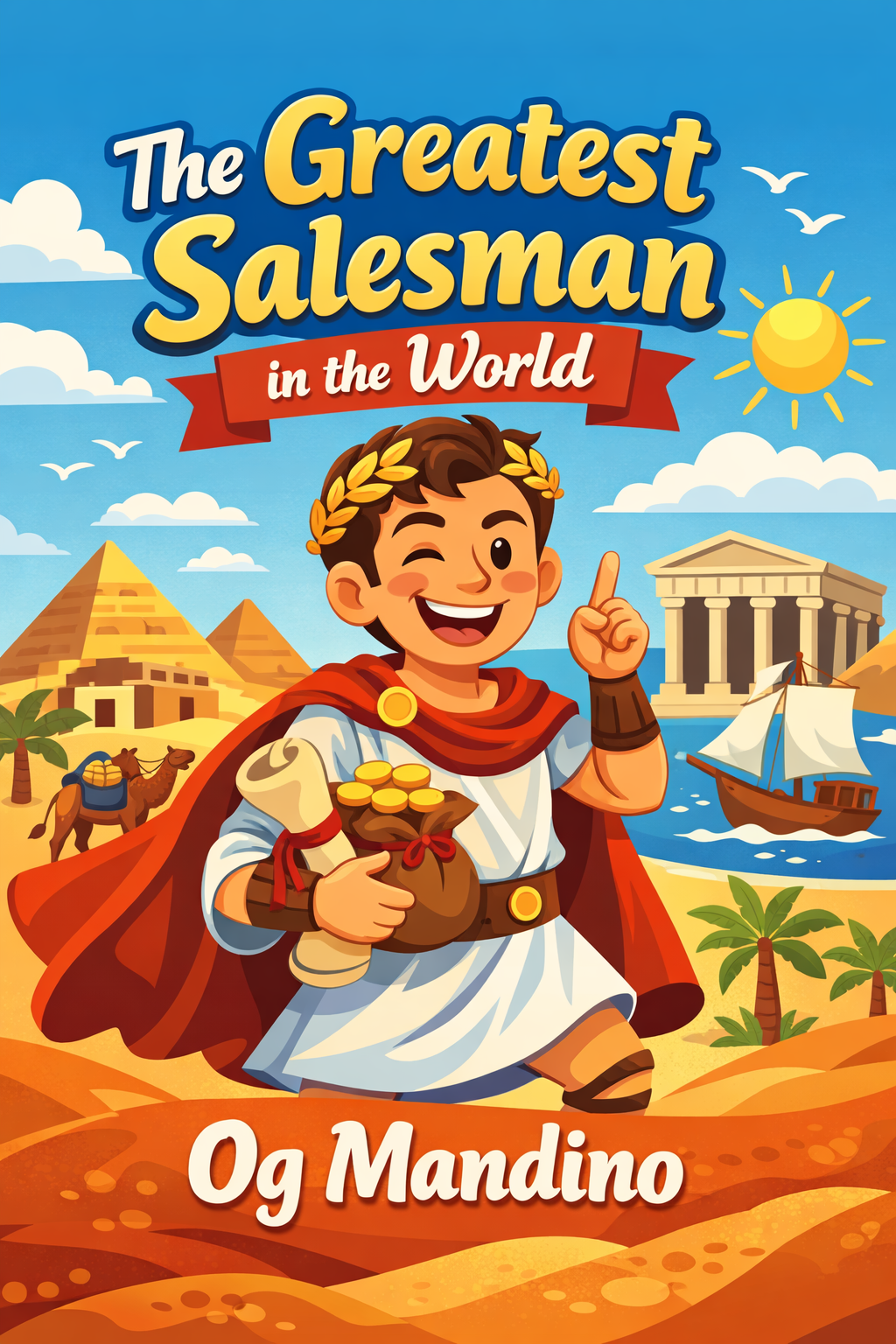
In a distant, timeless era, a poor camel boy named Hafid toils in the bustling markets, his life defined by hardship and want. His fortunes seem to change when his master, the wealthy and revered Pathros, promotes him to the prestigious role of a salesman. Yet, despite his dedication, Hafid fails in his first crucial assignment, returning in shame without having sold a single robe. In a moment of profound despair, he contemplates giving up his dreams of prosperity. However, Pathros, seeing a hidden spark within the boy, offers him not a reprimand, but a life-altering gift: a set of ten ancient leather scrolls. With them comes a strange and rigorous commandment: Hafid must read each scroll, three times daily, for thirty days before proceeding to the next, embedding their wisdom into his very soul.
The journey outlined in the scrolls is not a simple list of sales tricks, but a transformative philosophy for living. The first and most foundational scroll imparts the principle of new beginnings, teaching Hafid to shed the failures and habits of his past self. He learns that each day is a fresh canvas, and by mastering his emotions and rejecting negativity, he can build a new identity from the ground up. This internal shift is paramount; the scrolls argue that success is first an internal state before it manifests externally. As Hafid diligently follows the ritual, the words begin to reshape his character, replacing fear with persistence and doubt with an unshakeable belief in his own potential.
Subsequent scrolls build upon this new foundation, introducing principles that extend far beyond the marketplace. He is taught to persist until he succeeds, to embrace the monumental power of action over endless planning. One scroll focuses on the priceless nature of time, urging him to live each day as if it were his last, wasting not a moment on idleness or regret. Another instills a profound sense of self-worth, commanding him to see himself as a unique and invaluable creation, a belief that naturally radiates outward and commands respect. The scrolls weave together a tapestry of virtues: the cultivation of positive habits, the power of laughter and joy to disarm and attract, the importance of setting monumental goals that stir the soul, and the practice of unwavering faith in the unfolding of a grand design.
Crucially, the wisdom does not advocate for selfish manipulation. A central tenet is the principle of love and empathy. Hafid learns that the greatest salesman does not conquer, but serves. He must approach every interaction with genuine love—for his craft, for his prospects, and for humanity itself. By seeking to understand needs and provide true value, he builds relationships that endure far beyond a single transaction. This ethos of service transforms selling from a mere exchange of goods into an act of contribution, where profit becomes a natural byproduct of helping others achieve their desires.
As the months and years pass, Hafid faithfully adheres to the ritual, and the principles cease to be mere words; they become the core of his being. His fortunes reverse dramatically. From the desolate camel boy, he rises to become a merchant of legendary status, amassing not only vast wealth but also deep respect and personal fulfillment. He builds a family and a life of significance. The story culminates in his old age, when he must choose an heir to inherit both his fortune and the sacred scrolls. He selects not the most cunning merchant, but a man of character, ensuring that the wisdom is passed to one who will use it for good. The final revelation ties the narrative together, suggesting that the true, original “greatest salesman” was not a merchant of goods at all, but a humble carpenter from Nazareth, implying that the ultimate sale is that of a transformative idea, and the greatest success is a life lived with purpose, love, and enduring faith.
The book is, in essence, an allegorical guide. It posits that salesmanship is the fundamental art of all human progress—the ability to “sell” one’s ideas, services, character, and vision to the world. The ten scrolls provide a sequential, psychological blueprint for self-mastery. They teach that lasting success is not an accident but the inevitable result of disciplined thought, virtuous action, and a heart oriented towards service. It is a manual for developing an unconquerable spirit, arguing that wealth, happiness, and influence are the natural harvest reaped by anyone who diligently sows the seeds of these ancient, universal principles into the soil of their daily life.