Description
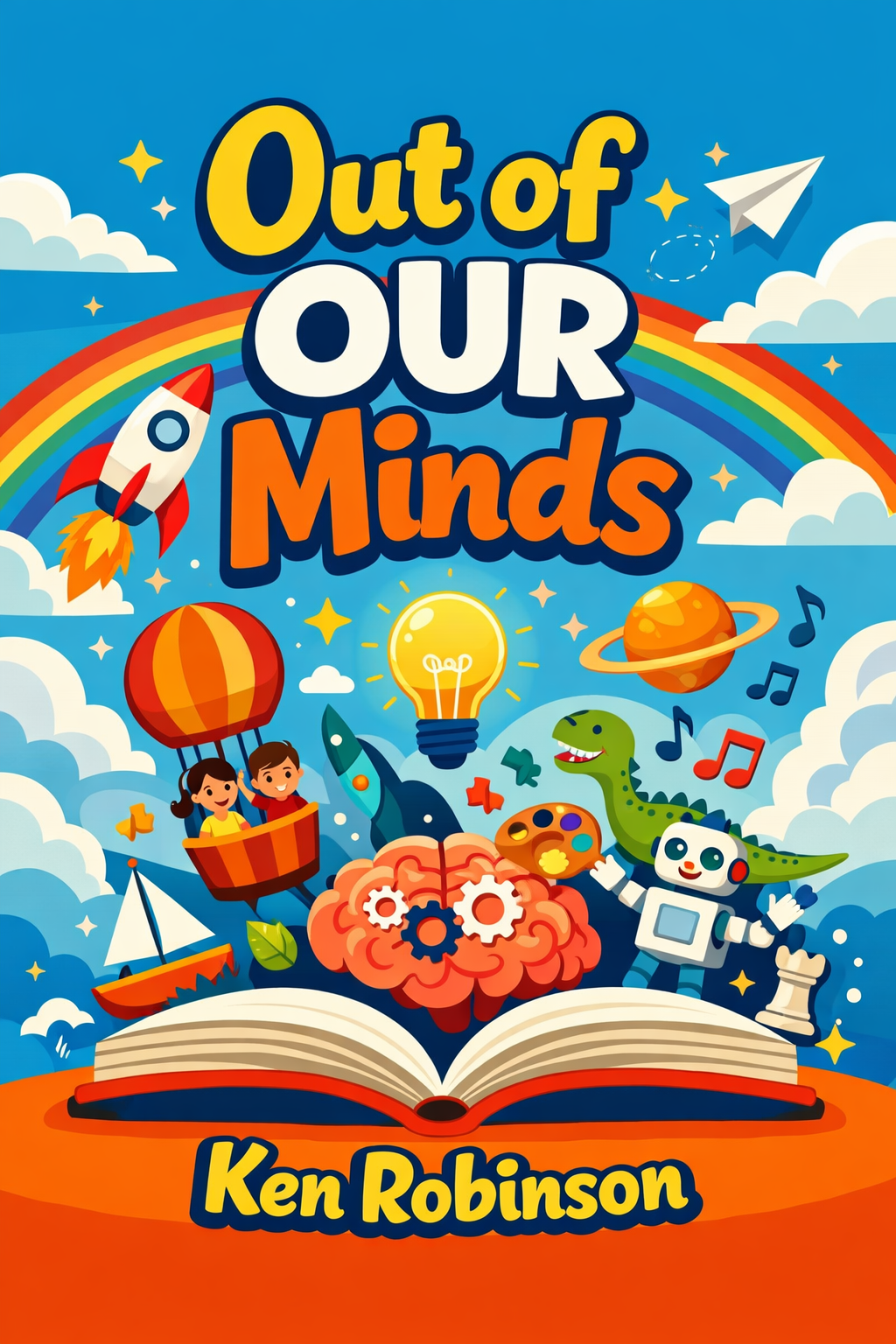
We live in an era of breathtaking and relentless change. The technological advancements of the past few decades have reshaped our world at a pace that is difficult to comprehend, compressing what used to be centuries of development into mere years. This acceleration means that the future of work, communication, and society is fundamentally unpredictable. In such a landscape, the ability to adapt, innovate, and imagine new possibilities is no longer a luxury for a select few artists or inventors; it is an essential skill for everyone. The central argument presented is that our greatest resource for navigating this uncertain future is the profound human capacity for creativity. Yet, paradoxically, the very institutions designed to prepare us for the world systematically suppress this innate ability.
The root of this problem lies in our education systems, which are not timeless structures but relics of a bygone industrial age. Established to meet the needs of the 19th-century economy, this model was designed to produce a reliable, standardized workforce for factories and offices. Its hallmarks—rigid timetables, bell schedules, subject compartmentalization, and standardized testing—mirror the assembly-line principles of industrial manufacturing. Students are processed in batches, expected to conform and progress linearly, with success measured by their ability to absorb and reproduce established information. While this system achieved its historical goal of mass literacy and numeracy, it operates on a fundamental hierarchy of subjects, placing mathematics and languages at the top and the arts at the very bottom. This hierarchy reflects a deep-seated misconception that creativity is separate from “real” academic or professional work, a frivolous add-on rather than the core engine of progress.
This educational model creates a stark mismatch with the demands of the modern world. Research consistently shows that leaders across all sectors now identify creativity as the single most important leadership competency for the future. The complex, interconnected challenges we face cannot be solved by rote knowledge or linear thinking alone. They require the ability to think differently, to connect disparate ideas, and to envision what does not yet exist. By sidelining the disciplines that most explicitly cultivate these capacities—the arts, music, drama, design—we are effectively handicapping future generations. We are educating people out of their creative capacities, teaching them that there is one right answer and discouraging the risk-taking and experimentation from which all original thought springs.
To reclaim creativity, we must first understand its source: imagination. Imagination is the uniquely human ability to bring to mind things that are not present to our senses. It allows us to travel in time, to empathize by seeing through others’ eyes, to reconstruct the past, and to anticipate multiple futures. Creativity is then defined as *applied imagination*—the process of having original ideas that have value and, crucially, putting them to work. This process is not mystical; it involves two key modes of thought: generating ideas and then critically evaluating, refining, and developing them. Creativity manifests in countless forms, from scientific discovery and entrepreneurial innovation to crafting a compelling narrative or solving a social problem. It is a dynamic process that often involves making unexpected connections across different fields of knowledge.
For organizations and leaders hoping to foster innovation, this understanding is critical. Moving beyond outdated, industrial-era management models that prioritize compliance and efficiency above all else is essential. Innovative leadership is not about being the sole source of brilliant ideas or about abandoning all structure for chaotic free-for-alls. Instead, it is about cultivating an environment—an ecology—where creativity in others can flourish. This requires flexibility in processes, physical spaces, and work patterns. It means valuing diverse perspectives and creating a culture where it is safe to experiment, to ask new questions, and even to fail productively.
The most potent creative environments are often collaborative and interdisciplinary. Breakthroughs frequently happen at the intersections between fields, where different ways of thinking collide and combine. Therefore, facilitating creativity involves deliberately bringing together teams with a variety of backgrounds, skills, and perspectives. By creating spaces for genuine dialogue and exchange, where the analytical mind can converse with the intuitive spirit, organizations can tap into a richer, more robust well of ideas. The path forward is to move beyond the outdated systems that constrain our natural imaginative powers and to build new ones—in our schools, our companies, and our communities—that recognize, nurture, and celebrate the creative potential in every individual. Our future depends not on standardizing our minds, but on finally learning to set them free.