Description
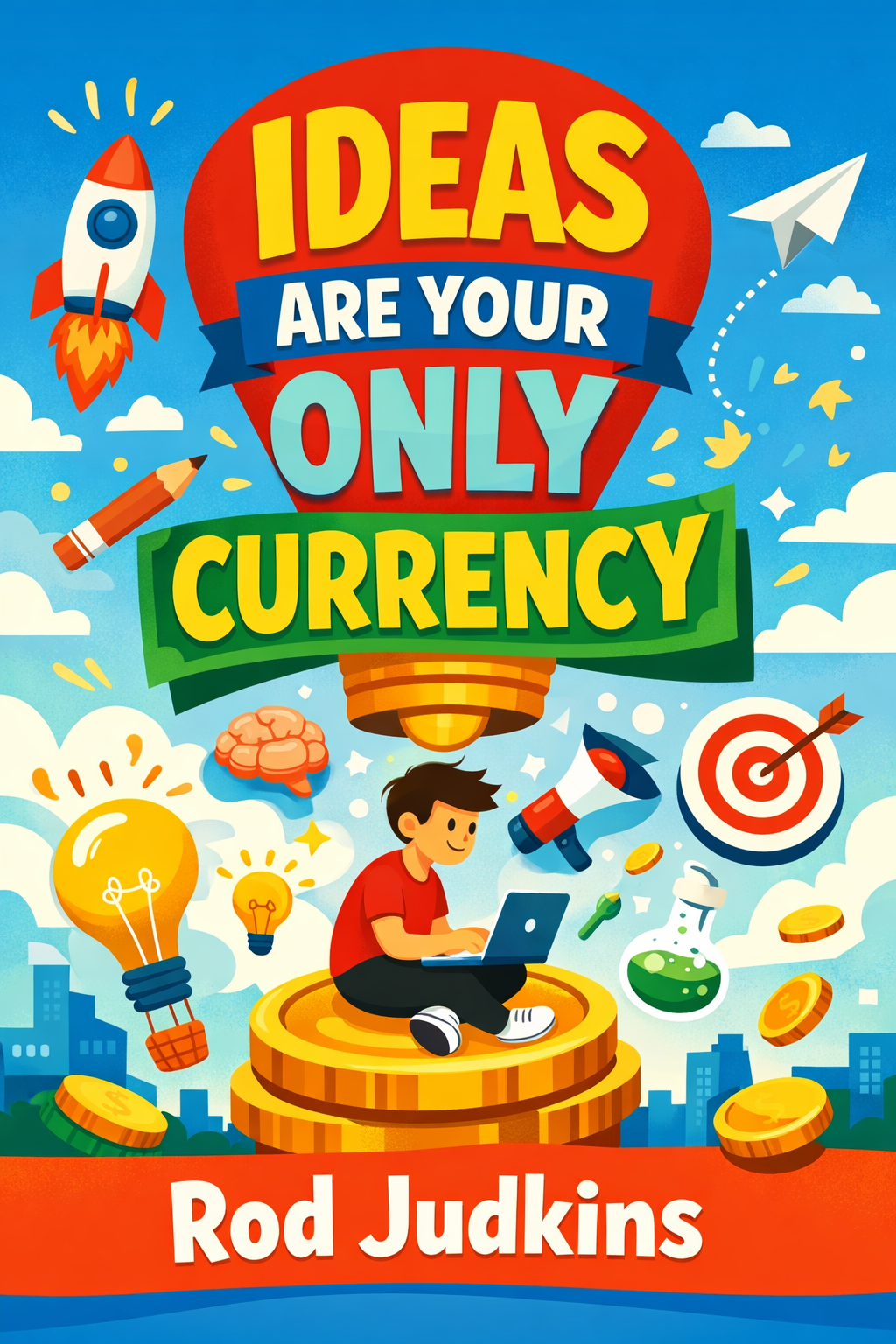
We live in an age of breathtaking acceleration. Where once a revolutionary technology like the printing press took centuries to reshape society, today’s innovations transform our world in years, months, or even days. This relentless pace renders specific knowledge obsolete with startling speed and turns today’s essential skills into tomorrow’s historical curiosities. In this environment, attempting to future-proof a career with a fixed set of competencies is a futile endeavor. The only true currency that appreciates over time, that cannot be automated or outsourced, is your native creativity. Your capacity to generate novel ideas, to connect disparate concepts, and to imagine solutions where others see only problems is your most valuable and enduring asset. This book is a practical manual for strengthening that creative muscle, offering a series of thought experiments designed to break conventional patterns and train your mind to think in more fluid, original ways.
The relationship between humanity and technology is often misunderstood. We tend to view our tools as neutral extensions of our will, but in truth, they actively shape us in return, molding our behaviors, social structures, and even our thought processes. The first step toward creative mastery is to flip this dynamic from passive consumption to active, critical engagement. Consider the personality inherent in iconic designs, from the friendly curves of a classic car to the biomechanical elegance of a designer lemon squeezer. What if you were to imbue a mundane object, like a cheese grater, with your own unique aesthetic influences? Furthermore, history is a rich repository of formats waiting to be reimagined. The medieval coat of arms, for instance, was a profound system of visual identity. What would a modern coat of arms for a tech visionary communicate? Finally, true engagement requires critique. What technology disturbs you? Designing a protest placard against a specific innovation forces you to articulate your concerns visually and conceptually, transforming vague unease into a clear, creative statement.
Time, our most finite resource, is often perceived as a tyrant—a linear force slipping relentlessly through our fingers. Creativity allows us to reshape our relationship with time itself. Einstein revealed time as relative and malleable, a concept so thrilling it revolutionized physics. Yet it is often presented drily. How would you design a book cover that captures the exhilarating wonder of relativity? Similarly, our symbol for infinity, the lazy eight, feels inadequate for a concept of such profound awe. What new logo could better represent the endless? Even our final departure can be reimagined creatively. Moving beyond conventional funerals, how might you design a final act—a way to handle your remains—that is a authentic, personal expression of your life and values? These exercises stretch your perception of time from a constraint into a canvas.
Our public discourse increasingly forces complex issues into simplistic, opposing binaries: success or failure, us versus them. This polarized thinking is the enemy of nuance and, by extension, creativity. To generate powerful ideas, we must learn to dwell in the fertile grey areas between extremes. Imagine creating a hybrid creature, like a hamster fused with another organism, to solve a unique problem or offer a new perspective. Challenge the rigid, geometric dogma of movements like Bauhaus by designing a cityscape of curves and flowing lines that prioritizes human connection over sterile efficiency. Confront cultural divides not as impassable chasms but as spaces for connection. If tasked with designing a bridge linking continents, how would its form symbolize unity and dialogue rather than mere separation? Exploding the binary means seeking synthesis over separation.
The future is not a distant destination we passively await; it is being built now, in the minds and workshops of today. Creative foresight involves actively participating in that construction. Consider the ultimate design challenge: creating a nuclear waste storage facility meant to last and communicate its danger for 10,000 years—a timespan longer than recorded history. How do you communicate across millennia to civilizations you cannot imagine? Conversely, how might you resurrect a relic of the past, like the floppy disk, through clever design, giving it new purpose and relevance? Finally, push your imagination to its limits by projecting forward not just one, but two centuries. What would people living in 2124 imagine for their future in 2224? Their hopes and technologies would be filtered through experiences unknown to us, revealing how the future is always a reflection of the present that imagines it.
Ultimately, what we perceive as objective reality is a fragile construct, shaped by culture, media, and personal bias. John Lennon noted that “reality leaves a lot to the imagination,” suggesting that the world is ripe for reinterpretation. To hone your creative vision, you must learn to question these foundations. Imagine a “transformation pill” that alters not your body, but your perception. What single shift in how you see the world—seeing sound as color, or perceiving the hidden architecture of social power—would most profoundly change your experience? Design this pill, its packaging, and its consequences. Then, look at the world around you. How many people move through life on autopilot, following unexamined routines? Design a “zombie cure kit”—not a literal medical product, but a conceptual package of experiences, questions, or artifacts designed to jolt someone out of complacency and into a state of awakened, engaged living.
The core argument is simple yet profound: In a world of constant flux, the tangible assets of knowledge and skill are depreciating commodities. The intangible capacity for original thought is your permanent capital. By regularly practicing these creative calisthenics—re-engaging with technology, bending time, rejecting binaries, designing the future, and reimagining reality—you train your mind to be agile and resilient. You stop preparing for a specific future and instead develop the ability to generate the ideas that will define whatever future arrives. Your ideas become your legacy, your value, and your only true currency.