Description
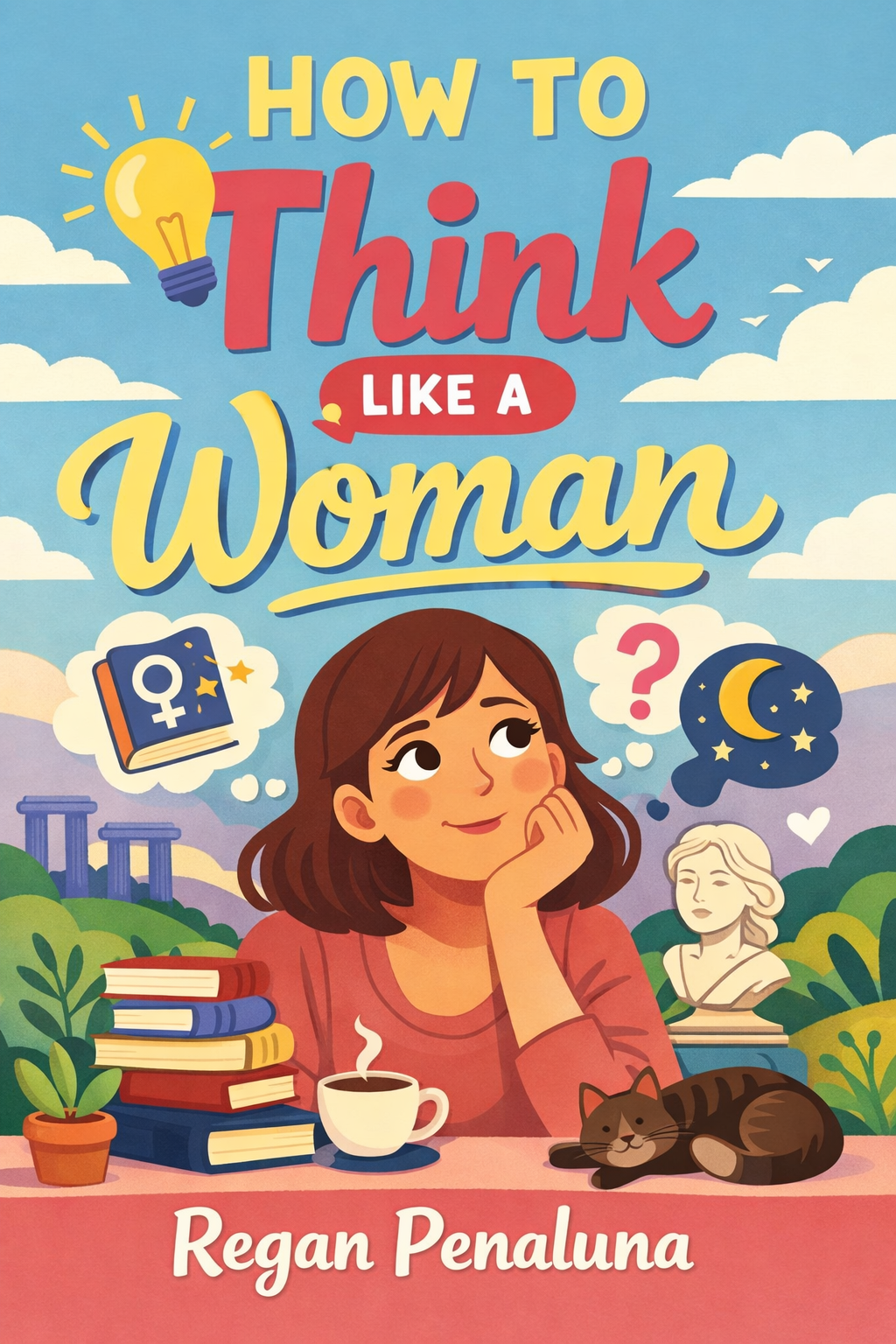
In “How to Think Like a Woman,” Regan Penaluna embarks on a dual quest: a personal reckoning with the alienation she felt as a woman in academic philosophy, and a historical excavation of the brilliant female thinkers that discipline erased. The book begins with a stark diagnosis of philosophy’s enduring gender problem, tracing a lineage of exclusion from Aristotle’s view of women as “deformed males” to the modern academy’s hostile climate of harassment and marginalization. Penaluna describes her own education, devoid of any female philosophers, and the slow erosion of her confidence in a field that seemed to insist women were interlopers in the realm of reason. This personal narrative becomes the engine for a recovery project, as she turns to the archives to unearth a hidden tradition of feminist thought, proving that women have always been philosophers, even when history refused to record them as such.
The heart of the work lies in the vibrant, intellectual biographies of four groundbreaking women. First, we meet Mary Astell, the seventeenth-century pioneer who, with meager savings sewn into her dress, fled to London to become a writer. Astell audaciously proposed a women’s college, arguing that reason was the soul’s essential faculty and that women possessed it equally. She dissected the contradictions in the work of Hobbes and Locke, championing a woman’s right to choose her own path. Penaluna finds a mirror in Astell’s struggle, drawing strength from her defiance while also confronting the limitations of her vision, which often excluded women outside her own social class.
Next, the story of Damaris Masham reveals the complex, often uncredited role women played in shaping canonical thought. The daughter of a philosopher, Masham was discouraged from formal study but found an intellectual partner in John Locke. Their relationship, blending mentorship with unfulfilled romantic tension, provided the space for Masham to develop her own philosophy. Writing from the demanding reality of managing a household, she argued powerfully against thinkers who blamed mothers for children’s ailments and posited that a mother’s love was the very foundation of virtue and inquiry. Her work championed the cultivation of autonomous thought in all children, envisioning a more enlightened society built from the nursery up.
The narrative then turns to the fiery revolutionary, Mary Wollstonecraft. Here, Penaluna finds a profound kinship with a philosopher whose life was a turbulent battle for intellectual and sexual autonomy. Wollstonecraft’s seminal arguments for women’s rights and education are shown as born from personal strife—an abusive childhood, precarious financial independence, and tumultuous relationships with men like Gilbert Imlay. Penaluna is particularly moved by Wollstonecraft’s unfinished novel, *Maria*, seeing in its raw portrayal of a woman’s psychological struggle a timeless reflection of the cost of being a “female philosopher” in a hostile world. Wollstonecraft embodies the painful, exhilarating clash between the hunger for love and the uncompromising demand for self-determination.
Finally, we encounter Catherine Cockburn, a figure who grappled with the quintessential conflict between intellectual ambition and societal expectation. A successful playwright and philosopher, Cockburn’s work was repeatedly interrupted by motherhood and financial need. Her philosophical writings, often published anonymously, defended the idea that virtue and intellect were not gendered. Penaluna sees in Cockburn’s life the persistent modern dilemma of “having it all,” recognizing the quiet resilience required to maintain a life of the mind amid domestic responsibility. Cockburn’s legacy is one of steadfast commitment, proving that philosophical insight can flourish even in the interstices of a woman’s traditionally prescribed roles.
Through these four portraits, Penaluna does more than simply add names to a historical ledger. She demonstrates that these women were not merely applying philosophy but transforming it. Thinking “like a woman” from their marginalized positions meant challenging philosophy’s core abstractions. Their work emerged from lived experience—from the confines of the household, the realities of the female body, and the struggle for personhood—forcing questions about love, care, dependency, and embodiment that the male canon had largely ignored. Their exclusion, therefore, impoverished the discipline itself, narrowing its scope and claiming universality from a profoundly limited perspective.
Penaluna’s journey culminates in a transformed understanding of both philosophy and herself. By recovering this lineage, she finds a language for her own experience and a community across time. The book argues that integrating these perspectives is not a niche concern but essential for a truly robust pursuit of wisdom. “How to Think Like a Woman” ultimately becomes a compelling manifesto for a more inclusive and complete intellectual tradition, one that acknowledges how the very act of thinking is shaped by who is permitted to do it, and what they are permitted to say.