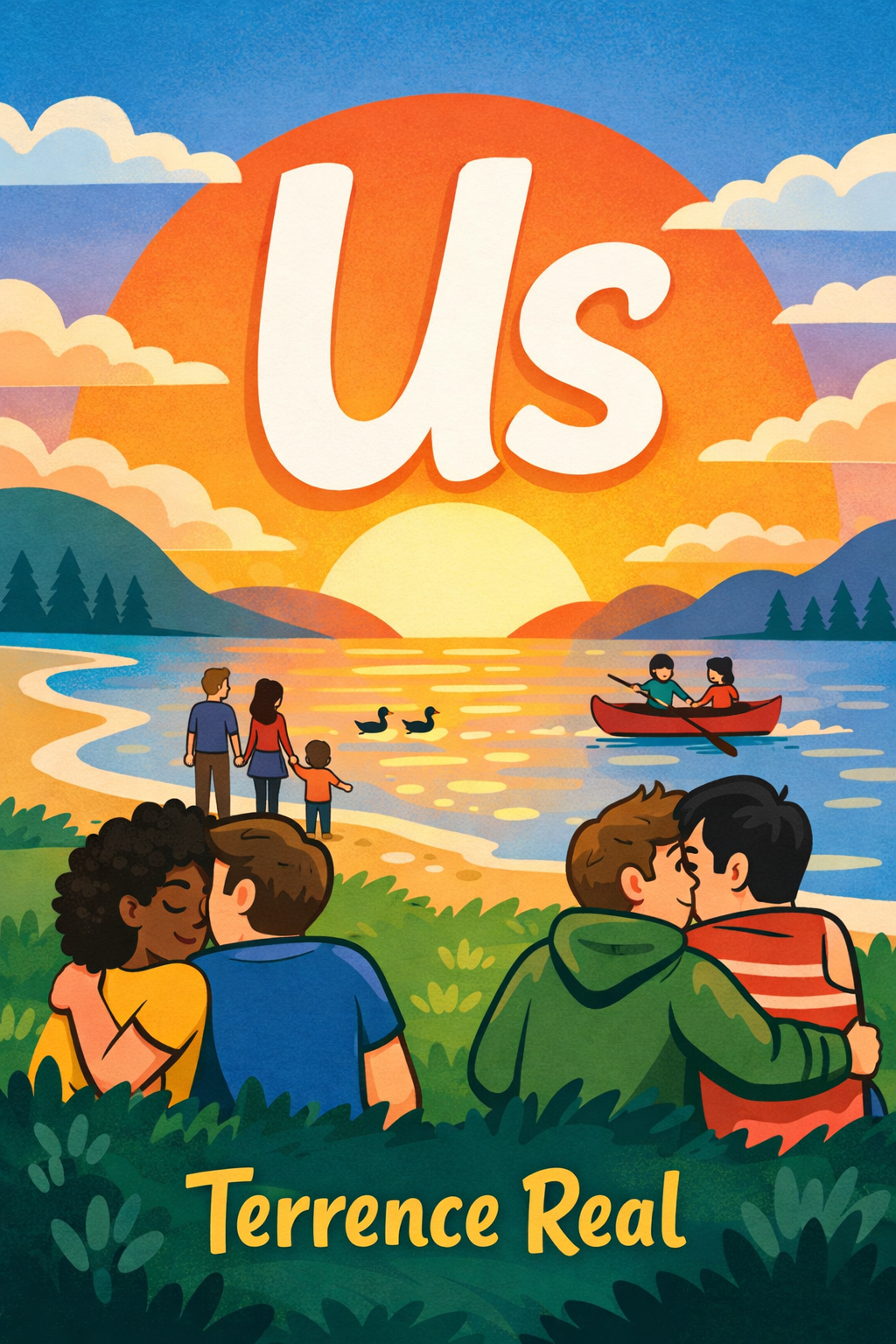
Description
In a world that celebrates the solitary achiever, the self-made success story, we often carry this isolating mindset into our most intimate relationships. This perspective frames connection as a constant negotiation between “you” and “me,” a dynamic that inevitably breeds division and strife. True, lasting intimacy requires a fundamental shift: a move from this individualistic standoff to a collaborative cultivation of “we.” This journey is not about erasing the self, but about understanding how our personal histories, our deepest fears, and our automatic reactions shape the space between two people. It is about building something greater than the sum of its parts.
The heat of a relationship conflict often feels uniquely intense, capable of transforming a minor irritation into a volcanic eruption of old hurts and harsh words. This occurs because close partners are deeply attuned to each other’s nervous systems; when one person’s stress spikes, the other’s often follows. In these charged moments, our rational, compassionate adult self retreats, and a more primal version emerges—what we can call the adaptive child. This is not a literal child, but a set of ingrained emotional habits formed long ago as survival strategies. Perhaps you learned to yell to be heard, to lie to avoid punishment, or to retreat into silence to escape conflict. When two adaptive children face off, the relationship becomes a battlefield of outdated tactics, with each person fighting for self-preservation rather than the health of the partnership.
The key to change lies not in battling this inner child, but in parenting it with compassion. Consider Dan, whose habit of twisting the truth threatened his marriage. His childhood was marked by a strict, volatile parent where any mistake provoked fury. Dan’s adaptive child learned that perfection—or a convincing story—was necessary for safety. As an adult, this strategy was destructive. By practicing relational mindfulness, Dan learned to pause when the urge to lie arose. He began to observe his impulses without judgment, and to gently question them: “Does this thought show basic respect for my partner? For myself?” This process of awareness creates space to choose a different response. When Dan finally risked honesty about a minor failure and received his wife’s understanding instead of rage, he experienced a profound corrective emotional experience. He saw that the old rules no longer applied, and that his adaptive strategy, once necessary, was now a barrier to the connection he truly desired.
Conflict becomes truly intractable when we stop fighting with our partner and start fighting with a caricature of them—a core negative image. This mental construct amplifies their most frustrating traits into a monstrous villain. You no longer see your forgetful partner; you see an inconsiderate, selfish oaf. They no longer see your cautious nature; they see a cold, withholding statue. These images lock both people into a defensive, seesaw dynamic of blame. To move forward, we must consciously dismantle these distortions. This requires a courageous return to the specific, present-moment issue, separating it from the loaded narrative. It means asking, “What is happening right now?” instead of “Here we go again.” By focusing on the actual behavior and its impact, rather than the imagined character flaw, couples can address problems without annihilating each other’s humanity.
For those who have experienced deeper wounds, either from childhood or within the relationship itself, the work extends beyond managing conflict to active rebuilding. Trauma, big or small, can shatter the sense of safety that is the foundation of “us.” Recovery is not enough; the goal is to construct a new, sturdier foundation together. This involves creating shared rituals of repair, consistently demonstrating reliability, and collaboratively writing a new story about the relationship—one that acknowledges past pain but is defined by present care and future commitment. It is in this deliberate reconstruction that a partnership can often find its greatest strength, transforming scars into testament of resilience.
Ultimately, building a powerful “us” is a daily practice of choosing the relationship over the individual ego. It is the commitment to meet each other not as adversaries representing our past hurts, but as allies building a shared future. It requires the wisdom to parent our own triggered reactions and the grace to see our partner clearly, beyond the shadows of our own fears. When two people make this conscious shift from “I” to “we,” they stop keeping score and start building something that can hold them both—a connection that is not a fragile balance of power, but a resilient, ever-evolving creation.