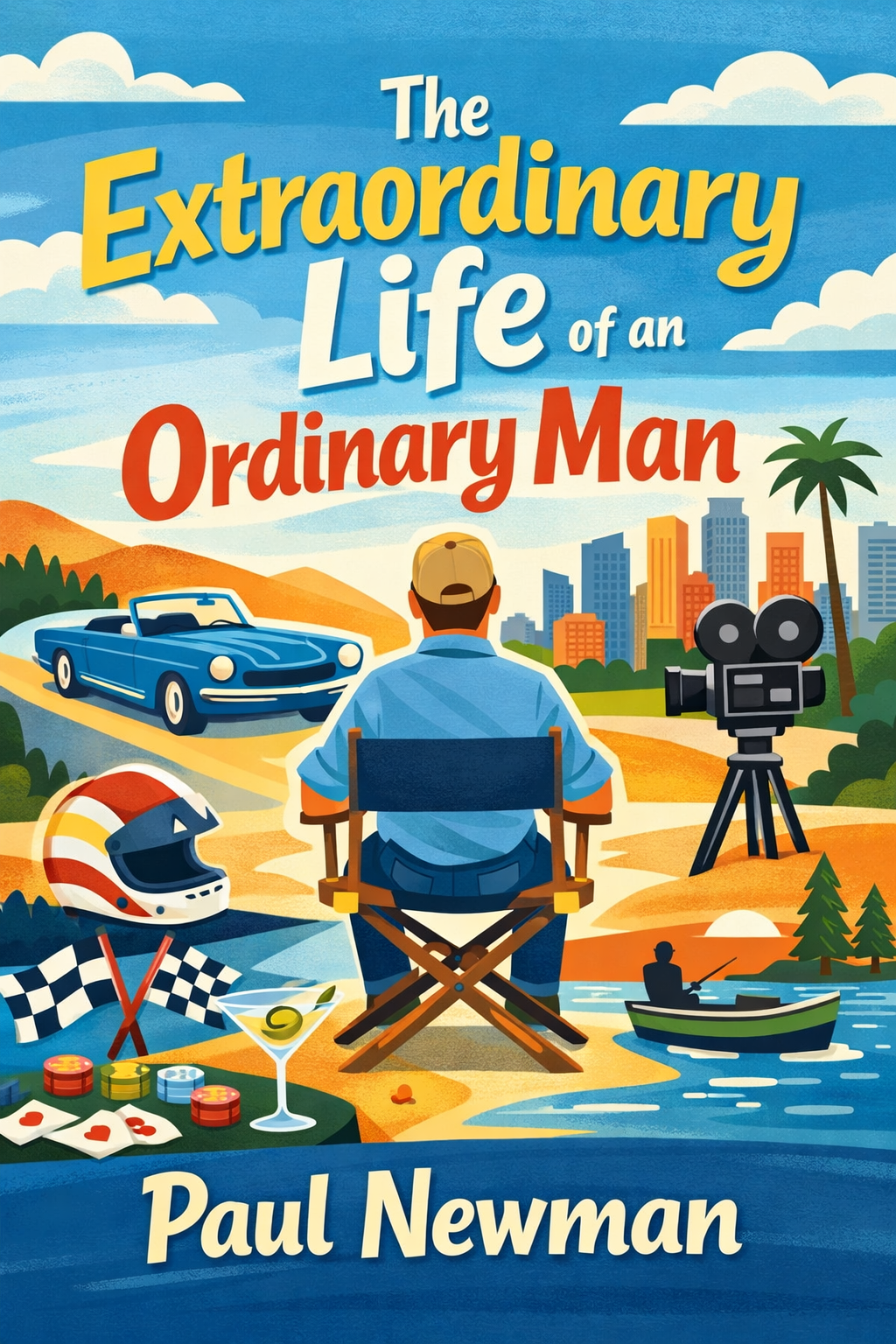
Description
This book presents the raw and introspective self-portrait of Paul Newman, constructed from a treasure trove of personal interviews and transcripts he created late in life. Far from a glamorous Hollywood tell-all, it is a profound psychological exploration of a man grappling with the disconnect between his extraordinary public image and his deeply felt ordinary, often confused, inner self. Newman speaks with unflinching honesty, dissecting his childhood, his flaws, his regrets, and his motivations, offering a narrative driven not by celebrity anecdotes but by a quest for self-understanding.
Newman’s story begins in a pristine, emotionally sterile home in Shaker Heights, where he describes himself as a “decorative object” for his mother. This early role created a fundamental split in his identity: the pleasing exterior versus the internal “orphan” who felt unseen and unknown. He recounts a tense household dominated by his mother’s perfectionism and his father’s quiet, bourbon-fueled rebellion, a dynamic that taught him to build emotional walls. He traces a direct line from this childhood void of authentic connection to his own struggles with communication and his son Scott’s tragic battles with addiction, revealing a chain of pain he spent decades trying to comprehend.
His path was meandering. A unremarkable student and self-described scrawny kid, he found a surprising work ethic in odd jobs, from a teenage door-to-door brush salesman to the ingenious owner of a college laundry service that traded clean clothes for beer. World War II service, by his own account, left him physically taller but emotionally unchanged. It was in the post-war camaraderie of Kenyon College theater that he first engaged with acting, though he confesses he loved everything about the stage *except* the acting itself, preferring the preparation and the partying. The real thrill, he implies, was in the escape it offered.
A rushed marriage to Jackie Witte and the birth of his first son coincided with his father’s death, leaving Newman adrift, sensing his own failures as a husband and parent. He fled to the Yale School of Drama, not out of passion, but as a potential safety net. His move to New York and unlikely acceptance into the legendary Actors Studio placed him among giants like Brando and Dean, but instead of feeling inspired, he felt like an impostor. He watched in awe as others accessed deep wells of emotion, a skill that felt foreign to him, reinforcing his belief in his own artistic inadequacy.
His rapid rise to movie stardom in the 1950s is presented not as a triumph, but as a bewildering acceleration that exacerbated his inner conflicts. The “Paul Newman” persona—the blue-eyed rebel, the charming anti-hero—became a marketable product, a mask he wore while feeling increasingly detached. His personal life was in turmoil; his first marriage unraveled as he fell deeply in love with Joanne Woodward, a relationship he credits with saving him, yet one he felt he constantly endangered through his own emotional unavailability and the corrosive pressures of fame.
The narrative delves into his complicated relationship with his craft. He dissects his process with the clarity of a technician, often minimizing his talent and attributing his success to luck, photogenic qualities, and sheer stubbornness. He discusses his directorial efforts as a more fulfilling creative outlet, where he felt more in control. The founding of Newman’s Own, the food company that channeled all profits to charity, emerges not as a celebrity vanity project, but as a vital, grounding enterprise. It was something tangible and productive, a way to connect with the world through philanthropy that felt more authentic to him than the artifice of filmmaking.
Ultimately, this is the story of a man engaged in a lifelong audit of his own soul. He returns repeatedly to his origins, examining how the decorative boy shaped the distant star, and how the orphan within sought belonging through racing cars, charity work, and his family. The memoir concludes without neat resolution, but with the hard-won insights of age. Paul Newman’s extraordinary life, as told by the ordinary man who lived it, is a testament to the universal struggle for authenticity, the weight of legacy, and the quiet work of trying to become, against all odds, a real person.