Description
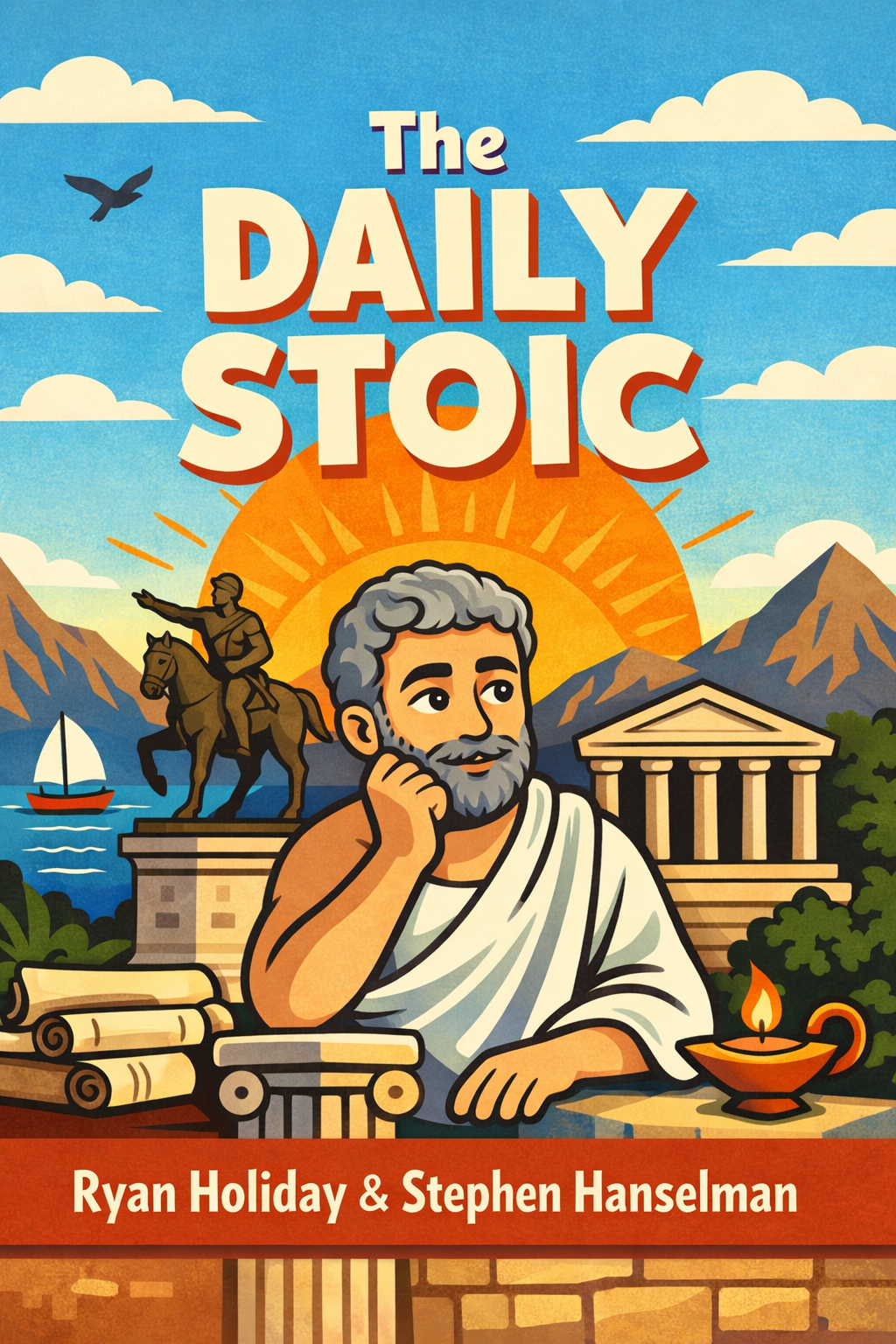
The book presents a year-long journey into Stoic philosophy, structured as a daily devotional designed to translate ancient wisdom into practical, modern life. It draws primarily from the works of three key figures: Marcus Aurelius, the Roman emperor whose private journal became “Meditations”; Seneca, the playwright and statesman who authored profound “Moral Letters”; and Epictetus, the formerly enslaved teacher whose lessons were captured in the “Enchiridion.” This is not an abstract academic study but a manual for living, focusing on the core Stoic conviction that virtue—comprising courage, wisdom, moderation, and justice—is the highest good and the surest path to a tranquil and meaningful life.
The philosophy begins with the imperative of self-examination. True understanding requires us to interrogate our own preconceptions, emotions, and beliefs with radical honesty, setting aside ego and the illusion of self-knowledge. This introspection must extend to our surroundings, as the company we keep profoundly shapes our character. By keeping in mind a respected mentor or ideal, we can cultivate an internal witness that encourages virtuous behavior. From this foundation of self-awareness, the book tackles the pervasive challenge of distraction. It suggests powerful mental exercises, such as approaching every task as if it were your last, to instill immediacy and quality into your actions. More fundamentally, it teaches the critical discipline of distinguishing between what is within our control—our judgments, choices, and reactions—and what is not, which includes external events, the actions of others, and even our own bodies. By focusing energy solely on the former, we reclaim our power and shed needless anxiety.
A central and empowering Stoic tool is the concept of the “two handles.” Every situation can be approached from multiple perspectives; one perspective may make the burden unbearable, while another provides a firm grip. The lesson is that while we cannot control situations, we always retain the ability to choose our reaction to them. By consciously selecting the handle of understanding, love, or opportunity rather than the handle of resentment, victimhood, or anger, we transform our experience. This clarity of reaction is bolstered by vigilant awareness of our own cognitive biases. Our minds are prone to rapid, prejudiced judgments and to “perceiving” rather than neutrally “observing” the world, layering interpretations onto raw events. By pausing to question our assumptions and strip away added narratives, we achieve clearer judgment.
The philosophy is relentlessly action-oriented. It encourages us to constantly measure our actions against the standard of our ideal, virtuous self and to act immediately in alignment with that vision, treating procrastination as a form of self-betrayal. When action meets the inevitable obstacles of life, Stoicism provides a framework for managing expectations. By mentally preparing for setbacks and understanding that challenges are not deviations from the path but part of the path itself, we build resilience. This pragmatism extends to our goals; Stoics are focused on results, advocating for flexible, effective action rather than rigid adherence to plan. The ultimate source of strength is self-reliance, cultivating an inner citadel of character that remains unshaken by external fortune, good or bad.
This inner fortitude is rooted in a profound sense of connection. Stoics view themselves as part of a larger whole, whether society, nature, or the cosmos. Our duty is to contribute to this whole through right action, acting with justice and fellowship not out of obligation but from a recognition of our interconnected nature. This perspective transforms our relationship with fate. Rather than a terrifying force, fate becomes the context for our exercise of virtue. We are like dogs tied to a moving cart; we can choose to run willingly with it or be dragged. Acceptance of what we cannot change is the source of freedom, not resignation. Finally, this acceptance finds its ultimate expression in the contemplation of mortality. Stoics do not fear death but embrace its certainty as the force that gives life urgency and meaning. By remembering our own end, we are motivated to live fully and virtuously in the present moment, which is the only time we ever truly possess. The book, through its daily format, aims to make this profound, life-altering perspective a living, breathing part of everyday existence.