Description
The staggering economic ascent of nations like Japan, South Korea, and Taiwan stands in stark contrast to the more faltering progress of their Southeast Asian neighbors. This journey into the mechanics of growth uncovers a deliberate, three-stage recipe for development that successful Asian states followed with remarkable discipline. The path begins not in gleaming factories or financial centers, but in the soil of the countryside. The critical first step is an agricultural revolution built on a surprising foundation: small-scale household farming. Contrary to conventional wisdom, large, mechanized plantations are less productive in poor, labor-rich nations. Maximizing yield per acre requires intensive, meticulous human labor—techniques like intercropping and hand-weeding that machines cannot replicate. By redistributing land to create a nation of smallholders, governments achieve a dual purpose: they unleash a dramatic increase in food output, and they create widespread rural employment and purchasing power, forming a stable base for the entire economy.
This agricultural transformation is impossible without profound land reform. History shows that successful economies like post-war Japan and Taiwan implemented radical, enforced redistribution, breaking up large estates and placing ownership directly in the hands of those who worked the land. This was not merely an economic policy but a profound social one, dismantling feudal structures, reducing inequality, and generating a bedrock of political stability. The resulting surge in farm productivity does more than feed the population; it generates a surplus that can fund the next, crucial leap: industrialization. With a stable agricultural base, the focus shifts to manufacturing. Here, the successful states embraced a seemingly heretical idea: strategic protectionism. They shielded their infant industries from overwhelming foreign competition, allowing domestic companies to imitate, learn, and gradually improve upon imported technologies. Governments actively invested in pilot projects, imported machinery and expertise, and created a nurturing environment for entrepreneurs to take root.
However, protection is not a permanent coddling. The masterstroke of the Asian development model was coupling this initial shelter with relentless internal pressure. Governments did not create lazy monopolies; they fostered fierce domestic competition and, most importantly, imposed export discipline. Companies were forced to prove their mettle on the global stage. In South Korea, access to vital credit was directly tied to export performance. This system ensured that companies became efficient and innovative not just for a captive local market, but to survive against the world’s best. The state’s role was as a strict coach, not a pampering parent. This disciplined approach stands in clear contrast to countries like Malaysia or Thailand, which often protected industries without demanding global competitiveness, leaving them vulnerable when crises hit.
The final piece of the puzzle involves the careful management of finance. Premature financial deregulation—opening markets to short-term, speculative international capital—is shown to be a dangerous misstep. It can lead to asset bubbles and devastating crises that wipe out decades of industrial progress. The successful developers kept finance on a tight leash, directing capital toward productive manufacturing and export goals, not speculation. China’s own explosive growth serves as a colossal modern case study, following this broad playbook by first reforming its agricultural sector, then aggressively building a protected yet fiercely competitive manufacturing base driven by export targets. The book argues that development is not a mystery of culture or luck, but a replicable process of sequential, state-led steps: first agriculture, then manufacturing with protected nurturing and enforced competition, all while keeping financial speculation firmly in check. The lessons form a clear blueprint for how economies can learn to walk, then run, and eventually sprint on the global stage.
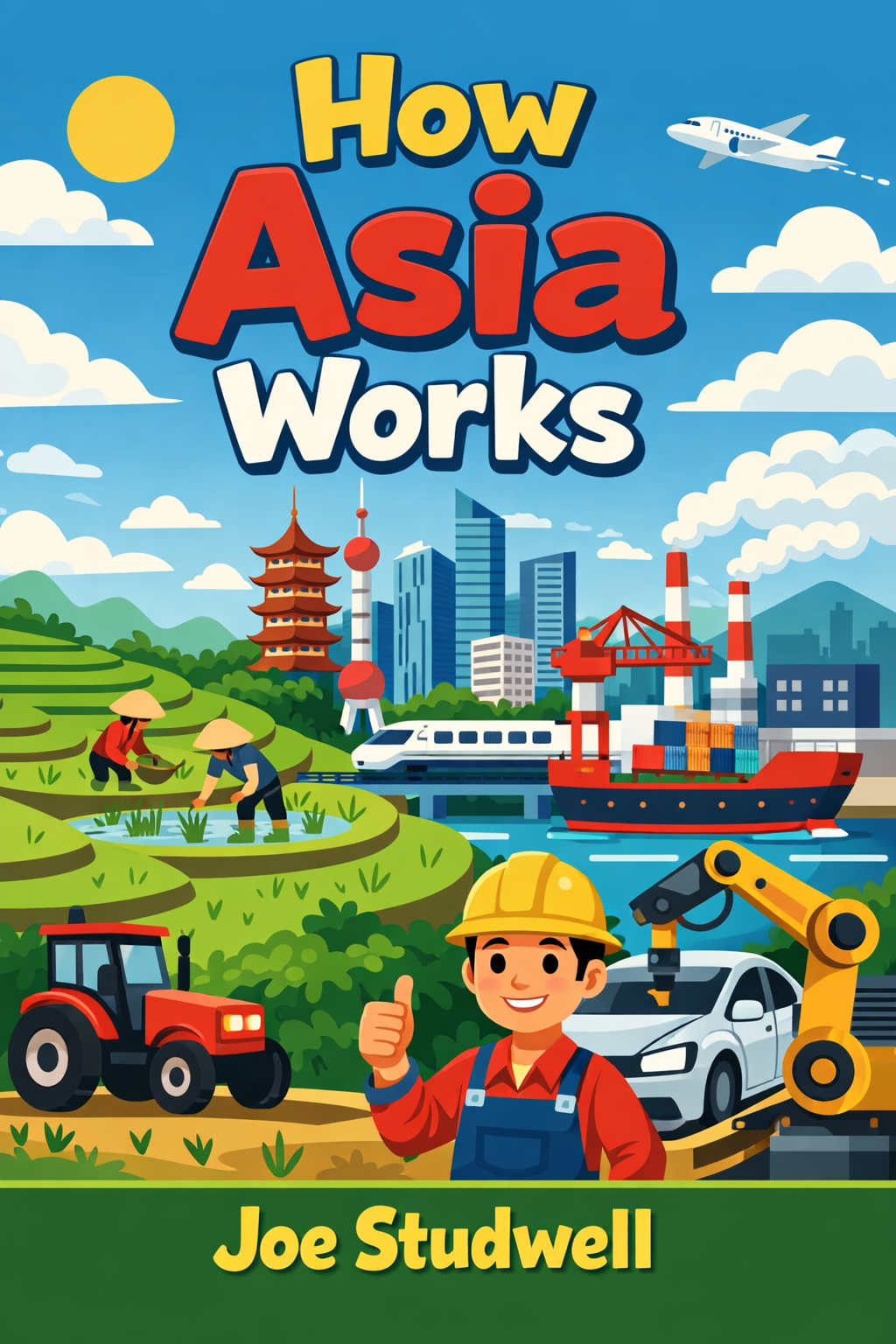
Book Title: How Asia Works