Description
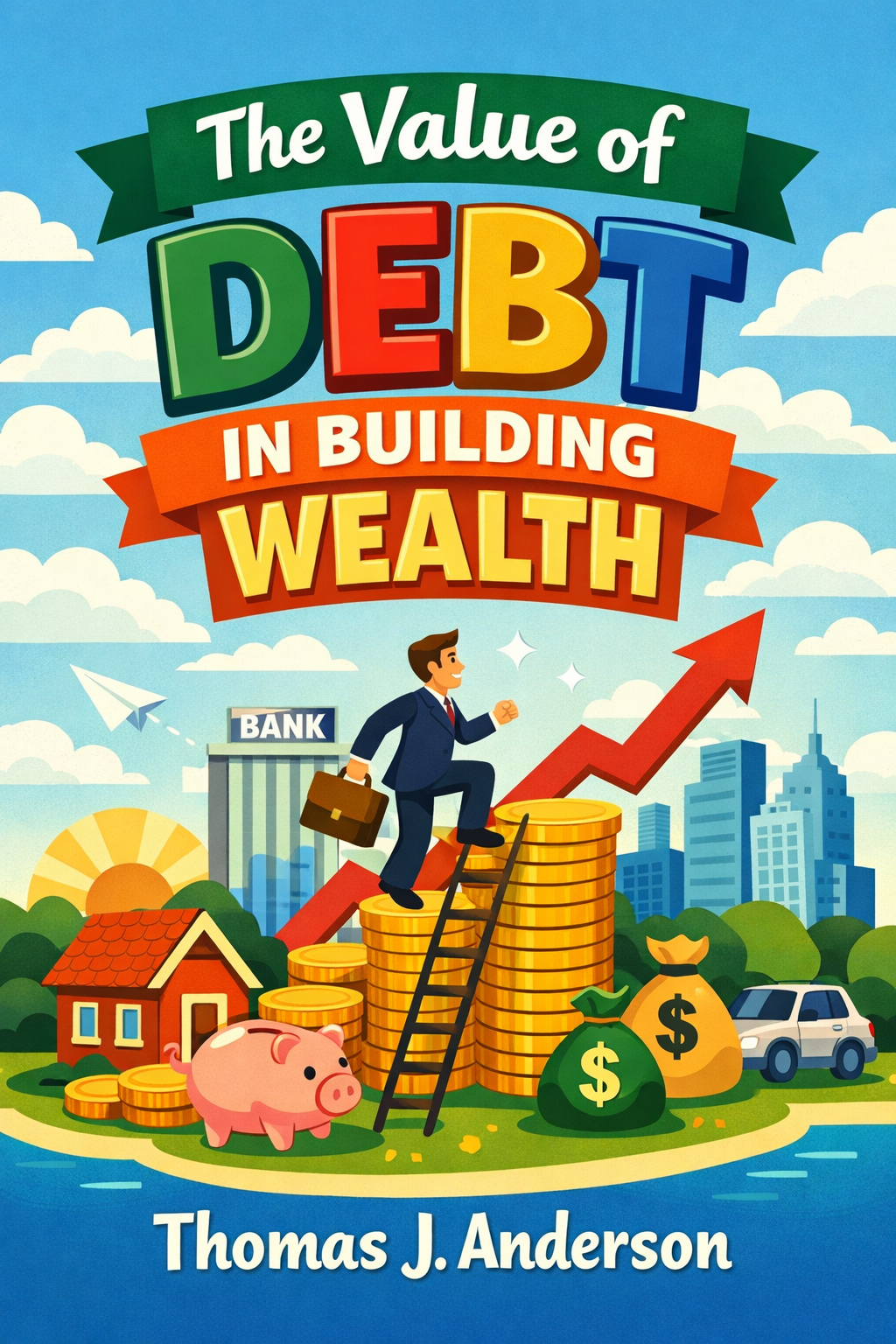
Conventional wisdom often treats all debt as a financial plague to be avoided at all costs. This perspective challenges that notion, drawing a crucial distinction between oppressive debt and enriching debt. Oppressive debt, like high-interest credit card balances or payday loans, drains your resources with punishing rates and offers no tax benefits. Enriching debt, however, such as low-interest, tax-deductible mortgages or business loans, can be a powerful lever. When managed strategically, this kind of debt can free up your cash flow, allowing you to invest earlier and harness the immense power of compound growth over decades.
The journey to financial security is framed as a four-phase game called LIFE: Launch, Independence, Freedom, and Equilibrium. Your current phase is determined by your net worth relative to your income. The initial Launch phase focuses on foundational steps: eliminating oppressive debt, building a small cash buffer equal to one month’s income, and starting a retirement fund of a similar size. Progress isn’t about drastic, overnight change but about consistent, targeted saving over three to five years to hit these milestones.
Graduating to the Independence phase means scaling these liquidity and investment targets. The goal here is to accumulate a more robust safety net—three months’ income in accessible cash, six months’ in retirement funds, and a separate nine-month fund for major life events like buying a home or starting a family. This phase solidifies your financial base, preparing you for the wealth-accumulation stages. The core philosophy throughout is that stockpiling liquidity is not being wasteful; it is providing essential flexibility to navigate life’s inevitable uncertainties without derailing your long-term plans.
The final two phases, Freedom and Equilibrium, shift focus from income multiples to your debt-to-asset ratio. In the Freedom phase, with a net worth roughly five times your income, the objective is to accumulate assets aggressively. Counterintuitively, this is not achieved by frantically paying down low-interest, enriching debt. Instead, you channel surplus funds into investments that historically outpace your debt’s interest rate. As your investment portfolio grows through compounding, your overall debt ratio naturally falls from perhaps 65% to a healthier 35-40%, even if the debt principal remains unchanged.
Ultimately, you reach Equilibrium, where your assets have grown so substantially that your remaining debt is trivial in comparison. At this point, retiring the debt is a matter of personal choice, not financial necessity. You have true optionality. Underpinning this entire strategy is a sober approach to investing. Since no one can reliably predict market movements, the smart path is a diversified, long-term portfolio. Spreading investments across different asset classes smooths out volatility and provides steadier returns over time, ensuring your wealth-building engine runs reliably. This is not a get-rich-quick scheme but a disciplined, philosophical framework for making debt work for you, not against you, on the voyage to lasting financial security.