Description
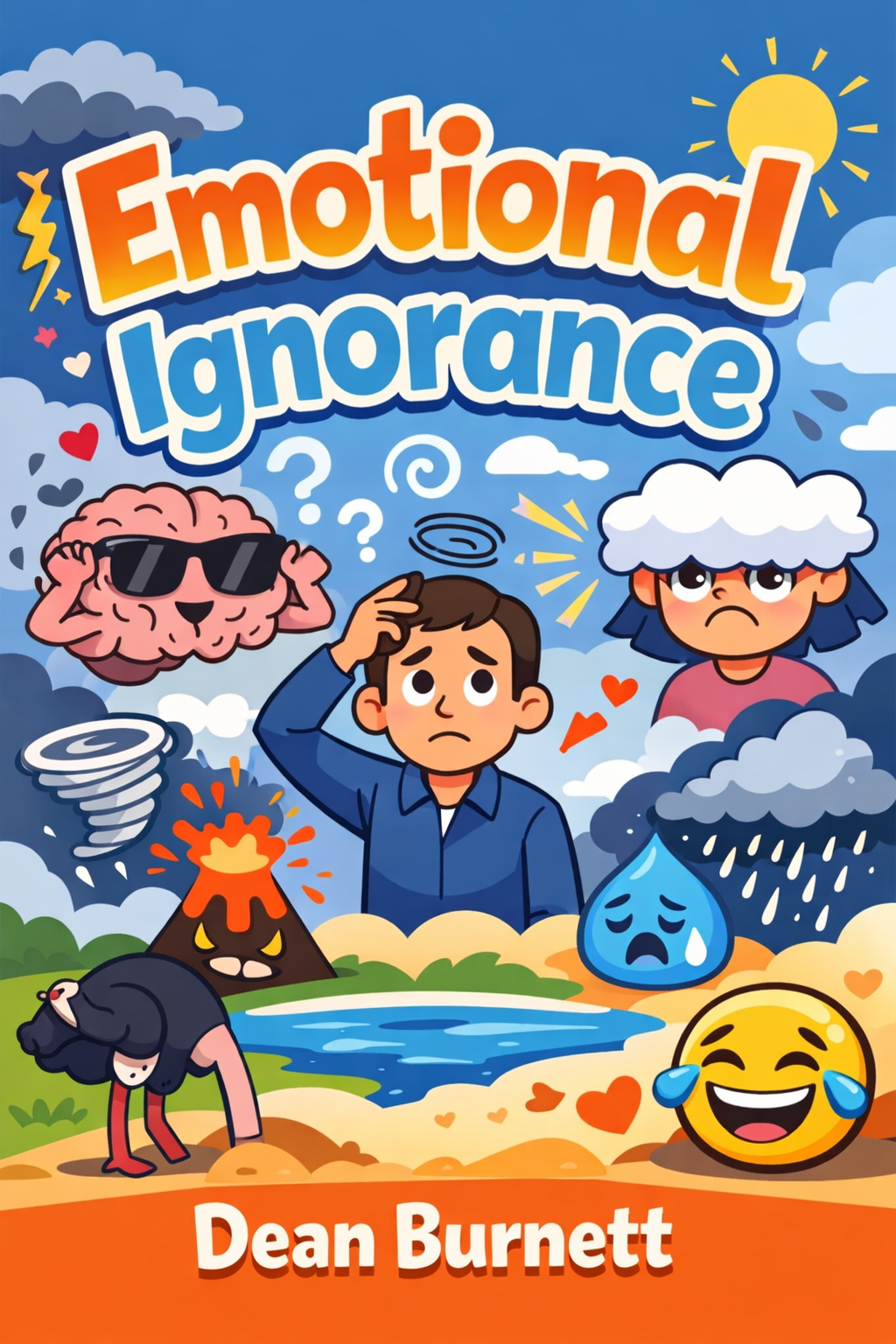
When neuroscientist Dean Burnett began writing a book on the science of emotions, he anticipated a detached, academic exploration. The sudden loss of his father to COVID-19 shattered that expectation, plunging him into a raw, personal confrontation with the very subject of his work. This profound experience transformed his inquiry from a theoretical exercise into a deeply felt investigation. The resulting book, *Emotional Ignorance*, weaves together cutting-edge neuroscience and intimate memoir to argue that our feelings are not messy distractions from rational thought, but the very foundation of what makes us human. It is a journey from the neurons in our gut to the complexities of love and sorrow, challenging the notion that we would be better off without our emotional selves.
The book begins by dismantling the simplistic idea of emotions as mere “feelings” that happen in our heads. Instead, it reveals them as whole-body experiences rooted in our physical biology. Our digestive system, often called a “second brain,” is in constant conversation with our actual brain, explaining why anxiety knots our stomach and why food comforts us. The debate over whether emotions are universal, hardwired programs or constructs built in the moment from context and memory is explored, showing that in either case, they are complex physiological events. This physical basis underscores that emotions are not separate from our bodies but are produced by them, an intricate dance between mental states and physical sensations.
This leads to a crucial reevaluation of reason itself. The common cultural trope, epitomized by characters like Star Trek’s Spock, suggests that pure logic is superior and that emotions cloud our judgment. Neuroscience reveals the opposite: emotion and reason are inseparable partners. Brain structures like the hypothalamus orchestrate both our primal drives and our highest ambitions. The motivational fire to start a project, the gut feeling that warns us of danger, the anxiety that sharpens our focus—these are not bugs in our system but essential features. Trying to excise emotion from thought is like removing the mortar from a brick wall; the entire structure of human cognition would collapse. Our capacity to care, to want, and to value is the bedrock upon which rational decision-making is built.
Our memories are not cold, factual recordings but are deeply colored and shaped by emotion. The author’s grief transformed previously happy memories of his father into sources of pain, illustrating how the brain weaves the “what” of an event with the “how did it feel.” The brain prioritizes and consolidates memories based on their emotional significance, which is why we remember a first kiss or a profound embarrassment with such vividness. This system has a built-in kindness, however: the fading affect bias. While negative emotions are potent in the moment, they tend to fade from memory faster than positive ones, a psychological mechanism that aids our resilience and well-being. This bias can vanish in states like depression, trapping individuals in persistent negative recall.
Emotions are also fundamentally social. Our brains are wired to connect, to read subtle cues in facial expressions, tone of voice, and body language. This neural mirroring allows us to share and understand each other’s inner states, creating bonds that predate language. This is why emotional suppression, often demanded in professional settings, is so taxing—it fights against our biological need to express and process feelings in communion with others. It also explains the profound pain of isolation, as experienced globally during the pandemic: when cut off from the reflective mirror of others, our emotional processing system is disrupted, leaving us adrift in our own sorrow or anxiety.
This innate social wiring underpins our most noble trait: care. The book tackles the puzzle of why humans invest immense, often thankless, effort in caring for others, from sick relatives to strangers. The answer lies in evolved emotional systems that bind us together. Empathy, compassion, and love are not just social virtues but biological imperatives that have ensured our survival as a species. They motivate sacrifices that pure self-interest could never explain. In a world increasingly mediated by digital screens, these core emotional needs persist but are often frustrated. Online interactions, lacking the full spectrum of nonverbal cues, can distort emotional expression, leading to misunderstanding, performative outrage, and a shallow sense of connection that leaves our social brains undernourished.
Ultimately, *Emotional Ignorance* is a plea to reject the outdated hierarchy that places cool reason above warm emotion. Through the lens of personal loss and scientific discovery, it demonstrates that to be emotionally ignorant is to misunderstand ourselves at the most basic level. Our feelings are not a sign of weakness but a sophisticated biological language guiding us through life, shaping our memories, connecting us to others, and giving our actions meaning. Understanding this complex system is not about achieving perfect control over our emotions, but about learning to listen to them, to integrate their wisdom, and to recognize them as central to the human experience. The journey through grief, science, and connection reveals that our hearts and minds are not at war, but in a necessary and beautiful collaboration.