Description
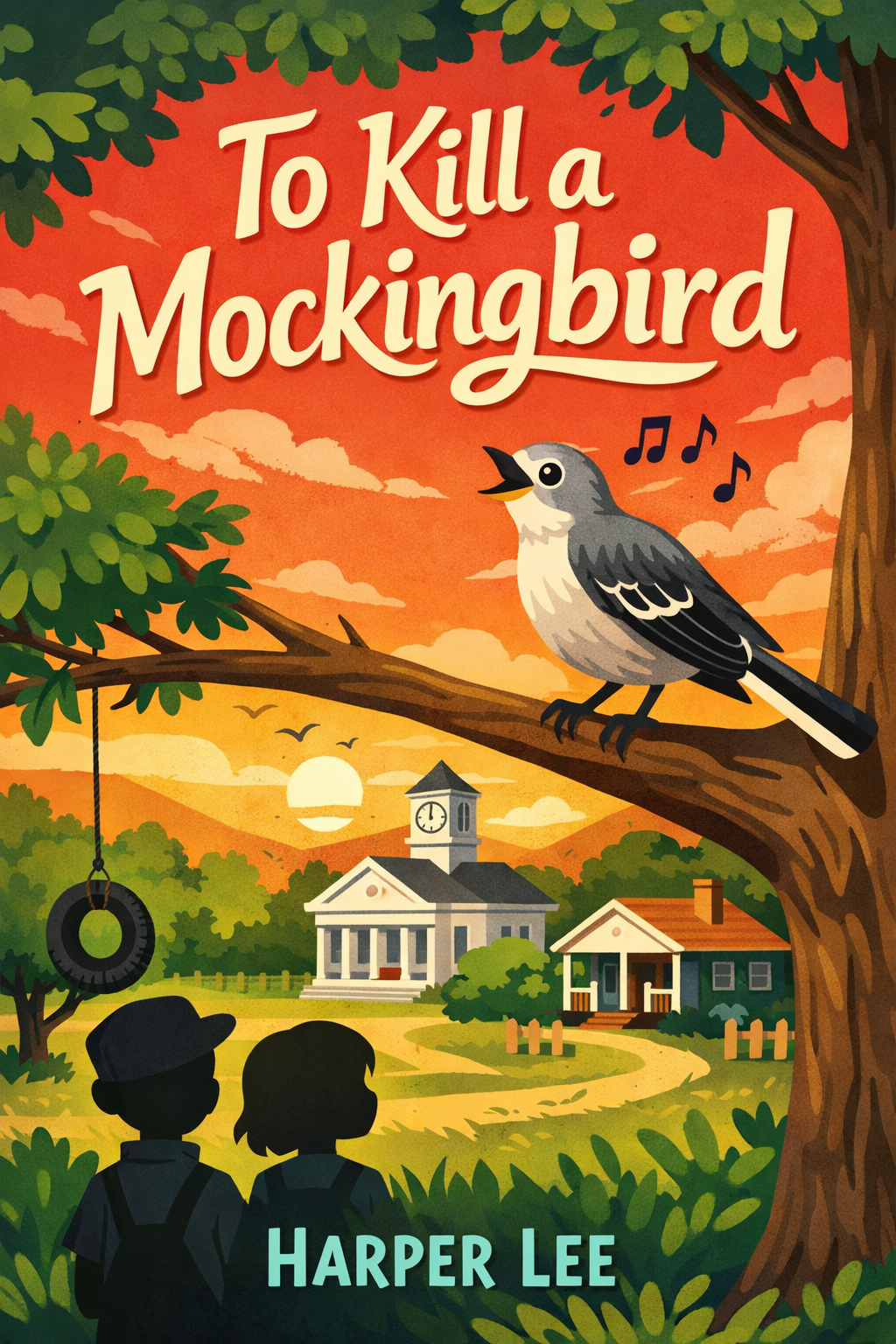
Harper Lee’s enduring novel unfolds through the observant eyes of a young girl named Scout Finch, offering a profound exploration of morality set against the sleepy, yet deeply divided, backdrop of Maycomb, Alabama during the Great Depression. The story is less about dramatic events and more about the quiet, often painful, education of its narrator as she grapples with the complexities of human nature, moving from a child’s simple understanding of good and evil to a more nuanced appreciation of justice and empathy.
The world of Maycomb is established with rich detail—a place where time seems to move slower, shaded by oak trees and burdened by an unrelenting heat. It is a town of strict social hierarchies and unspoken rules, where everyone knows their place and deviation is met with suspicion. Scout, her older brother Jem, and their summer friend Dill spend their days in imaginative play, their greatest fascination being the mysterious, reclusive neighbor Arthur “Boo” Radley, whom local gossip has transformed into a monstrous phantom. Their attempts to lure Boo out become a childhood adventure that subtly parallels the town’s larger tendency to fear what it does not understand, crafting monsters out of mere difference.
The Finch children’s relatively carefree world is irrevocably altered when their father, the principled lawyer Atticus Finch, agrees to defend Tom Robinson, a Black man falsely accused of raping a white woman, Mayella Ewell. Atticus’s decision places his family at the center of a storm of racial prejudice and social outrage. Scout first encounters this hostility at school, where classmates taunt her with epithets they barely comprehend, recycled from their parents’ dinner-table conversations. Through these bewildering experiences, Scout begins to sense the deep fissures in her community. Atticus, a man of quiet integrity, explains his position not with grand speeches to his children, but with simple, powerful logic: if he did not take this case, he could not live with himself or hold his head up in town. He defines courage as “when you know you’re licked before you begin but you begin anyway and you see it through no matter what.”
The tension in Maycomb escalates as the trial approaches, culminating in a harrowing night when Atticus faces down a lynch mob at the county jail. Unaware of the grave danger, Scout, Jem, and Dill inadvertently disrupt the mob’s intent. Scout’s innocent conversation with one of the men, Mr. Cunningham, appealing to his identity as a father and neighbor, successfully defuses the situation. This moment is a pivotal lesson for Scout, demonstrating that individual humanity can pierce through the faceless anger of a crowd.
The trial of Tom Robinson forms the dramatic heart of the narrative. Lee masterfully translates the courtroom proceedings through Scout’s perspective, making the legal arguments and social dynamics accessible and intensely personal. Atticus’s defense is brilliant and methodical, proving beyond a reasonable doubt that Tom Robinson could not have committed the crime as described by Mayella and her father, Bob Ewell. The evidence clearly suggests that Mayella, a lonely and abused woman, made advances toward Tom, and when caught by her father, fabricated the rape accusation to cover her transgression against the town’s rigid racial code. Despite the overwhelming proof of Tom’s innocence, the all-white jury returns a guilty verdict, exposing the immutable power of racial bias over truth and justice. The crushing outcome teaches Jem and Scout a bitter lesson about the imperfections of their world and the deep-seated nature of prejudice.
In the aftermath of the trial, Bob Ewell, humiliated by Atticus’s exposure of his family in court, seeks vengeance. He spits in Atticus’s face, threatens Tom Robinson’s widow, and finally, attacks Scout and Jem as they walk home on a dark Halloween night. During this assault, the children are saved by a reclusive figure who stabs Ewell and carries an injured Jem to safety. Scout finally meets the legendary Boo Radley, not as a monster, but as a shy, gentle man who had been watching over them with kindness all along. The sheriff, understanding the true nature of events, decides to report that Ewell fell on his own knife, protecting Boo from the public spectacle that would surely destroy him. Standing on the Radley porch, Scout finally understands Atticus’s earlier lesson about seeing things from another person’s point of view. She realizes that Boo was not a figure of fear, but a silent guardian, and that exposing him to public attention would be a form of cruelty—akin to killing a mockingbird, a creature that does nothing but sing its heart out for others.
The novel closes with Scout walking Boo home and then being tucked into bed by Atticus. As she drifts off, she replays the events of the year from Boo’s perspective, achieving a hard-won empathy. The story is a powerful coming-of-age tale that charts the loss of childhood innocence, but replaces it with a more mature and compassionate worldview. It argues that real courage is moral rather than physical, that justice is an ideal to be continually pursued despite frequent failures, and that empathy—the simple act of climbing into another’s skin and walking around in it—is the most powerful antidote to hatred and prejudice. Through its timeless themes and unforgettable characters, the book remains a profound meditation on conscience, community, and the enduring struggle for human dignity.