Description
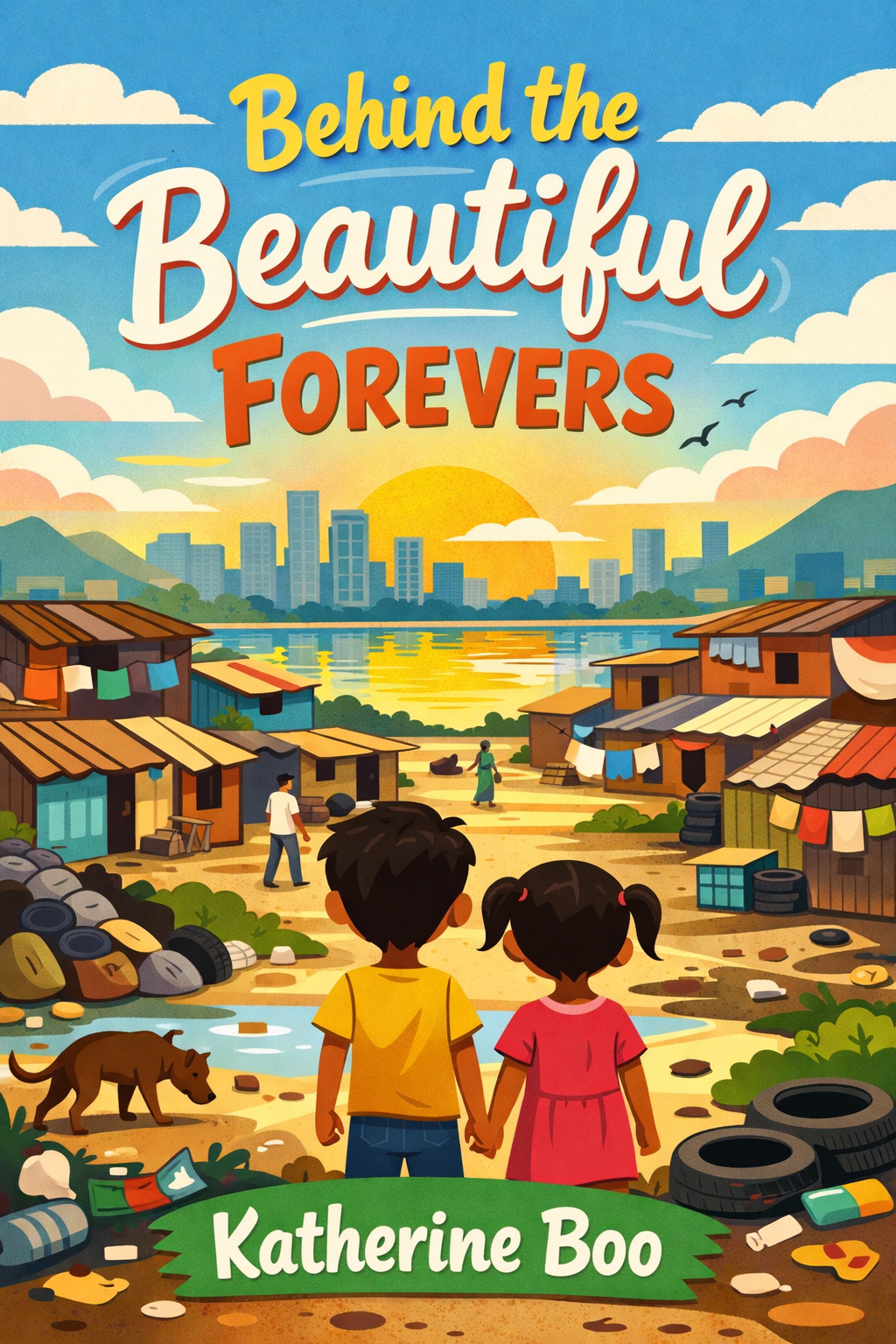
Behind the Beautiful Forevers immerses you in the dense, vibrant, and punishing world of Annawadi, a makeshift settlement clinging to the edge of Mumbai’s international airport. This is not a distant sociological study but a deeply human narrative, following the lives of residents whose dreams are perpetually shadowed by the razor-thin line between progress and ruin. The story centers on the Husain family, who have carved out a fragile foothold through the grueling work of sorting and selling recyclable garbage. Their modest aspiration—to buy a small plot of land and leave the slum—embodies the universal desire for a better life. Yet their fate becomes a harrowing case study in how easily ambition can be derailed in a place where the rules are written by the powerful and enforced through fear.
Life in Annawadi is a daily negotiation with profound adversity. The physical environment itself is hostile. A festering sewage lake, where animals drink and die, breeds disease. The air is thick with grit from a concrete plant, seeding respiratory illnesses like asthma and tuberculosis. Goats with diarrhea roam freely, and rats bite sleeping children. These unsanitary conditions are a constant, low-grade assault on health, with little recourse for treatment. For the residents, this squalor exists in surreal juxtaposition to the gleaming symbols of India’s economic boom visible just beyond the slum’s borders—the airport hotels with their promise of a different world, advertised by a wall mural that gives the book its title.
Within this landscape, a complex ecosystem of survival operates. The narrative reveals how systemic corruption is not an abstract concept but the very currency of daily existence. Every interaction with authority, from the police to the courts to the municipal offices, requires a bribe. When a tragic conflict with a troubled neighbor, Fatima, leads to her self-immolation and death, the Husain family is ensnared in a legal nightmare. They are falsely accused of her murder, and their meager savings are systematically drained to pay off police, lawyers, and even neighbors willing to sell testimony. The justice system becomes a predatory machine, designed to extract wealth from the vulnerable rather than deliver truth.
This corruption permeates every institution meant to provide safety or support. In hospitals, medicines meant to be free are stolen by staff and sold back to patients at market stalls outside. Doctors falsify records to cover up negligence. Education, often seen as a ladder out of poverty, is another compromised hope. Schools are run as profit centers by unqualified appointees, with classes held only when inspectors visit. The simple act of obtaining a voter card, a tangible piece of identity in a country that often treats slum dwellers as invisible, requires bribing officials. The democratic ideal of equal citizenship is reduced to a transaction.
For children, the dangers are particularly acute and the expectations cruelly high. A walk to school can be fatal on roads filled with distracted drivers who rarely stop if they hit someone. Injuries are met not with sympathy but with parental fury over the potential financial ruin a doctor’s bill would bring. The death of a child is routinely dismissed, investigated only to be explained away. Young workers, with no rights or protections, suffer horrific accidents and feel compelled to apologize to their employers for the inconvenience. The story of a boy who loses his hand to a shredder and begs his boss not to be troubled is a stark testament to the inverted moral universe of the slum.
Faced with such relentless pressure, the characters respond in varied, often heartbreaking ways. Some, like the politically ambitious Asha, seek to climb by mastering the corrupt system, becoming middlemen who exploit their own neighbors. Others retreat into indifference, focusing solely on their own family’s precarious hold on life. The book poses a difficult, implicit question: what would you do to survive? For some, the accumulated weight of hopelessness becomes unbearable, and suicide appears as the only escape from a life of indignity and pain.
Yet, amidst the despair, threads of resilience persist. There is fierce pride, seen in the meticulous work of a garbage sorter like Abdul Husain. There is the stubborn dignity of casting a vote, of insisting on one’s belonging to the nation. Behind the Beautiful Forevers ultimately offers no easy lessons or simple solutions. Instead, it delivers a powerful, empathetic immersion into lives of profound complexity, challenging the reader to look beyond statistics and see the individuals navigating an impossible maze of inequality. It is a story about the global world order written on a single, crowded acre, a testament to the human spirit’s capacity to endure and dream, even when every system is designed to make that dream a dangerous luxury.