Description
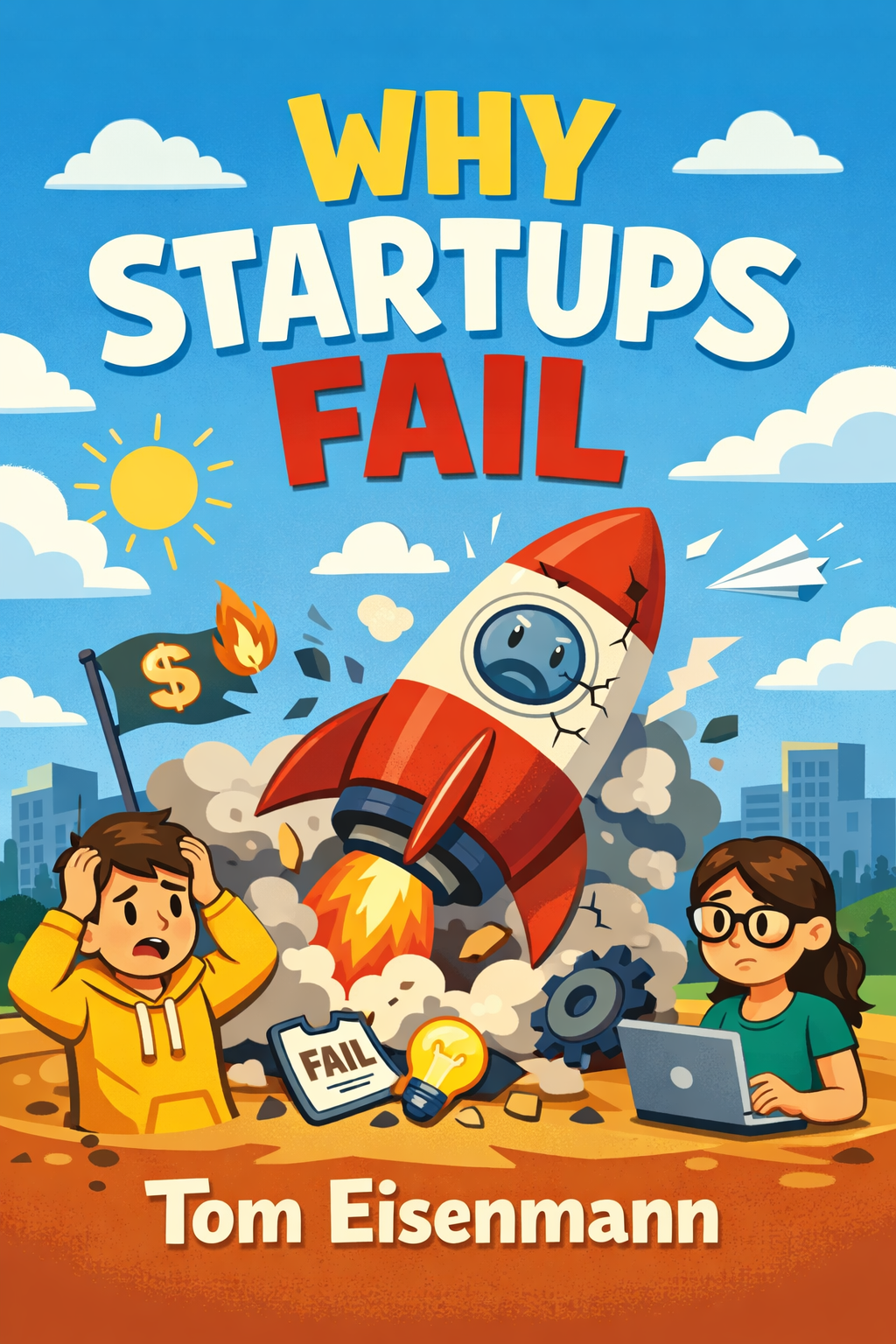
Embarking on a startup journey is an act of courage, but the seas are littered with shipwrecks. To navigate these treacherous waters, founders need more than grit and a good idea; they need a clear map to identify hidden risks before they become fatal. This exploration delves into a powerful diagnostic framework, built from extensive research, that pinpoints the core reasons promising ventures fail. It moves beyond superficial excuses to examine the fundamental interplay between a startup’s key components and the people who steer them. By understanding these failure patterns, you can critically assess your own venture’s health, spot pressure points, and correct course to significantly improve your odds of building something that lasts.
The journey begins with the realization that evaluating a startup’s health requires a structured lens. Imagine a framework built around four essential opportunities that every new venture must seize and harmonize. The first is the core idea itself—a unique solution that addresses a genuine, important customer problem in a way nothing else does. The second encompasses technology and operations: all the systems needed to build, deliver, and maintain the product or service. The third is the profit formula, a model projecting revenue against all costs, which is crucial for managing cash flow. The fourth is marketing—the strategies to communicate with and entice customers, ideally turning them into loyal advocates. These four opportunities do not exist in a vacuum. They are powered and steered by people: the founders, the team, investors, and partners. Think of the opportunities as a racehorse with immense potential; the collective of people is the jockey whose skill and synergy with the horse determine whether it wins the race.
A critical failure point emerges when founders lack deep industry knowledge. Consider the case of a fashion startup founded by two sharp, well-credentialed entrepreneurs. They had a compelling idea for better-fitting women’s business attire, conducted research, raised significant seed capital, and saw promising early sales. Yet, beneath the surface, their personal lack of expertise in garment manufacturing—in areas like pattern making, technical design, and fabric sourcing—led to a cascade of operational failures. The very promise of perfect fit was broken, leading to a return rate far higher than projected, which eviscerated margins. The venture had a great idea, marketing, and a plausible profit formula, but its operations were fundamentally unsound due to this knowledge gap. The lesson is clear: if you are building in an unfamiliar sector, you must compensate. Bring on a cofounder with the requisite experience, form an advisory partnership with an expert, or dedicate yourself to acquiring enough foundational knowledge to hire the right team and avoid fatal blind spots.
Another common trap is building a product without a profound understanding of the customer. This often manifests as a “false start,” where founders, brimming with enthusiasm, rush to build a minimal viable product before doing the necessary homework. One entrepreneur had an idea to use behavioral data from web browsing to match compatible singles, licensing this software to dating sites. He was so eager to engineer the solution that he skipped rigorous market validation. He assumed customers would pay a premium for algorithmic matching and overlooked significant privacy concerns. In reality, people choosing romantic partners rely on intuition and personal attraction in ways that don’t align with algorithmic recommendations. Had he first surveyed the actual users of dating platforms, he would have discovered the flawed assumptions at the heart of his idea. The impulse to build is powerful, but creating an MVP is a late-stage step, not the first. It must be preceded by a deep, empathetic investigation into everything about your intended customer—their desires, behaviors, and pain points.
Even with early traction, misinterpretation of that success can be deadly. A pet-care service launched in a new apartment building and was an instant hit, used by a large majority of pet owners there. This explosive early adoption led to rapid expansion into new cities. However, this growth was built on a “false positive.” The founders failed to analyze why that initial group was so enthusiastic. The circumstances were unique: the building was new, so residents had no existing pet-care relationships, and a large contingent were well-paid film crew members with pets and no time. This was not a representative sample of the mainstream market. When the service expanded, the expected adoption rates never materialized. The rapid scaling then strained operations, team, and partner relationships, but the root cause was the foundational misreading of early signals. To avoid this, you must ruthlessly analyze your early adopters. Ask if they represent the broader market or if their enthusiasm stems from exceptional, non-repeatable conditions. Scaling based on a false positive is a direct path to running out of cash.
Scaling too quickly, often fueled by abundant venture capital, is a perilous path in itself. The pressure to grow can lead founders to expand geographically or increase marketing spend before the underlying business model is proven and operations are robust. This “premature scaling” forces a startup to simultaneously tackle all the challenges of a complex business—refining the product, building a management team, establishing processes, and cultivating a culture—while also trying to grow at breakneck speed. It is like constructing a new airplane while already in flight and attempting a transatlantic journey. Systems break, customer experience suffers, cash burns at an alarming rate, and the company collapses under its own weight. Sustainable growth requires proving a repeatable, profitable model in one domain before injecting capital to replicate it. Growth should be an outcome of a healthy system, not a substitute for one.
A related and fatal weakness is the absence of the right senior management team. Founders are often brilliant visionaries and operators in the early days, but the skills needed to guide a company through scaling are different. A startup transitioning to a growth phase needs experienced executives in areas like finance, marketing, and operations who can implement structure and strategy. Without this upgrade, the company becomes chaotic, misses critical milestones, and fails to professionalize its operations. Founders must have the self-awareness to recognize their own limitations and the urgency to recruit seasoned leaders who complement their skills and can build the infrastructure for the next stage.
Some ventures are doomed by the sheer scale of their initial ambition. These “moonshot” startups attempt to conquer multiple challenges at once—creating new technology, educating a market, building a complex supply chain, and fighting entrenched competitors. The coordination required is immense, and the margin for error is vanishingly small. While such ventures can change the world if they succeed, the likelihood of failure is extraordinarily high due to the compounded risk. A more prudent path is to start with a “single-player mode”—solving one core problem exceptionally well for one specific customer group—before attempting to build a multi-sided platform or revolutionize an entire industry.
Failure, when it comes, is not always the end. Recovery is possible, though it is a painful and arduous process. It requires founders to confront reality without denial, communicate transparently with stakeholders, and make brutally difficult decisions, often involving layoffs and drastic cost-cutting. The emotional toll is heavy, but those who navigate it with integrity can preserve key relationships and their own reputations. The lessons learned from failure are invaluable, forging resilience and providing hard-won wisdom that can inform future success. The goal of this framework is not to guarantee a path without setbacks but to provide the tools to identify weaknesses early, so you can adjust, adapt, and dramatically increase your chances of being among the ventures that ultimately thrive.