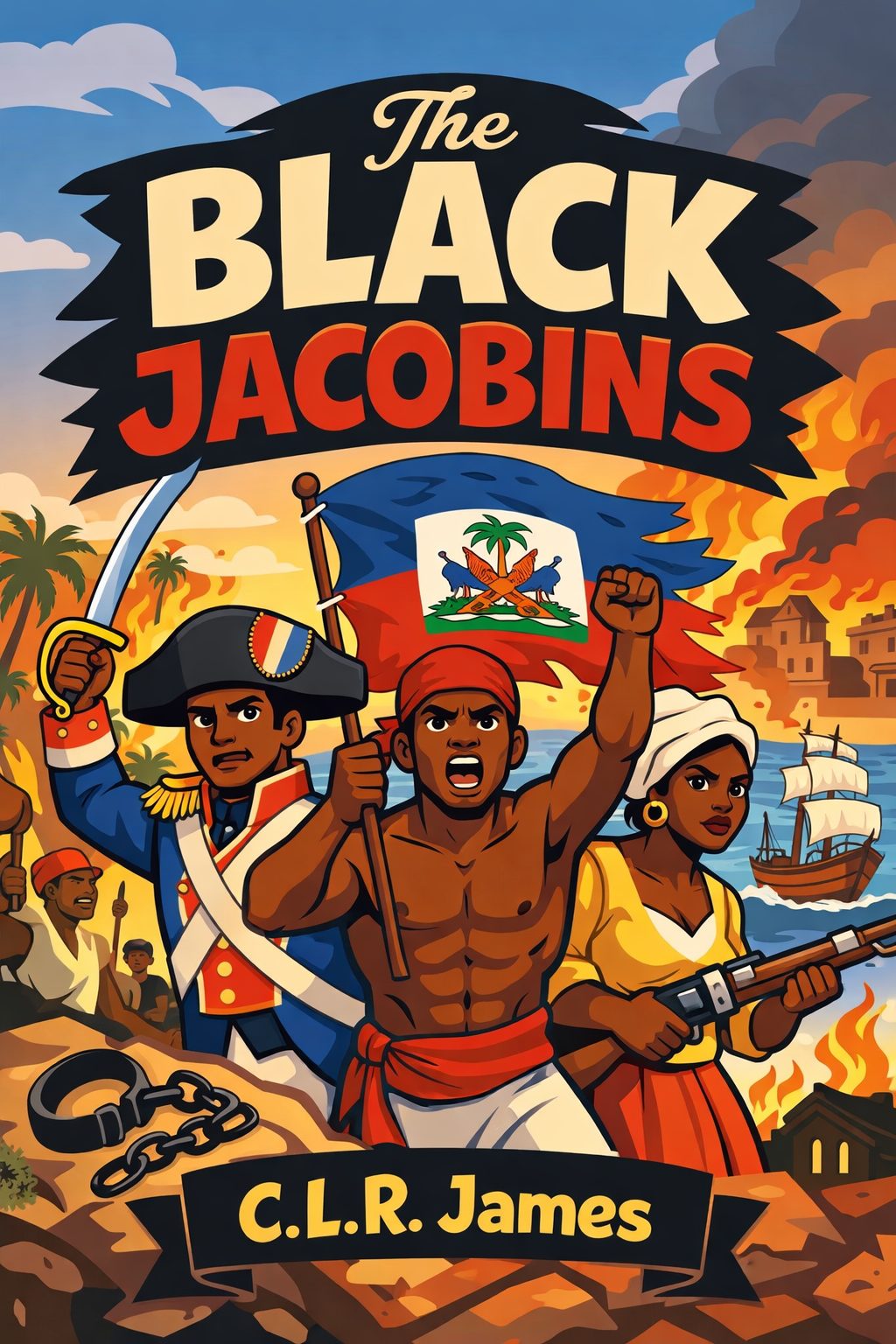
Description
The island of Saint-Domingue, the crown jewel of the French colonial empire in the late 18th century, was a place of grotesque contrasts. Its soil, incredibly fertile, produced mountains of sugar, coffee, and indigo that fueled European luxury and made plantation owners staggeringly wealthy. This prosperity, however, was built on a foundation of unimaginable brutality: the systematic enslavement of hundreds of thousands of Africans. Life for the enslaved was a relentless cycle of exhausting labor under a tropical sun, punctuated by whippings, mutilations, and executions designed to crush the human spirit. This vast enslaved majority formed the bottom layer of a complex and tense social pyramid. Above them were the *grands blancs*, the wealthy white planters and merchants; the *petits blancs*, poorer whites who clung to racial superiority as their social capital; and a sizable class of free people of color, often prosperous and educated but denied basic rights and dignity by a rigid racial code.
Resistance to this dehumanizing system was constant, from individual acts of defiance to the formation of maroon communities in the mountains. Yet, a successful, large-scale revolution seemed impossible without two crucial elements: a seismic shift in the wider world and a leader capable of harnessing it. That shift arrived with the thunderclap of the French Revolution in 1789. The ideals of Liberty, Equality, and Fraternity echoed across the Atlantic, electrifying the colony’s fraught social landscape. The white colonists initially used these ideas to challenge royal authority, but they desperately tried to limit their application. The free people of color, however, heard the promise of equality and rose in revolt. Though their rebellion was crushed, it revealed the cracks in the colonial edifice. The enslaved population, listening intently, understood that the revolutionary language applied most fundamentally to them.
Into this volatile moment stepped a man who would become one of history’s most brilliant revolutionary leaders: Toussaint L’Ouverture. Born into slavery, his relative privilege allowed him an education and a role as a steward, skills that later proved invaluable. He was a keen student of military strategy and human nature, possessing a formidable intellect, unwavering discipline, and a profound understanding of both the enslaved people he led and the European powers he had to outmaneuver. When the great slave insurrection finally erupted in 1791, with its initial fury and horrifying violence, Toussaint initially observed, then organized. He joined the rebellion, bringing order, strategy, and a clear political vision that elevated the uprising from a chaotic revolt into a revolutionary war.
Toussaint’s genius lay in his multifaceted strategy. He forged a disciplined army from the ranks of formerly enslaved people, defeating not only the local militias and French forces but also invading Spanish and British armies who sought to capitalize on the chaos. He was a masterful diplomat, constantly aligning and realigning with various European powers to secure his primary, non-negotiable goal: the permanent abolition of slavery. By 1801, he was the de facto ruler of Saint-Domingue, governing a society in transition. He sought to rebuild the shattered plantation economy, not for the profit of whites, but to prove the viability of a free black state, using a system of paid labor to restore productivity. His constitution affirmed freedom for all while maintaining a strict, authoritarian control he believed necessary for survival.
This vision, however, contained the seeds of its own challenge. His insistence on a multi-racial society and his use of some former white planters in administration alienated more radical black lieutenants. More fatally, his rise threatened the ambitions of Napoleon Bonaparte, who had come to power in France. Napoleon, dreaming of a renewed American empire, saw the independent black ruler as an affront and slavery as a profitable institution to be restored. In 1802, he sent a massive expeditionary force to Saint-Domingue under the guise of alliance, with secret orders to strip Toussaint of power and re-enslave the population.
Toussaint, after initial resistance, agreed to negotiate. It was a trap. He was seized under a flag of truce, bound, and shipped to a frigid prison cell in the French Jura mountains, where he died of neglect and pneumonia in 1803. This betrayal, however, did not end the revolution; it ignited its final, furious phase. The revelation of French intentions to restore slavery unified the population. Under Toussaint’s former generals, Jean-Jacques Dessalines and Henri Christophe, the revolutionary army fought with renewed desperation. They were aided by yellow fever, which decimated the European troops. By the end of 1803, the French were defeated. On January 1, 1804, Dessalines declared the independence of Saint-Domingue, giving it the old indigenous name of Haiti. The world’s first black republic was born, forged by the revolutionary ideals of France and the strategic genius of Toussaint L’Ouverture, but ultimately achieved through the unbreakable will of a people who refused to be enslaved again. The Haitian Revolution stands as a monumental testament to the universal desire for freedom and a shattering blow to the institution of Atlantic slavery.