Description
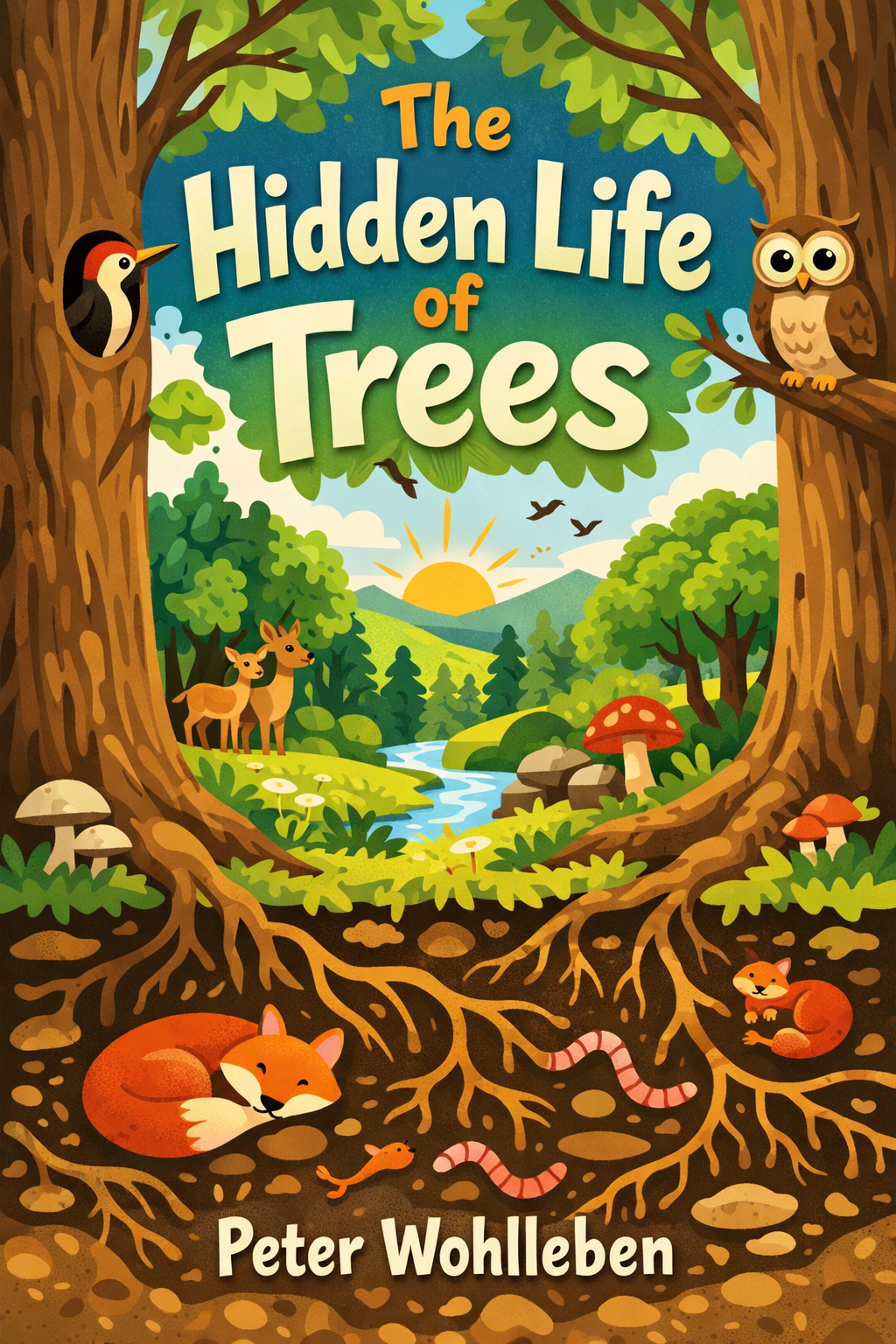
In “The Hidden Life of Trees,” Peter Wohlleben invites us into a secret world, one that exists in slow motion beneath our feet and above our heads. Drawing on decades of observation and the latest scientific research, he dismantles the common perception of trees as solitary, static fixtures of the landscape. Instead, he presents a forest as a vibrant, interconnected community, more analogous to a human society or even a family than a collection of inert objects. Trees, he reveals, are social beings. They communicate, learn, remember, support their offspring, and care for their sick and elderly. This perspective shift is not merely poetic but rooted in a profound understanding of arboreal biology, urging us to see the woods with new eyes and a deeper respect.
The book begins by establishing the indispensable role trees play in the very fabric of our planet’s life support systems. They are far more than the “lungs of the world,” cleaning our air. Wohlleben explains how forests act as massive water pumps, drawing moisture from coastal rains and releasing it inland to create new clouds, effectively irrigating continents. Their relationship with the soil is equally dynamic; trees are both creators and custodians of the earth, with their fallen leaves and decaying wood forming the rich humus that sustains countless other life forms. This foundational understanding sets the stage for the more intimate revelations about tree behavior that follow.
The life of a tree is a story of resilience and communal effort. From the outset, the odds are stacked against them. A single tree, over its centuries-long lifespan, may see only one of its thousands of seeds reach maturity. Young saplings face a gauntlet of dangers—from being eaten or trampled to succumbing to drought or storm. Those that survive do not do so alone. Wohlleben paints a touching picture of the “nursery,” where parent trees nurture their young. Mature trees use their vast canopy to shade delicate seedlings, protecting them from harsh sun, while their root systems share water and nutrients. This support system allows the young trees to grow slowly and soundly, developing strong, dense wood. It is a patient, long-term investment in the future of the forest.
Central to this community is a sophisticated language. Trees communicate through a “wood wide web,” a subterranean network of fungal filaments that connects root systems. Through this biological internet, trees exchange chemical signals about drought, disease, or insect attacks. When one tree is besieged by pests, it can send a warning to its neighbors, who then preemptively pump defensive toxins into their leaves. They also communicate via airborne scent messages. An elm under assault by caterpillars, for instance, releases a pheromone that summons a specific type of wasp, a natural predator that lays its eggs in the caterpillars, neutralizing the threat. This demonstrates not just communication, but a form of strategic alliance with other species.
Wohlleben further challenges us by attributing personality and memory to trees. He observes individual trees in the same grove, subjected to identical conditions, making different choices—such as when to shed their leaves in autumn. One might be cautious, shedding early to avoid frost damage to its foliage, while a bolder neighbor holds on longer to maximize photosynthesis. These decisions, he argues, are informed by experience. A tree that suffers a frostbite injury one year will alter its behavior the next. While they lack a brain, the sensitive tips of their roots appear to store and process information, allowing them to learn and adapt over their long lives.
This interconnected existence necessitates cooperation, but also involves hardship. Trees feel pain, in their own way. When injured, they send electrical signals and release distress chemicals. They have developed a vast arsenal of defenses, from producing bitter tannins to ward off browsers to deliberately making their wood brittle in a storm to sacrifice a limb and save the trunk. They form symbiotic partnerships, most famously with fungi, trading precious sugars from photosynthesis for minerals and water gathered by the fungal network from the soil. This relationship is so vital that some seedlings will fail to thrive if not connected to this fungal community.
Ultimately, Wohlleben’s work is a plea for a revolution in how we treat forests. Modern forestry, with its monoculture plantations and short harvest cycles, creates what he calls “tree deserts”—places where trees, stripped of their social networks, live stressful, isolated, and shortened lives. He advocates for practices that allow forests to grow naturally and old, preserving their complex social structures. “The Hidden Life of Trees” is more than a collection of fascinating facts; it is a narrative that re-enchants the natural world. It argues that trees are not resources but beings with their own rhythms, relationships, and rights. To walk in the woods after reading it is to walk among neighbors, elders, and families, in a ancient, silent, and profoundly intelligent community.