Description
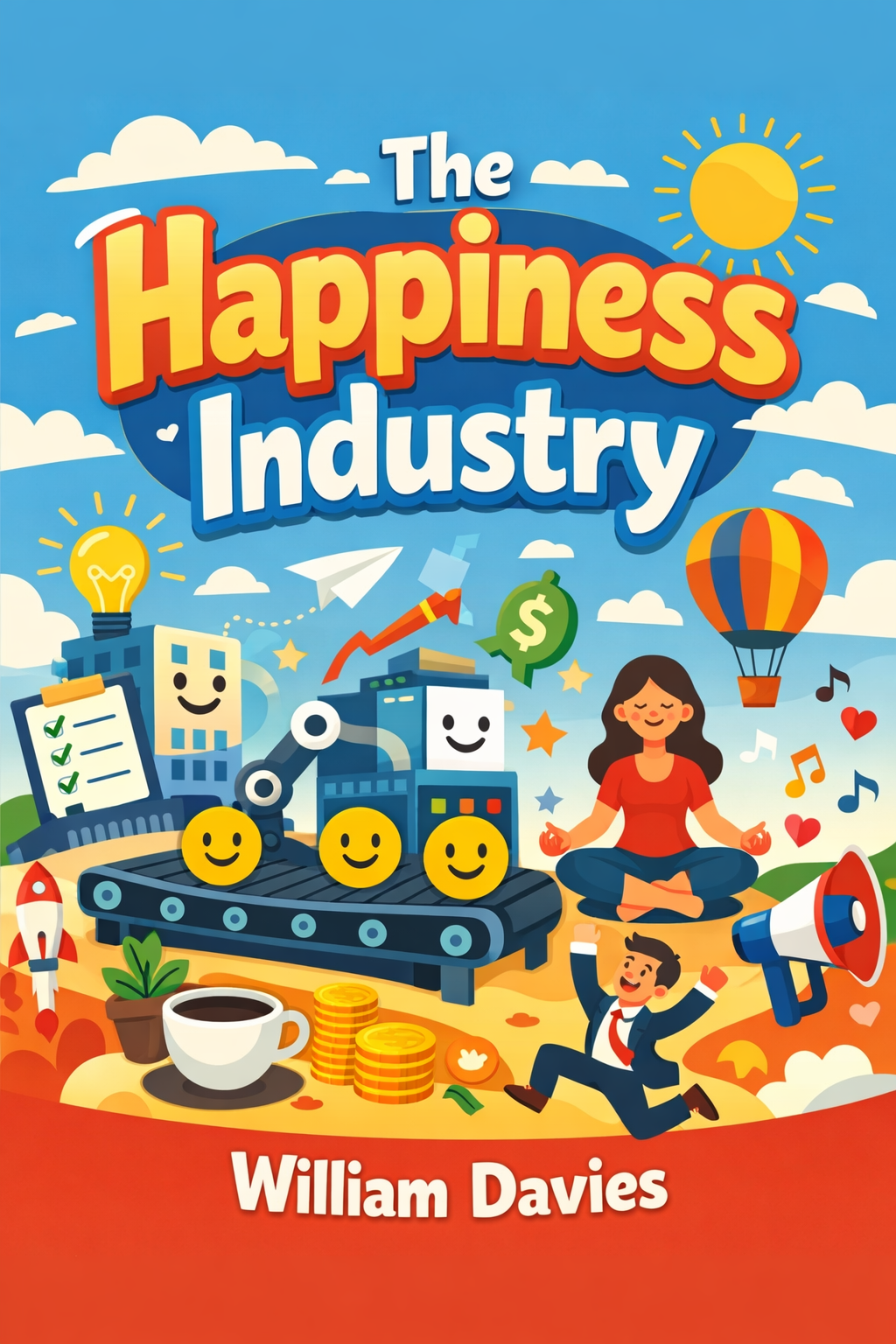
The pursuit of happiness, a deeply personal quest, has been systematically transformed into a quantifiable science and a powerful tool for economic and social control. This book explores how our most intimate feelings have been co-opted by a vast industry spanning philosophy, neuroscience, economics, and marketing. It reveals that the question “Are you happy?” is no longer just a private reflection but a point of intense interest for governments, employers, and advertisers, all seeking to measure, manage, and monetize our emotional states.
This journey begins with the philosophical roots of this transformation. The utilitarian thinker Jeremy Bentham proposed that happiness could be objectively measured, suggesting that the intensity of pleasure could be gauged through physical metrics like pulse rate and economic metrics like money spent. This idea laid the groundwork for viewing happiness not as a subjective experience but as a utility to be maximized. Governments adopted this logic, structuring systems of punishment and reward to steer society toward greater collective happiness, while economists began to treat financial expenditure as a direct proxy for personal satisfaction.
This link between money and happiness was aggressively pursued and promoted. Neuroscientific research appeared to bolster the claim, identifying specific brain regions, like the nucleus accumbens, that light up with dopamine-driven pleasure both in anticipation of a reward and during a purchase. This created a powerful narrative for capitalist systems: spending money is not just a transaction but a neurological event synonymous with happiness. The implication is that our very biology can be aligned with market forces, turning consumerism into a physiological imperative.
Armed with these insights, modern marketing has evolved into a sophisticated form of behavioral manipulation. Advertisers have moved beyond selling product features to selling emotional experiences and anticipatory joy. They understand that the brain often derives more pleasure from craving an object than from owning it. By tapping into deep-seated emotions—such as a mother’s desire for purity or an individual’s yearning for social acceptance—campaigns are engineered to trigger specific psychological responses that lead to a sale. The digital age has supercharged this process, allowing for the continuous, subtle tracking of consumer behavior online, making influence more precise and pervasive than ever.
The interest in our happiness extends beyond the marketplace and into the workplace. For businesses, an unhappy employee is an unproductive one. Studies quantify the staggering economic costs of worker disengagement, burnout, and absenteeism. Consequently, corporate wellness programs, mindfulness trainers, and even “happiness consultants” have become common fixtures, not merely as benevolent perks but as strategic investments designed to optimize human capital for greater output. The goal is a healthier, more cheerful, and thus more profitable workforce.
Perhaps the most potent marketing strategies today exploit our fundamental need for social connection. Companies strive to mimic genuine relationships through tactics like corporate giving and heartfelt “thank you” campaigns, building a facade of friendship with consumers. More insidiously, they engineer “friendvertising,” creating emotionally resonant, shareable content that turns social media users into unwitting brand advocates. When a friend shares an uplifting ad about real beauty or a funny viral clip, they are performing a powerful, trusted endorsement, blurring the line between social sharing and commercial promotion.
Our hyper-connected world has created the ultimate tool for this happiness industry: massive, continuous data surveillance. Every online click, search, like, and purchase generates a digital footprint that is collected and analyzed. This data is a goldmine for predicting behavior, shaping desires, and managing moods. While we may scroll and share freely, we are simultaneously feeding a system that seeks to quantify our happiness in real-time, often without our explicit consent or awareness. The risk is a society where our inner lives are no longer our own, but a curated dataset used to nudge us toward economically productive and consumptive behaviors, redefining happiness itself as a commodity to be tracked and traded.