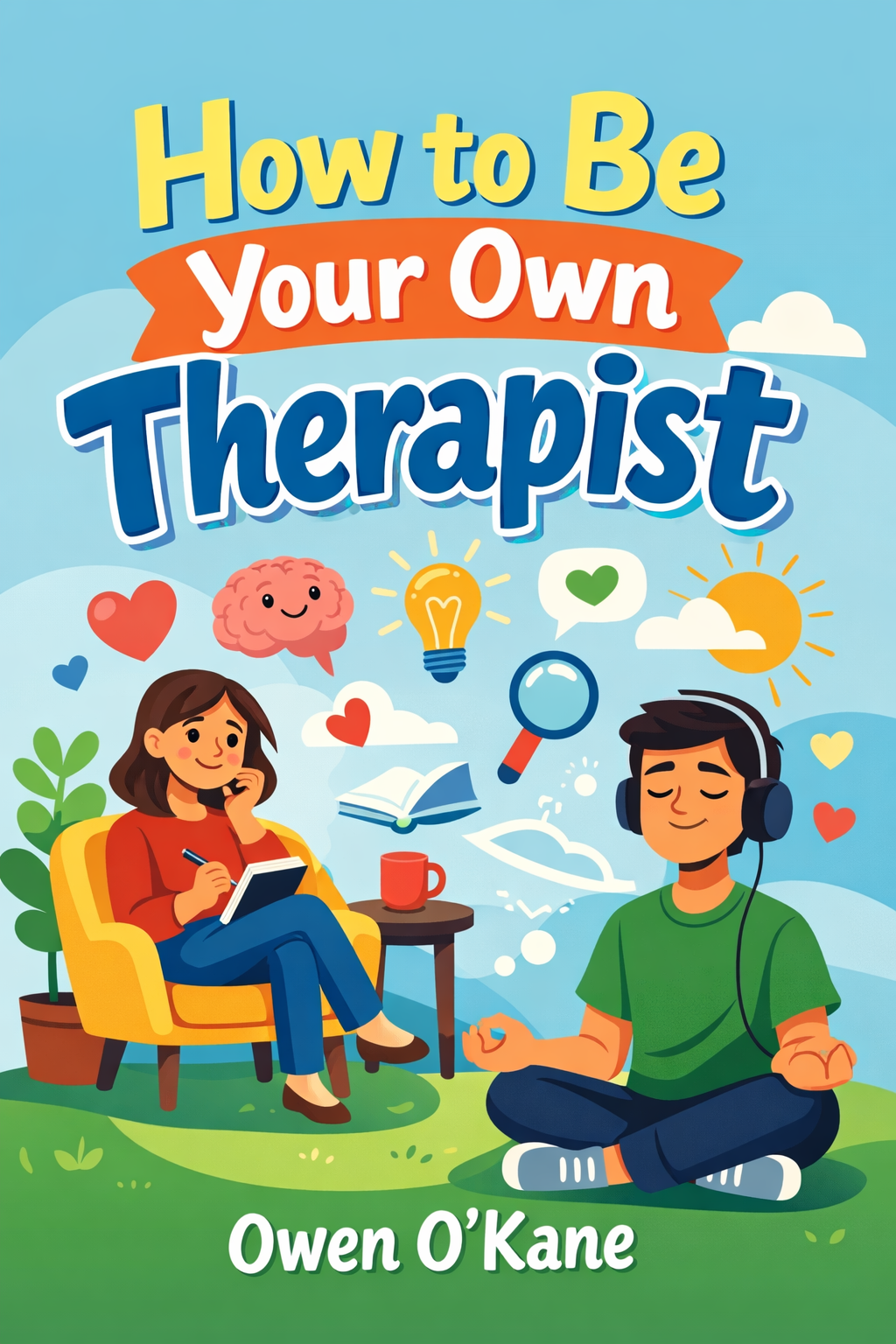
Description
The journey toward greater emotional wellbeing often feels like a distant goal, reserved for those who can access professional guidance. This book dismantles that notion, presenting a compassionate and structured approach to becoming your own source of insight and stability. At its heart is a powerful premise: the core practices of therapeutic understanding are not mysterious secrets but learnable skills. By dedicating just ten minutes each day to a trio of intentional routines, you can cultivate a profound connection with your inner world, untangle unhelpful patterns from the past, and navigate daily life with increased clarity and calm.
The foundation of this work is the recognition that we all operate from a personal story, a narrative shaped by our earliest experiences. As children, we develop brilliant strategies to cope with our environment and get our needs met. These strategies, however, often harden into invisible rules and assumptions that we carry unquestioned into adulthood, where they may no longer serve us and can become sources of suffering. The first step of change is simply learning to see these patterns. The book encourages a gentle, investigative curiosity about your own life story—the significant events, the recurring struggles, and the silent beliefs you hold about yourself and the world. This isn’t about blaming the past but about illuminating the present, understanding why you react, feel, and think the way you do.
This understanding is brought to life through a simple, three-part daily practice designed to fit seamlessly into your life. The first segment, a four-minute morning routine, acts as an internal weather check. Before rushing into the day, you pause to quietly assess your emotional state, physical sensations, and the quality of your thoughts. This act of non-judgmental noticing is a radical departure from autopilot. You then ask a simple, powerful question: “What do I need today?” This dialogue with yourself can reveal deep yearnings for connection, peace, or courage. The routine concludes by planting seeds of gratitude and setting a gentle intention for the day, followed by a brief visualization to ground yourself in a felt sense of safety. This prepares you to face the day’s external demands from a place of internal awareness.
Life, of course, is rarely a smooth ride. The second practice is a three-minute midday anchor, designed for the moments when stress accumulates or old patterns get triggered. Here, you briefly reflect on the morning’s challenges, not to dwell on them, but to identify triggers and consider if a different, more helpful narrative might be possible. You consciously acknowledge what you’ve already done well, reinforcing positive actions, and then you perform a subtle but transformative act: directing kindness outward. A smile, a thoughtful wish for a stranger, a small gesture—these acts break the cycle of self-absorption that often accompanies stress, lifting your mood and reminding you of your connection to others.
As the day closes, the mind can become a busy archive of unresolved thoughts. The final three-minute evening practice provides a structured way to file the day’s events and find closure. Through concise journaling prompted by four simple headings, you move from the raw facts of an event to your interpretation of it, the emotional consequences it sparked, and finally, a conscious step to release it. This process doesn’t solve problems magically, but it gets them out of your swirling mind and onto the page, symbolically putting them to rest. It creates a psychological boundary between the day’s trials and your rest, allowing for genuine mental reprieve.
Together, these practices form a complete cycle of self-care: a morning of preparation, a midday of stabilization, and an evening of release. This book is not a replacement for professional therapy in times of crisis, but rather a guide to building everyday emotional fitness. It argues that wellbeing is not a destination but a daily practice of turning inward with kindness, questioning automatic thoughts, and choosing intentional responses. By committing to this brief daily dialogue with yourself, you build the resilience to weather internal storms and the clarity to appreciate moments of calm, ultimately becoming the most understanding and supportive companion you could ever have—yourself.