Description
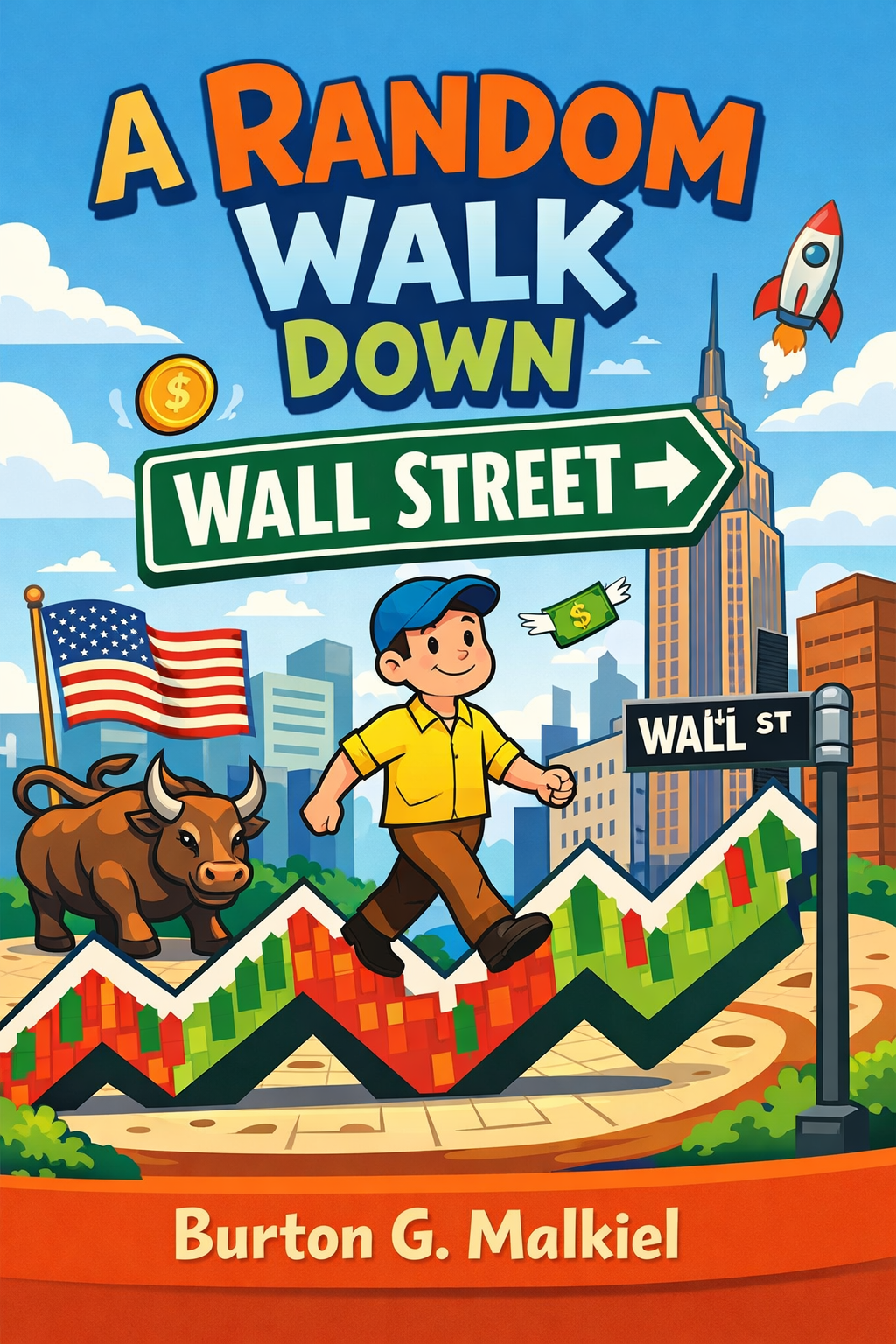
At the heart of Burton Malkiel’s influential work is a powerful and counterintuitive idea: the stock market is fundamentally unpredictable. The book’s title metaphor, a “random walk,” suggests that future steps—or stock price movements—are impossible to predict based on past steps. This challenges the very foundation of much Wall Street activity, where armies of analysts, chartists, and fund managers claim to discern patterns and forecast trends. Malkiel systematically argues that these efforts, while sophisticated and confident, are largely an exercise in illusion. The market’s randomness is not a sign of chaos but of efficiency; it reflects the fact that all publicly available information is almost instantly incorporated into a stock’s current price. Therefore, tomorrow’s news, which is by definition unknown today, is what will drive tomorrow’s price change, making it random relative to today’s knowledge.
The book guides the reader through a historical tour of market manias and speculative bubbles, from the infamous Dutch tulip craze to the dot-com frenzy, illustrating how emotion and crowd psychology often override rational valuation. It then meticulously dismantles the two primary schools of thought that claim to predict markets: technical analysis and fundamental analysis. Technical analysts, or chartists, study past price movements and trading volume to forecast future directions. Malkiel compares their charts to Rorschach inkblots, where practitioners see patterns of their own making. He demonstrates through empirical evidence that complex trading rules based on historical patterns fail to consistently outperform the simple strategy of buying and holding a broad market index.
Similarly, while acknowledging the intellectual rigor of fundamental analysis—which involves evaluating a company’s financial health, management, and growth prospects—Malkiel questions its ability to grant a permanent edge. He points out that the intense competition among thousands of highly skilled analysts means any “undervalued” stock is discovered and bid up to its fair price almost immediately. Furthermore, unforeseen events, creative accounting, and sheer luck make precise long-term earnings forecasts, the bedrock of fundamental valuation, notoriously unreliable. The performance records of professionally managed mutual funds, which rarely beat the market averages over long periods, serve as strong evidence for this thesis.
If the market is a random walk and beating it is a loser’s game for most, what is an investor to do? Malkiel’s answer is both liberating and practical. He advocates for a strategy of consistent, long-term investment in a diversified portfolio of assets. The cornerstone of this approach is the index fund—a low-cost vehicle that simply buys all the stocks in a broad market benchmark, like the S&P 500, guaranteeing the investor the market’s average return. Since most active managers fail to beat that average after fees, the index fund investor is likely to finish ahead of the majority of professionals.
The book extends this philosophy into a life-cycle guide to investing, advising individuals on how to allocate their assets across stocks, bonds, and other securities based on their age, risk tolerance, and financial goals. It emphasizes the critical importance of minimizing costs, taxes, and emotional decisions. The final message is one of empowering simplicity. By accepting the randomness of the market, investors can free themselves from the anxiety of chasing hot tips or timing trends. Instead, they can build wealth steadily over decades through regular contributions to a sensibly diversified, low-maintenance portfolio, harnessing the relentless upward trend of corporate earnings and economic growth that underlies the market’s short-term randomness. In doing so, they turn Wall Street’s unpredictable walk into a steady and reliable journey toward financial security.