Description
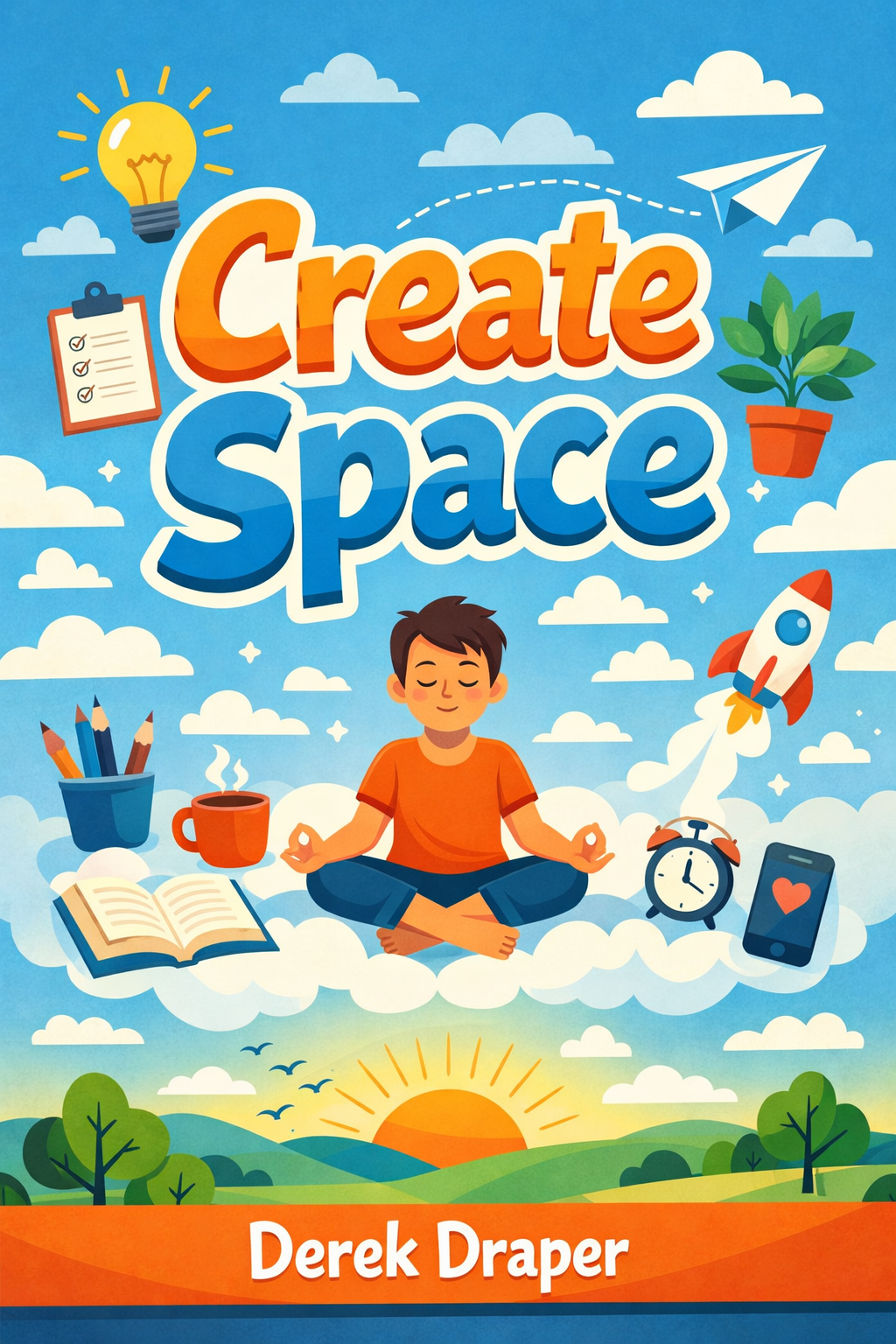
We inhabit a unique moment in history. For millennia, the human drive has been to explore, expand, and fill the vast spaces around us. Today, however, we face the opposite challenge: we are overcrowded and overscheduled, desperately needing to carve out room for relief and growth. This fundamental shift underscores the central premise of *Create Space*, which argues that intentional space is not a luxury but a prerequisite for development. True growth, whether personal or professional, cannot be forced into the cracks of a packed schedule; it must be deliberately cultivated. The book organizes this vital pursuit into four interconnected domains: creating space to think, to connect, to do, and to be. Mastering these areas unlocks profound improvements in self-awareness, relationships, productivity, and overall purpose.
The journey begins with space to think, which is rooted in reflection. Self-awareness is the cornerstone of excellence in any field, allowing you to leverage your strengths and navigate around your weaknesses. The path to this knowledge is through honest, regular reflection—a meaningful conversation with oneself. This practice, celebrated since ancient times, sharpens decision-making and reduces errors by encouraging analysis before and after action. However, deep reflection requires deliberate cultivation of four types of space: temporal (time), physical (a location), relational (a trusted person to brainstorm with), and psychic (an openness to new ideas). Creating this space demands significant effort in our distraction-filled world, and the process itself can be uncomfortable, often forcing us to confront past mistakes or unflattering truths. Yet the rewards are substantial, with studies showing that even brief, deliberate reflection—like during a commute—can increase happiness and effectiveness.
Closely tied to thinking is creating space for learning, which requires adopting a growth mindset. This is the belief that our abilities are not fixed but can be developed through dedication and learning. Neuroscience confirms this, showing our brains possess lifelong neuroplasticity. Embracing this mindset is particularly powerful for overcoming common fears, such as the fear of failure. By reframing failure as an essential learning opportunity, we disarm its paralyzing power. The book illustrates this through the story of Rachel, a client whose catastrophic fear of failure stemmed from a deep-seated belief that any mistake would lead to ruin. Only by creating a safe psychological space to explore the origin of this belief was she able to replace it with a healthier perspective, seeing that asking for help is a strength, not a failure. This shift, like all meaningful learning, requires dedicated time, a supportive environment, and often, the guidance of a mentor.
The second critical domain is creating space to connect, and this foundation must be built within. Before forging strong bonds with others, you must connect with yourself by understanding your emotional landscape. Our emotions powerfully influence our actions, but by routinely checking in—perhaps by naming a feeling and rating its intensity, or scanning for physical sensations like tension—we regain control. This practice builds emotional intelligence, the key to managing oneself and navigating relationships empathetically. This inward space also allows you to identify your Core Pathogenic Beliefs (CPBs): the often-unconscious, self-limiting convictions formed from past experiences that hold your career and life in a rut. These can be beliefs like “I am unworthy of love” or “Everyone is untrustworthy.” Uncovering and addressing these CPBs is challenging but liberating work that requires a compassionate, reflective space.
With a stronger internal connection, you can then create space to connect with others through sharing and relating. A team that lacks psychological safety—where people feel they must always be nice and avoid conflict—will stifle innovation and hide problems until they fester. The book shares the transformation of a team that learned to practice radical transparency, where concerns and mistakes could be shared without fear. This created a vibrant, safe environment where risk-taking and learning from failure became possible, dramatically improving performance. To strengthen your web of relationships, a practical tool is the stakeholder map: placing yourself at the center and mapping out all key people in your life, then rating the quality of each connection. This visual exercise highlights which relationships need attention and nurturing, as the quality of our connections is directly linked to our well-being, stress levels, and success.
The third domain is creating space to do, which is the art of focused execution. This begins with planning, not as a rigid constraint, but as a flexible framework that actually enhances adaptability. Effective planning involves distinguishing between the important and the merely urgent, and blocking out time for deep, concentrated work. The core of productive doing is the relentless elimination of distractions and the disciplined prioritization of tasks that align with your key goals. It’s about doing fewer things with greater focus. This leads directly to the principle of empowerment and delegation. True leadership is not about having all the answers; it is about creating the space for others to contribute their talents. A good leader sets clear direction and then steps back, trusting their team to execute, which fosters ownership and unlocks collective potential.
Finally, the book explores the most profound space: space to be. This is the antidote to the constant pressure of doing and connecting. It is the intentional pause to reconnect with your core purpose, values, and sense of self beyond your job title. It’s in this space that you restore balance and find the resilience to navigate challenges. A powerful, if unconventional, method to access this is to reflect on your own mortality. Contemplating the finite nature of life can strip away trivial concerns and sharply clarify what truly matters to you, realigning your daily actions with your deepest purpose.
The journey of creating space culminates in the wisdom of discernment. New opportunities will always arise, but each comes with a cost—your time, energy, and focus. Learning to say “no” is therefore essential to protect the spaces you’ve worked so hard to create. A practical strategy is the “No. 1 Meeting,” a regular check-in with yourself to ensure your primary goal or value remains your central focus, and that your actions are consistently aligned with it. Ultimately, *Create Space* is a guide to designing a life and career that is not just productive, but sustainable and fulfilling. By systematically building room to think, connect, do, and be, you lay the groundwork for continuous growth, stronger relationships, and a profound sense of purposeful direction.