Description
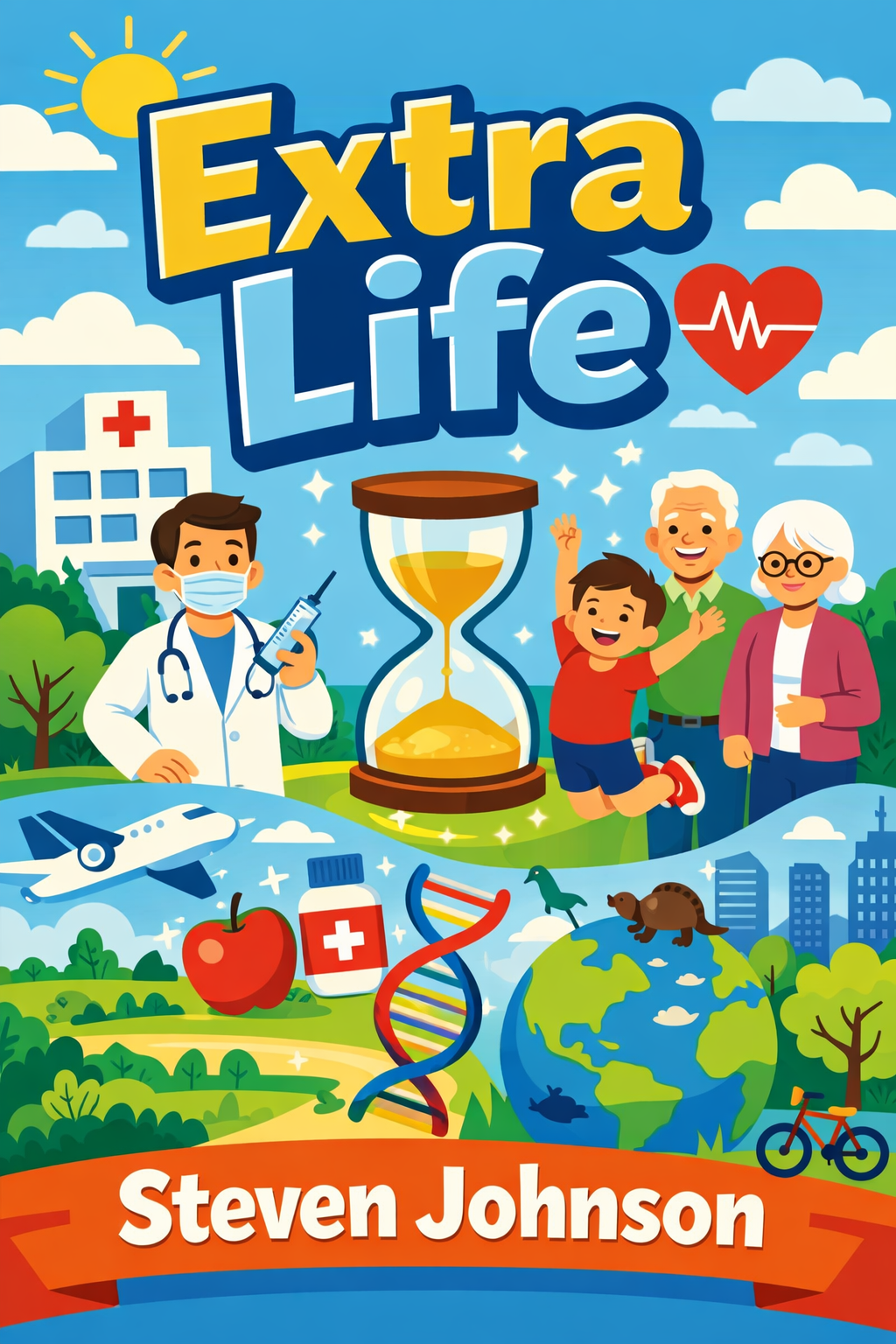
The twentieth century, often remembered for its conflicts, also hosted a silent, profound revolution: the average human life span doubled. This transformation wasn’t the work of a single genius or a sudden miracle, but a hard-won series of victories over invisible threats and entrenched practices. It is a story of overlooked pioneers, stubborn advocacy, and surprising collaborations that reshaped our daily existence. From the food we consume to the medicines we trust and the vehicles we drive, a tapestry of innovations woven together granted humanity an extraordinary gift—extra life.
Our journey begins with a fundamental defense: vaccination. While Edward Jenner’s cowpox experiment is celebrated as a founding moment, the practice of deliberately inducing immunity has deeper, global roots. For centuries, techniques like variolation—using small amounts of actual smallpox matter—were practiced from Asia to the Ottoman Empire. It was the advocacy of figures like Lady Mary Wortley Montagu, who brought the practice to Britain after witnessing it in Constantinople, that planted the seed. Jenner’s breakthrough built upon this existing knowledge, refining it into a safer method. The eventual global eradication of smallpox stands as a monument not to a lone eureka moment, but to a cumulative human endeavor spanning continents and cultures.
Next, we confront a danger hidden in plain sight: a glass of milk. In the nineteenth century, dairy was a lethal commodity, especially for children. The problem began with the cows, often kept in filthy urban lots and fed a toxic diet of distillery waste, producing “swill milk” that bred disease. Change required exposing this reality, a task undertaken by crusading journalists like Frank Leslie, whose work shifted public opinion and forced agricultural reforms. But the battle wasn’t over. Spoilage and bacteria remained, solved scientifically by pasteurization, yet resisted for decades by industry. Only through persistent political pressure and regulation was this simple, life-saving process finally mandated, turning a common childhood hazard into a staple of nutrition.
The safety of our medicine cabinet, too, was not a given. For most of history, drug manufacturers operated with little oversight, not required to prove their products were effective or even entirely safe. The transformation came through the vigilance of individuals like Frances Oldham Kelsey. As a new medical reviewer at a then-weak Food and Drug Administration, she resisted intense pressure to approve a sedative called thalidomide for morning sickness. Her skepticism, and her demand for more data, delayed the drug in the United States just as horrific reports emerged from abroad linking it to severe birth defects. This catastrophe became a catalyst, leading to laws that empowered regulators to demand rigorous proof of both safety and efficacy, fundamentally changing how modern medicine is developed and trusted.
The fight against bacterial infections found its champion in penicillin, a discovery often misremembered as a simple accident. While Alexander Fleming did note the mold’s properties in 1928, he lacked the resources to develop it into a usable drug. That task fell to a team at Oxford, led by Howard Florey and Ernst Boris Chain, who performed the painstaking work of isolation, testing, and early production. Their effort became a massive Allied project during World War II, which in turn led to the industrial-scale fermentation needed to supply it. A critical breakthrough came from an unsung researcher, Mary Hunt, who scoured markets for a better mold strain and found it on a rotting cantaloupe. The penicillin that saved millions was born from this chain of cooperation, linking a chance observation to wartime urgency and a moldy piece of fruit.
Safety innovations also transformed the world beyond our bodies, specifically the machines we operate. The automobile, a symbol of freedom, was initially a death trap. Early cars were designed with little thought for what happens in a crash. The change was driven by a handful of engineers and researchers, like those at Volvo, who prioritized safety features like the three-point seatbelt and made the patent freely available. But technology alone wasn’t enough. Widespread adoption required cultural shift, fueled by relentless activists and lawyers who used data and litigation to pressure manufacturers and governments. Their work proved that saving lives on the road was not just a matter of smarter engineering, but of applying sustained public pressure to demand it.
Finally, this longevity revolution required feeding a booming population. The development of synthetic nitrates, initially for explosives, was repurposed after World War I into artificial fertilizer, averting global famine and enabling intensive agriculture. This “Green Revolution” came with complex trade-offs for the environment, but it undeniably supported billions of lives. Each of these advances—vaccination, pasteurization, regulation, antibiotics, safety engineering, and agricultural science—intertwined to create a world where premature death is no longer the universal expectation. The story of our extra life is a humbling reminder that progress is rarely a solo achievement. It is a collective marathon, run by doctors, activists, engineers, bureaucrats, and even journalists, all contributing to a century of added tomorrows.