Description
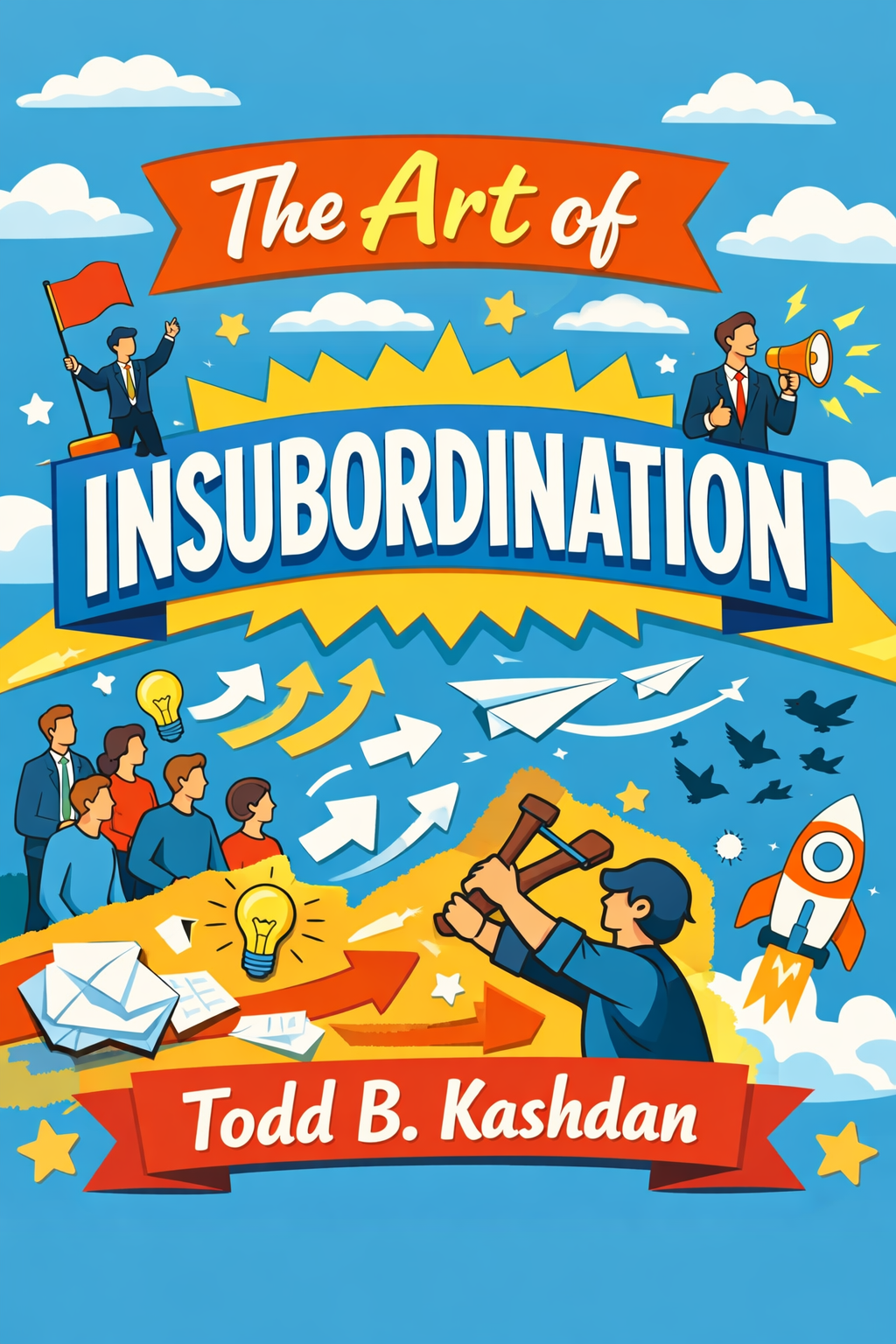
The drive to question authority and challenge the status quo is not a flaw, but a potential force for profound good. This book explores the concept of principled insubordination—a form of constructive rebellion aimed at improving society while minimizing harm. It argues that true progress often depends on courageous individuals who dare to support worthy ideas, even when they stand in stark opposition to majority opinion. Becoming such a change-maker is not about mindless defiance, but about mastering a set of skills to navigate bias, communicate persuasively, and manage the personal discomfort that comes with standing apart.
Our journey begins with a revealing analogy from the world of basketball: the free throw. While the standard overhand method is used by nearly every professional player, it is statistically inferior to the underhand, or “granny,” style. One Hall of Famer who used the underhand method maintained a 90 percent success rate, far above the league average. Yet, players avoid it, fearing it looks silly or unmanly. This simple example illuminates a powerful human truth: we are deeply wired to conform, often prioritizing social acceptance over optimal outcomes. This tendency extends far beyond the court. We exhibit a pervasive status quo bias, instinctively believing that what is longstanding is inherently better or safer, even when evidence suggests otherwise. We often rationalize and support systems that actively harm us, simply because the uncertainty of change feels more threatening than the familiar discomfort of the present. Acknowledging this powerful psychological pull is the first, crucial step for any aspiring insubordinate.
Overcoming this innate bias is the next challenge. History is filled with forgotten rebels whose principled stands shifted society. Consider Elizabeth Jennings, a Black schoolteacher in 1854 New York who refused to leave a “whites-only” streetcar. After being violently ejected and arrested, she sued the transit company and won. Her solitary act of defiance became a catalyst, inspiring others and leading to the desegregation of the city’s public transportation a year later. Her story demonstrates that nonconformists are essential engines of social progress. Research supports this: teams that include a “principled insubordinate” generate more original and highly-rated ideas than uniformly conformist groups. While dissent can initially cause friction, it ultimately elevates performance and creativity. The key for organizations and movements is to cultivate a culture where dissent is not just tolerated, but actively welcomed and tested. Furthermore, change has a tipping point. Studies suggest that when a committed minority reaches roughly 25 percent of a group, its perspective can sway the entire majority. The mission, then, is to communicate effectively to build that critical mass.
Effective communication is the bridge between a solitary rebel and a movement. Consider the punk band Fugazi, who championed an anti-corporate, “straight edge” lifestyle but famously never preached it to their fans. They consistently lived their values while explicitly stating their way was not the only way. This approach made their message more palatable and persuasive. From such examples, we can derive key tactics for persuasive rebellion. First, frame yourself as part of the in-group you wish to persuade. Humans favor those they perceive as similar. A conservative arguing for gun safety legislation should first affirm shared conservative values, establishing common ground before introducing the divergent view. Second, balance consistency with flexibility. Be unwavering in your core principle but adaptable in your arguments and solutions. Dogmatic rigidity alienates; steady, reasoned commitment attracts. Finally, advocate for your idea, not against your opponents. Frame your position as a positive vision for the future rather than a mere attack on the existing order. This forward-looking stance is more inspiring and less likely to trigger defensive reactions.
Embarking on this path inevitably brings discomfort. The social and psychological costs of rebellion are real, from anxiety and self-doubt to ostracism. Managing this discomfort is a vital skill. Begin by reframing anxiety as excitement; both share physiological symptoms, and consciously interpreting nerves as anticipation can boost performance. Prepare thoroughly, as competence breeds confidence. Perhaps most importantly, build a “coalition of the willing”—a small group of trusted allies who provide support, feedback, and validation. This community acts as a buffer against the majority’s pressure and a sanctuary for resilience. Remember, the goal is not to become impervious to discomfort, but to develop the fortitude to act in spite of it.
Finally, what happens when you succeed? Winning responsibly is a chapter often overlooked. The intoxicating rush of victory can corrupt the very principles you fought for, turning rebels into the new oppressive establishment. To avoid this, insubordinates must practice humility and continuous self-reflection. Institutionalize mechanisms for ongoing criticism and dissent within your new movement or organization. Celebrate the victory, but immediately turn your focus to the *next* worthy cause, preventing stagnation and the consolidation of power for its own sake. The true principled insubordinate is not fighting for a permanent seat at the table, but for a world where the table is constantly reshaped to include more voices and better ideas. This book is not a call to anarchic rebellion, but a manual for thoughtful, courageous, and effective deviation—a guide for those who understand that sometimes, the most responsible act is to elegantly, eloquently, and expertly challenge the world as it is.