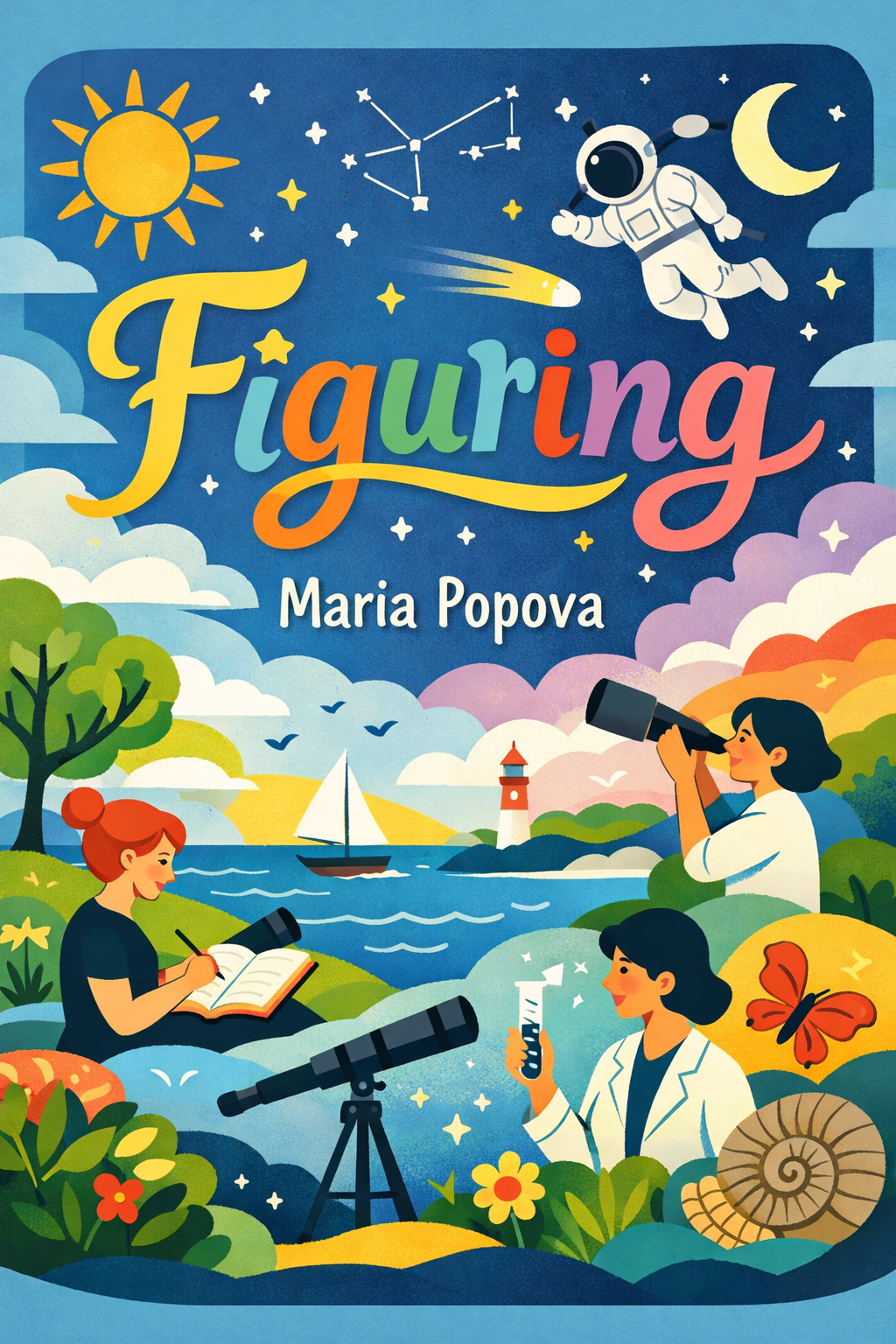
Description
Our lives are not solitary lines but part of a vast, shimmering web, where a thought in one century becomes a discovery in another, and a private passion ignites a public revolution. This is the profound truth at the heart of this narrative, which gracefully traces the threads linking astronomers, poets, artists, and scientists across time. It reveals that no achievement is an isolated event, but a confluence of influences, relationships, and moments of beauty that ripple outward in unpredictable ways. By following these delicate connections, we see history not as a series of dates, but as a living, breathing tapestry of human endeavor.
Consider the legacy of Johannes Kepler, the pioneering astrophysicist of the seventeenth century. His rigorous laws of planetary motion, which described elliptical orbits, became the bedrock for Newton’s gravity and, centuries later, the calculations that guided Apollo 11 to the moon. Yet his imagination soared beyond calculation. In a visionary story about a voyage to the moon, he not only pioneered science fiction but also intuited the physics of launch and weightlessness. His work demonstrates how a scientific mind, when coupled with creative speculation, can plant seeds that blossom in realms far beyond its original soil. The path from his equations to a human footprint on lunar dust is a direct line through the web of human knowledge.
This web is spun not just of ideas, but of circumstance and character. Maria Mitchell, America’s first female astronomer, discovered a comet from a rooftop on Nantucket in 1847, a feat that earned her a gold medal and a place in history. Her success was not merely personal genius, but the product of a unique constellation of factors: a Quaker upbringing that valued girls’ education, a father who nurtured her intellect, and an island community where mathematics was a practical tool for navigation. Her story dismantles the myth of the solitary, self-made genius, showing instead how individual brilliance is amplified and made possible by a supportive and unusual environment. Her life became a beacon, inspiring generations of women to look to the stars.
A recurring motif among these interconnected lives is a shared belief in a deep alliance between beauty and truth. Galileo saw profound beauty in the illuminated phases of Venus, a sight that confirmed a heliocentric truth. The poet Ralph Waldo Emerson argued that beauty was a language, a code that invites us to uncover deeper realities. For the abolitionist Frederick Douglass, the new technology of photography held a beautiful, transformative power—it could capture the stark truth of injustice, making the need for moral progress viscerally undeniable. This pursuit of truth, whether through a telescope, a poem, or a photograph, is consistently driven by an appreciation for the elegant and the sublime.
The personal landscapes of these figures were often as complex and nuanced as their intellectual ones. Historical labels fail to capture the full spectrum of human affection and connection. In the nineteenth century, relationships that fell outside strict norms were sometimes termed “Uranian.” Yet the inner truths of the heart have always resisted simple categorization. The narrative gently examines the quiet, often unspoken bonds and loves that shaped these individuals, relationships that were sometimes concealed, sometimes unfulfilled, but always integral to their emotional and creative worlds. This attention to private life adds a rich layer of understanding, reminding us that the drive to figure out the universe is intimately tied to the struggle to figure out one’s own heart.
The fusion of disciplines is perhaps perfectly embodied by Ada Lovelace, the daughter of the poet Lord Byron. A mathematical prodigy, she saw the poetic potential in Charles Babbage’s Analytical Engine, envisioning its capacity to manipulate symbols beyond mere number-crunching. In her notes, she outlined what we now recognize as the first computer algorithm, blending scientific precision with a visionary’s foresight. She personified the meeting of literature and science, demonstrating that logic and imagination are not opposites but essential partners in the dance of discovery.
Even the towering figure of Johann Wolfgang von Goethe left a substantial, if less celebrated, scientific legacy. His intensive studies of color and plant morphology were driven by a holistic desire to understand nature’s essential forms and processes. While his color theory contested Newton’s, it stemmed from a profound belief in the sensory and experiential truth of observation. His scientific work, often overshadowed by his literary masterpieces, stands as a testament to a mind that refused to compartmentalize knowledge, seeking unity in all of nature’s expressions.
Finally, in the shadow of mortality, the lines between the rational and the mystical often blur. The narrative explores how even the most rigorously scientific minds, when confronted with the ultimate unknown, have reached for comfort in spiritual wonder or cosmic unity. This is not a failure of intellect, but a acknowledgment of life’s greatest mystery. It suggests that the quest for knowledge, in its fullest sense, encompasses both what can be measured and what can only be felt—the cold equations of motion and the warm, enduring hope for something more. In the end, this journey through interconnected lives leaves us with a humbling and exhilarating vision: we are all temporary custodians of ideas and loves that long predate us and will long outlast us, tiny but vital nodes in the everlasting web.