Description
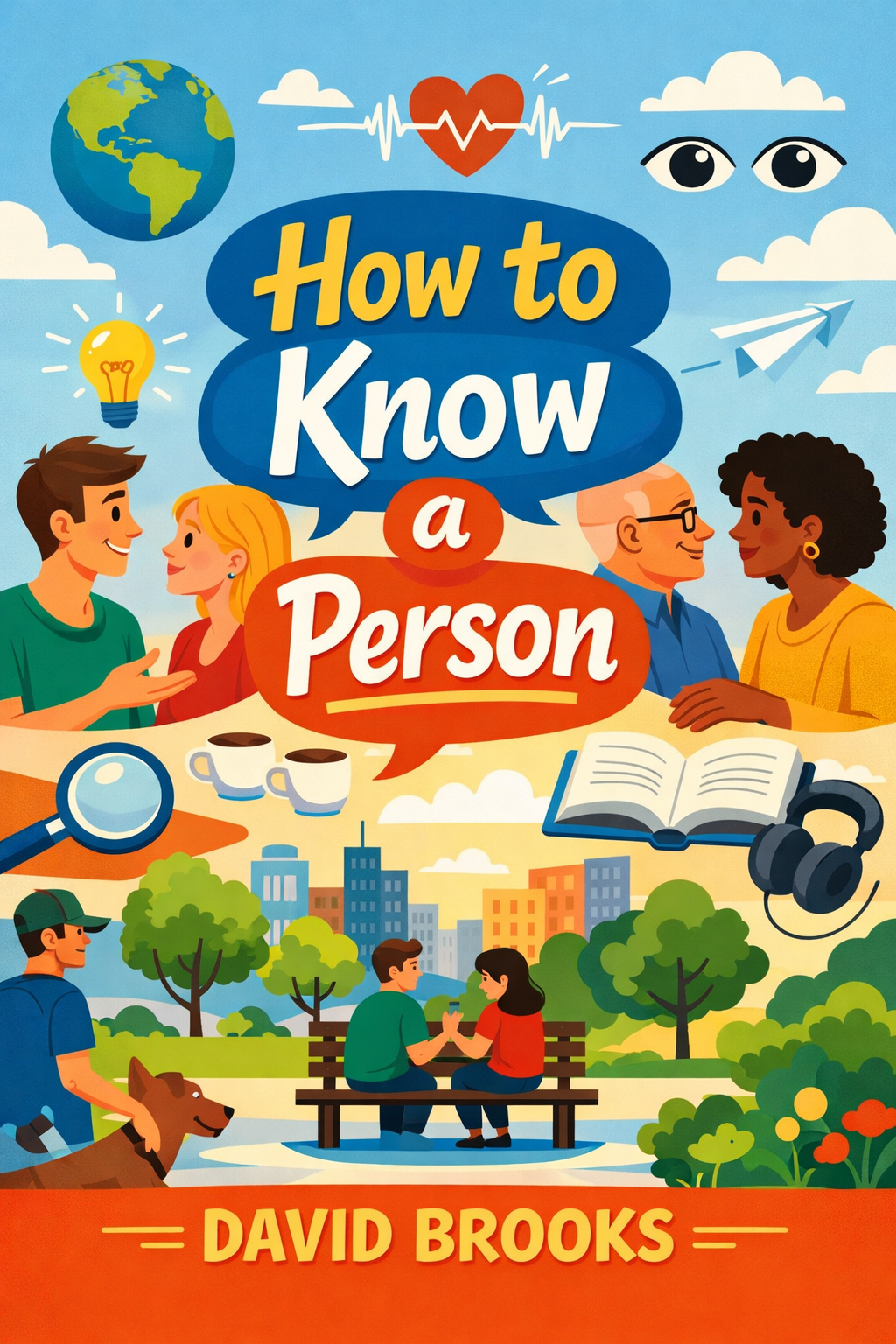
In an age where loneliness is rampant and social divisions run deep, we often speak of connection without possessing the fundamental skills to achieve it. This book argues that the ability to truly know another person—to see them in their full depth and complexity—is a craft that can be learned and honed. It is not an innate talent but a set of practices that, when cultivated, can transform our relationships, enrich our communities, and mend the frayed fabric of society. The journey begins with a simple yet profound shift: moving from a mindset of indifference to one of illuminated attention.
The core of meaningful human interaction lies in the act of seeing and being seen. To be treated as if you are invisible or insignificant is a profound cruelty, while the gift of feeling understood and valued can be life-altering. This skill of illumination is critical not only for personal fulfillment but for navigating life’s most important choices, from choosing a partner to building a team. On a societal scale, our collective inability to see across lines of difference—of race, ideology, or background—fuels misunderstanding and conflict. The repair of our social world, therefore, starts not with grand political programs, but with individuals committing to see each other more clearly.
People often fall into two categories in how they approach others: diminishers and illuminators. Diminishers make people feel small, often through self-absorption, using others as instruments, or relying on lazy stereotypes. Their conversations are monologues. Illuminators, in contrast, operate with a persistent, tender curiosity. They ask questions that draw out the hidden strengths and stories in others, making people feel respected and enlarged. The effect can be transformative, as illustrated by figures like a certain engineer at Bell Labs whose genius lay not just in his own work, but in his ability to listen and ask questions that unlocked the genius in his colleagues. We can cultivate this illuminating gaze by consciously choosing to believe that every person possesses a unique and precious inner world, worthy of our full attention and respect.
The practice of knowing someone unfolds in the mundane, side-by-side moments of daily life. It begins with the humble art of small talk, which builds the necessary rapport and comfort for deeper connection. When the moment to go deeper arrives, true conversation becomes key. This is not about witty storytelling, but about fostering a mutual exploration. It requires treating your attention as a binary switch—fully on or off—rather than a dimmer. Master conversationalists practice “loud listening,” offering visible and vocal engagement that encourages the other person to open up. They are also comfortable with silence, resisting the urge to formulate a response while the other person is still speaking, understanding that real listening means receiving a complete thought before replying.
Building bridges becomes especially crucial in a climate of polarization and isolation, where many have forgotten how to engage across differences. Real connection requires the courage to have hard conversations. Success here depends on mindful context-setting, showing genuine curiosity, and, most importantly, resisting defensiveness. When someone shares a story of pain or exclusion, the task is not to debate their facts but to seek understanding of their lived experience. If a conversation turns tense, the remedy is to jointly pause, examine why, and reaffirm the shared goal of mutual understanding. The aim is not necessarily to achieve agreement, but to transform wariness into a measure of trust.
A major barrier to knowing others is the unconscious assumption that we all perceive the same objective reality. In truth, our perceptions are filtered through a lens shaped by our physiology, psychology, culture, and personal history. A hill looks steeper to a tired person than to an athlete; the world looks different through the lens of joy than of sorrow. To see another person well, we must actively try to see the world as they see it, considering how their unique background and circumstances have shaped their perspective. This empathetic leap is the foundation of true understanding.
The final, and perhaps most demanding, skill is the capacity to sit with another person’s suffering without turning away. In the face of another’s pain, our instinct is often to offer a quick solution, a silver lining, or to shift the focus—all forms of abandonment. True companionship in suffering means offering a quiet, steady presence. It means asking, “How is it for you?” and then having the fortitude to listen to the answer, to acknowledge the reality of their pain without trying to explain it away. This act of “accompaniment” is a powerful form of love, one that validates the other’s experience and provides a sanctuary of shared humanity. Ultimately, to know a person is to see them, to hear them, and to have the courage to stay present with them—in their joy and in their sorrow—thereby illuminating the extraordinary within the ordinary.