Description
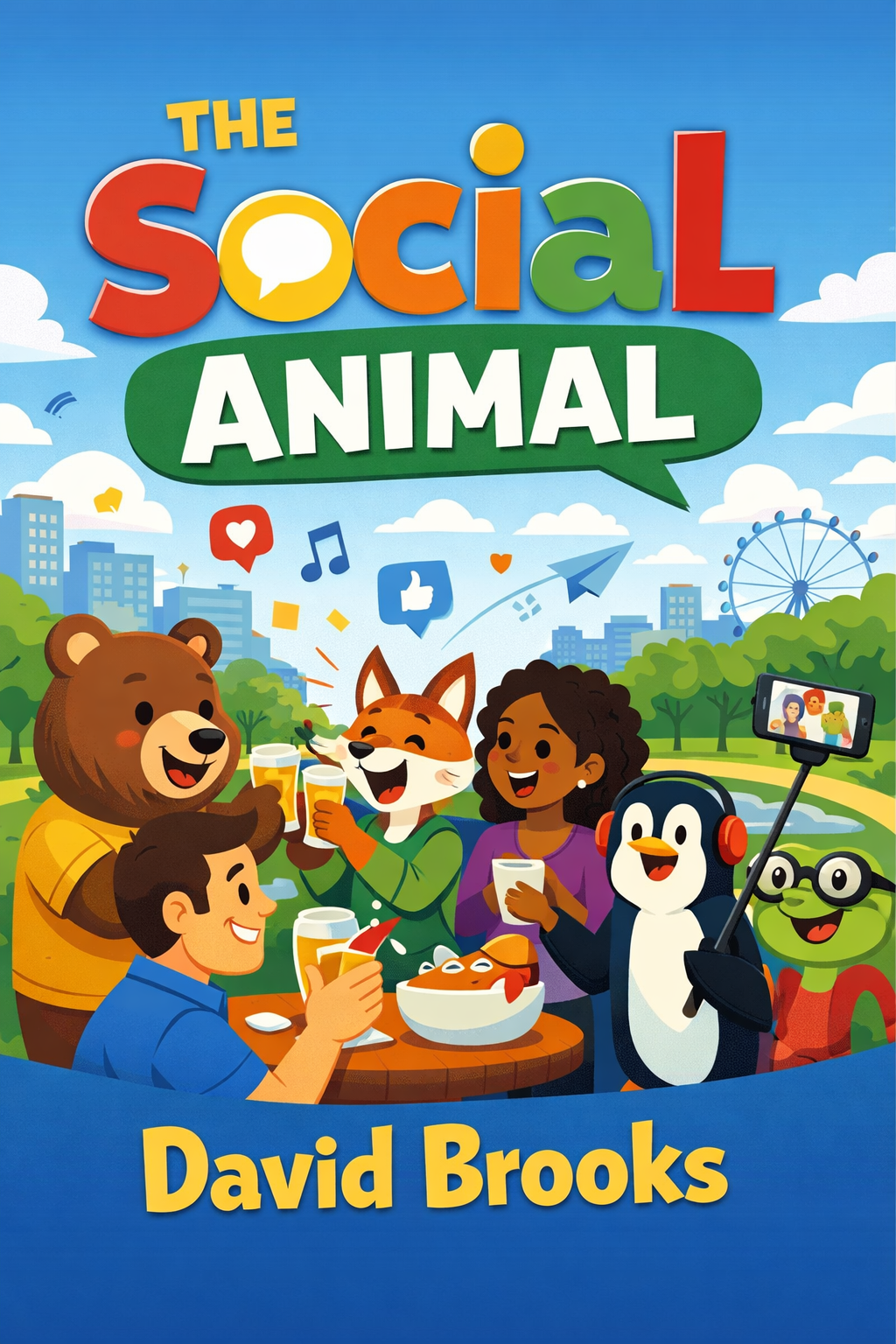
We navigate the world believing we are captains of our own ships, making conscious, rational choices at every turn. Yet beneath the surface of our awareness, a vast and powerful unconscious mind is steering us, influenced by subtle cues, deep-seated emotions, and social connections we barely perceive. This exploration reveals that we are, at our core, profoundly social and intuitive creatures, and understanding these hidden currents is key to understanding human behavior.
Consider the mystery of attraction. While we may believe we have a specific “type,” our unconscious draws us to partners who subtly resemble ourselves in facial structure and background. Proximity plays a far greater role than any checklist of ideal traits; we are most likely to bond with those who share our social world. Furthermore, universal, often unconscious, preferences emerge, such as a widespread inclination toward specific physical proportions, hinting at ancient evolutionary programming guiding our choices.
Our sense of control is further illusionary when we examine how context dictates our actions. Mere words can prime our behavior, causing us to walk slowly or act aggressively without any conscious intention. Our judgments are relative, not absolute; a bottle of wine seems a bargain or a splurge based solely on the prices that surround it. Even serious decisions, like a judge’s ruling on parole, can be swayed by something as basic as hunger, with clemency rates plummeting as mealtimes approach. Our very assessment of our own life satisfaction fluctuates with the weather. These are not mere glitches in an otherwise logical system but signs of a deeper truth: emotion, not cold calculation, is the true engine of our decision-making.
This leads to a fundamental question about morality. Is our ethical compass a product of conscious reasoning, where we logically apply principles to overcome selfish urges? Or is it rooted in a gut-level intuition, a moral sense we feel before we can articulate a reason? The evidence leans powerfully toward intuition. Psychopaths, who possess normal reasoning skills but lack emotional resonance, demonstrate that intellect alone does not create morality. Our brains can deliver a moral verdict in a fraction of a second, long before rational deliberation begins. Even infants show a preference for helpful characters over hindering ones, suggesting the foundations of morality are innate and emotional.
Paradoxically, this emotional foundation is not the enemy of good judgment but its prerequisite. The fantasy of pure, Spock-like rationality is just that—a fantasy. Individuals who lose the ability to feel emotion due to brain injury often become paralyzed by simple decisions or make profoundly foolish choices. Emotion provides the essential values and weights that make rational choice possible; it tells us what matters in the first place. We are not thinking machines that sometimes feel, but feeling machines that think.
Our unconscious mind is a powerhouse, constantly absorbing and processing staggering amounts of information from our social environment. We are wired to connect, to read faces and gestures, to belong. This social aptitude often outweighs conventional measures of intelligence in determining life outcomes. The skills that truly propel us are frequently those of the heart, not just the head: sensitivity to others, the ability to cooperate, and crucially, self-control. The famed “marshmallow test,” where a child’s ability to delay gratification predicts future success, underscores that mastering our own impulses is a greater predictor of achievement than raw IQ.
In the end, this journey into the human psyche reveals a being far more complex and interesting than the purely rational actor of old models. We are social animals, driven by deep unconscious processes, shaped by invisible contexts, and guided by moral intuitions. Our greatest strengths lie in our capacity for connection, our emotional wisdom, and our ability to navigate the hidden world within and between us. Recognizing the limits of our conscious control is not a reduction of our humanity but a deeper, more accurate appreciation of its beautiful, intricate design.