Description
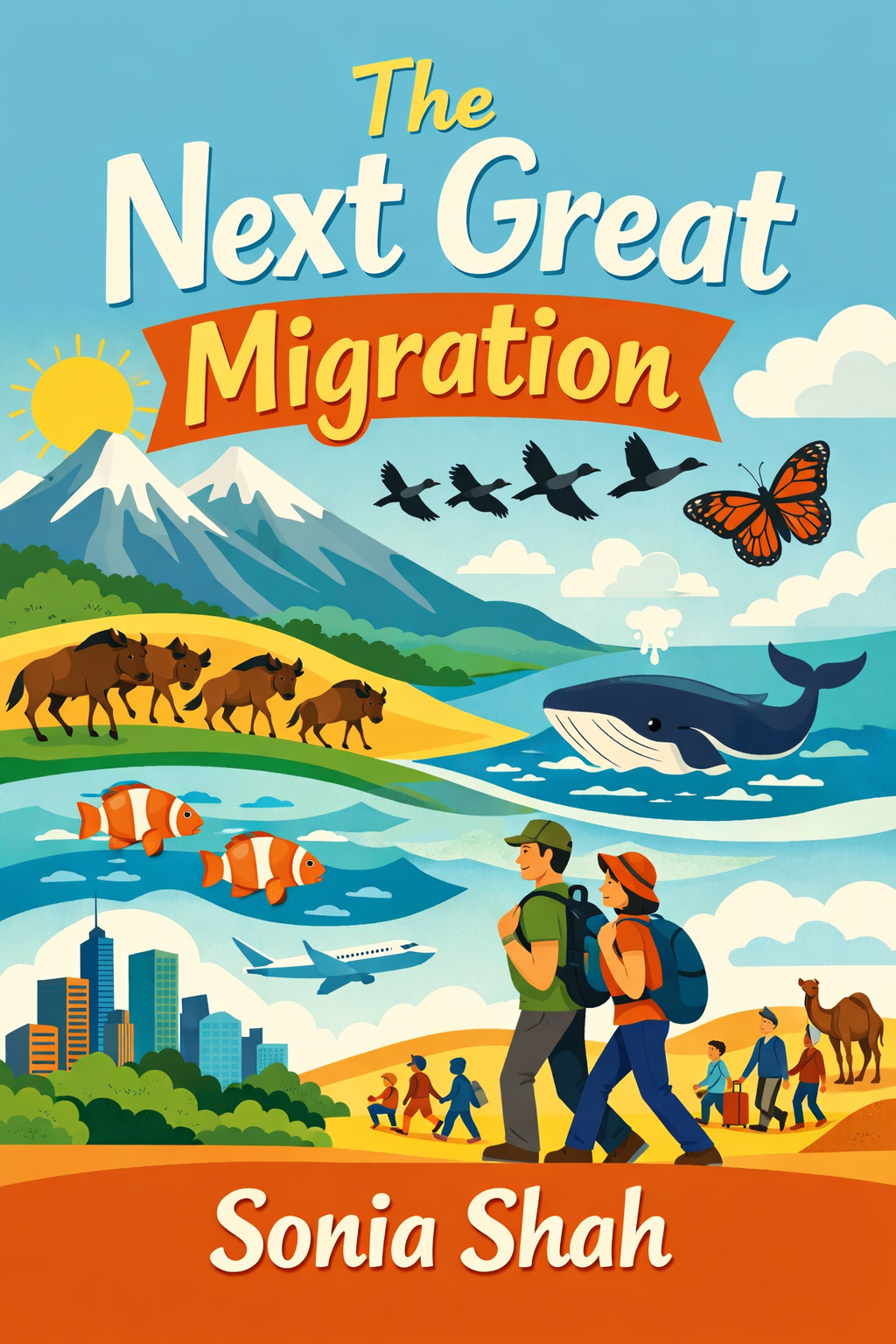
For centuries, the story we have told about life on Earth is one of stability and fixed borders. We imagine plants, animals, and people belonging to specific, unchanging places. This book dismantles that deeply ingrained myth, revealing a more vibrant and true narrative: our world is, and always has been, shaped by movement. The journey begins by confronting our historical blindness to this reality. Long before modern politics, even our understanding of the natural world was clouded by the belief that species were sedentary. Pioneering naturalists like Carl Linnaeus, while creating the systems we use to classify life, operated under the assumption that all creatures had settled into permanent, divinely ordained homes after a single primordial dispersal from a place like the Garden of Eden. This idea persisted stubbornly, causing even obvious migratory behaviors, like the mass movements of lemmings or birds, to be misinterpreted as bizarre anomalies or destructive acts, rather than recognized as essential, life-sustaining journeys.
This concept of a static natural order was catastrophically applied to humanity. Linnaeus, in his effort to categorize everything, extended his system to people, formally dividing humans into subspecies based on continent. This scientific framing provided a powerful tool for emerging racist ideologies, suggesting that differences were innate and permanent, born of isolation rather than connection. This thinking found fertile ground in places like the United States, where it was weaponized by influential figures. Men like Madison Grant and Henry Fairfield Osborn, driven by a fear of changing demographics, championed eugenics. They preached that the mingling of populations led to degeneration, lobbying successfully for harsh immigration laws designed to preserve a mythical racial purity. Their pseudoscience, which found admirers in the highest and most horrific echelons of global power, was ultimately baseless, but its cultural impact was profound and lasting.
The fear of migrant people seamlessly bled into a fear of migrant species. The early 20th century saw the rise of the “invasive species” panic, where any plant or animal moving into a new region was seen as a threatening “alien.” This view was bolstered by simplistic ecological models that suggested different species could never peacefully coexist, inevitably leading to a violent takeover. From American officials decrying European starlings as “bad citizens” to Nazi gardeners rooting out non-native flowers deemed “Mongolian invaders,” the language and logic mirrored the anti-immigrant rhetoric of the day. Nature itself was subjected to a ideology of borders and nativism.
Underpinning much of this anxiety was a Malthusian dread of overpopulation—the fear that too many people, especially arriving from elsewhere, would overwhelm resources and lead to societal collapse. This fear has been used to justify not only closed borders but also severe human rights abuses, including forced sterilizations, under the guise of preserving stability and quality of life. It is a narrative of scarcity and competition that denies our capacity for adaptation and innovation.
However, the most powerful rebuttal to centuries of fixed-border thinking comes from our own bodies. Modern genetics provides irrefutable evidence that tells a story of constant, ancient migration. DNA reveals that all humans are profoundly interconnected, sharing recent common ancestors. The very populations once held up as examples of pure, isolated lineages are shown to be the products of immense and repeated waves of movement, mixing, and resettlement over millennia. We are all, without exception, the descendants of migrants.
Despite this biological truth, the political narrative of migration as a crisis persists. Contemporary reactions to refugee movements are often built on a foundation of exaggeration and myth, portraying newcomers as an overwhelming tidal wave rather than a manageable flow of individuals seeking safety. This reactionary stance ignores history and human nature, choosing walls over pathways.
The book ultimately argues for a profound paradigm shift. Instead of seeing movement as a problem to be stopped, we must recognize it as a reality to be managed with compassion and intelligence. For humans, this means creating safe, legal, and orderly pathways for migration that respect dignity and human rights. For the broader natural world, it means facilitating movement through visionary projects like wildlife corridors and green bridges, allowing animals to traverse our human-dominated landscapes. Migration is not a disruption of the natural order; it *is* the natural order. By embracing this truth, we can begin to build a future that is not rigid and fearful, but resilient, adaptable, and truly in harmony with the dynamic pulse of life on our planet.