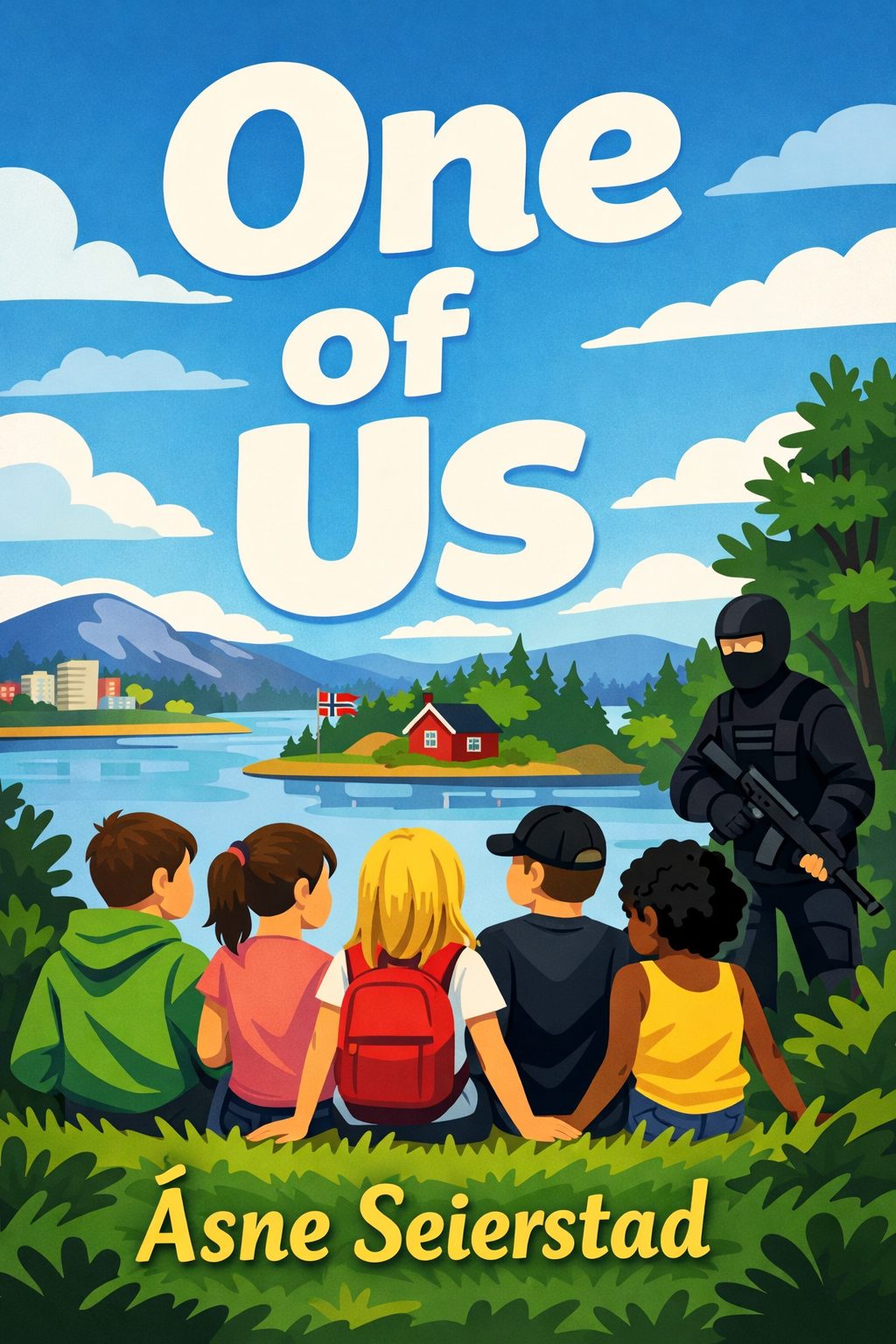
Description
On a serene summer day in 2011, Norway’s peace was shattered by two acts of unimaginable violence. A bomb detonated in Oslo’s government district, and shortly after, a gunman arrived at the island of Utøya, where a political youth camp was underway. By day’s end, seventy-seven people were dead, and one man, Anders Behring Breivik, was in custody. This narrative delves deep into the making of that man, not to excuse his atrocities, but to understand the complex and disturbing journey that led to them. It is a story that begins not with ideology, but with instability.
Breivik’s early life was marked by profound dysfunction. His parents’ marriage collapsed when he was an infant, and his childhood home was evaluated by psychologists as psychologically damaging. Reports noted a mother “provoked” by her son and a home environment that stifled his development. Despite professional concern, he remained in that unstable setting. This foundation fostered a boy who was both shy and prone to anger, struggling to connect with peers. In his early teens, he briefly found a sense of belonging and identity in Oslo’s graffiti scene, earning a measure of respect for his loyalty when caught by police. However, his innate need for supremacy and recognition led him to violate the subculture’s codes, deliberately defacing the work of a respected “king.” This act of social sabotage made him an outsider, a status cemented in his school yearbook where classmates noted he had “made enemies of everybody.” A final arrest severed his already tenuous connection with his father, leaving him further adrift.
Seeking a new arena for his ambitions, Breivik turned to politics. He joined the populist Progress Party and, for a time, threw himself into its youth wing, securing a minor leadership position and diligently networking. He believed he was destined for a candidacy, for a place in the spotlight. When that nomination never came, his engagement evaporated. The party structure, another system, had failed to grant him the significance he craved. This rejection precipitated a retreat from the real world. For years, he lived in his mother’s apartment, descending into the immersive universe of online role-playing games. Here, as “Andersnordic,” he could craft a persona of competence and control. Yet even in this digital realm, his dream of becoming the absolute best remained unfulfilled. It was from this state of isolation and perceived failure that he drifted into the darker corners of the internet.
The online world that next captivated him was not one of fantasy elves, but of far-right ideology. He consumed vast amounts of content from anti-Islamic and nationalist websites, becoming particularly enamored with the writings of a blogger known as “Fjordman.” In the echo chambers of these platforms, his grievances found a grand, sinister narrative. He became convinced that Europe was under existential threat from “cultural Marxism,” feminism, and Islamization. His gaming obsession was replaced by a new, all-consuming project: the creation of a manifesto. This sprawling, plagiarized document, “2083: A European Declaration of Independence,” framed his personal resentments as a heroic, historical struggle. It argued that the decay of traditional values necessitated a violent crusade, culminating in a detailed guide for executing terrorist acts. The manifesto was both a blueprint and a perverse form of self-mythology, complete with a fictional interview celebrating his own future deeds.
With his ideological purpose forged, Breivik embarked on a chillingly meticulous preparation. He legally obtained firearms through a shooting club. To build a massive fertilizer bomb, he rented a remote farm under the guise of starting an agricultural business, patiently sourcing materials online and from pharmacies with fabricated stories. For months, he worked alone, following and adapting imperfect instructions found on the web, a self-styled knight assembling a weapon of mass destruction in rural silence. His neighbors saw nothing amiss. On July 22nd, he executed his plan. The bomb in Oslo was a diversion, but it was also a symbol of his hatred for the government. The true horror unfolded on Utøya.
Arriving on the island posing as a police officer, Breivik exploited catastrophic failures in communication and response. The police crisis center was unaware the island had been identified as a potential target; the local police boat was overloaded and stalled. For over an hour, Breivik was left alone to hunt down the campers. The systemic failures that day were profound, but they were matched by the sheer, horrifying determination of the individual. He showed no rage, but a cold, procedural efficiency. In the aftermath, and during his trial, he displayed not remorse, but a chilling conviction. He used the courtroom as a platform to espouse his ideology, insisting his actions were “cruel but necessary.” The court engaged in a necessary debate about his sanity—was he a psychotic terrorist or a politically motivated one?—ultimately finding him criminally responsible and sentencing him to the maximum term.
This account is more than a timeline of a crime. It is an unsettling voyage into how a human being can be forged into a weapon. It traces the wires from a lonely, unstable childhood, through repeated social failures, into the addictive validation of virtual worlds, and finally into the toxic embrace of an online ideology that provided a grand purpose for his rage. It reveals how modern tools—the internet for radicalization, online commerce for bomb-making supplies, legal loopholes for weapons—can be harnessed for ancient hatreds. The story of Breivik is a stark examination of the intersection between profound personal pathology and the dark currents of our time, a reminder that the most devastating storms can begin with the smallest, most human fractures.