Description
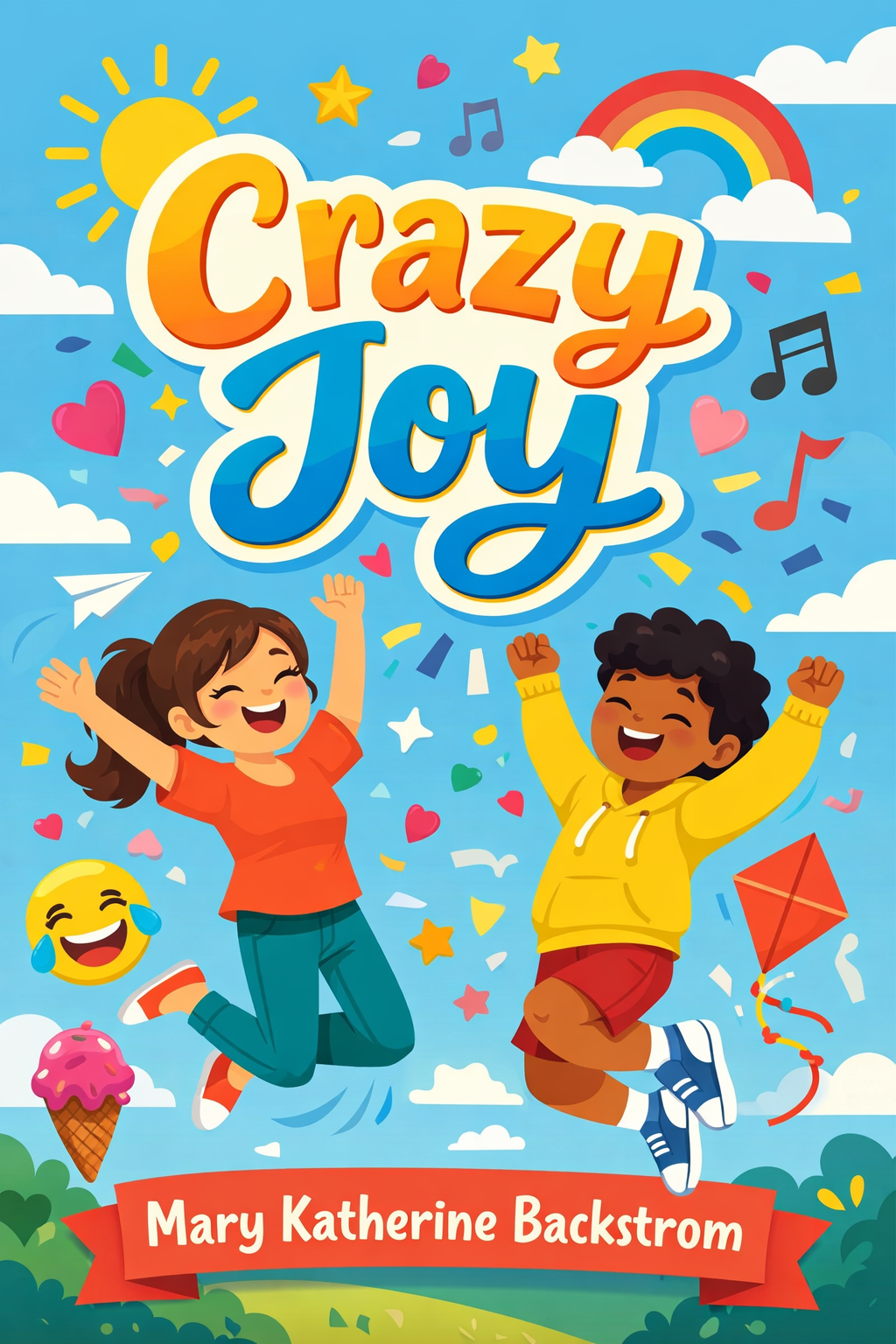
In “Crazy Joy,” Mary Katherine Backstrom presents a refreshingly honest and humorous guide to discovering a profound, lasting sense of joy within the beautiful mess of ordinary life. She begins by distinguishing joy from happiness, using a poignant childhood memory. As a child, she proudly picked what she thought were beautiful purple flowers, only to learn they were common weeds called henbit. Her mother, an avid gardener, used this moment to teach a lasting lesson: cultivated flowers are finicky and require perfect conditions, but weeds are resilient, thriving anywhere. Joy, Backstrom argues, is like henbit. It isn’t dependent on perfect circumstances; it pops up through the cracks of our struggles and disappointments. Happiness, in contrast, is like a rose—beautiful but temporary and fragile. This sets the stage for an exploration of how to nurture this wild, untamable version of joy.
The common belief that joy arrives only when life is perfect—when we land the dream job, achieve an ideal weight, or secure a flawless relationship—is a trap. This mindset turns joy into a distant destination, forever on the horizon. Backstrom suggests we stop focusing on the destination and start finding joy in the journey itself. Drawing on Sir Isaac Newton’s third law of motion, she posits that joy exists in pairs with its opposites. To experience deep joy, we must also be open to the counterforces of heartbreak, disappointment, and sadness. They are not enemies of joy but proof that we are fully engaged in living. Avoiding pain means avoiding the risks that lead to the most exhilarating experiences, much like refusing to ever get on a horse means you’ll never feel the thrill of galloping along the beach.
One of the most persistent thieves of this journey-based joy is comparison. Backstrom confesses to once claiming store-bought pies as her own at a family Thanksgiving, driven by a feeling of inadequacy next to the skilled bakers in her life. This seemingly harmless habit, she reveals, secretly ravages our peace. Studies show a significant portion of our daily thoughts involve comparing ourselves to others, fueling a narrative of personal insufficiency. Working with a therapist, Backstrom learned to see her sense of self as a household with different resident parts—emotional, mental, physical. She realized she was a bully to her own emotional self, offering kindness to others that she withheld from herself. The antidote is radical self-acceptance: befriending yourself. This means treating the various parts of you with the same compassion you’d offer a dear friend, celebrating your unique presence in a world of eight billion people.
Perhaps the most daunting obstacle to joy is the awareness of death, which can feel like the ultimate killjoy. Backstrom found unexpected wisdom on this front in the philosophy of Friedrich Nietzsche. While Nietzsche grappled with nihilism, he also arrived at a passionate affirmation of life. His concept that “joys all want eternity” suggests that our deepest experiences of joy make us wish they could last forever, inherently defying the finite nature of life. Backstrom illustrates this with an analogy from the game show *Supermarket Sweep*, where contestants have limited time to grab the most valuable items. Our mortality, rather than being a morbid fixation, can be the lens that clarifies what we truly value. It urges us to stop filling our carts with life’s “canned beans”—the trivial worries and distractions—and instead reach for the “filet mignon”—the relationships, experiences, and passions that bring profound meaning. Accepting that we are mortal loosens death’s paralyzing grip, freeing us to invest our precious time in what matters most.
Finally, cultivating crazy joy requires courage—the willingness to ride waves even when sharks are in the water. Backstrom uses the story of surfer Jay Moriarity, who trained for months to surf the monstrous Mavericks wave, knowing he might be held underwater in a “white wall of chaos” for minutes at a time. The pursuit of joy is similar. It involves venturing into treacherous, uncertain territory. Fear is a natural barrier, but, as witnessed in her surfer husband who returns to the water even after spotting a hammerhead shark, the joy found in doing what you love can be worth the risk. Joy is sometimes crazy. It asks us to show up, to paddle out again after being wiped out, and to find exhilaration not in the absence of fear, but in the decision to proceed despite it.
In conclusion, “Crazy Joy” is an invitation to abandon the exhausting pursuit of a perfect, pain-free life. Lasting joy is found in the resilient, weed-like ability to grow through adversity. It requires silencing the thief of comparison, embracing our mortality as a clarifying force, and gathering the courage to engage fully with a risky, unpredictable world. It’s about surfing life’s waves, sharks and all, knowing that sometimes you’ll catch a glorious ride and sometimes you’ll take a breathtaking tumble. Both are part of the wild, worthwhile, and beautifully crazy journey.