Description
We all aspire to be good people—fair, kind, and progressive. Yet, despite our best intentions, we often fall short of these ideals without fully understanding why. The journey to becoming the person you mean to be begins with a challenging but essential truth: we all harbor unconscious biases. These are the automatic, ingrained associations and preferences that operate beneath the surface of our awareness, shaped by our upbringing, culture, and life experiences. They influence our decisions, interactions, and perceptions in subtle but profound ways, often contradicting our conscious values. This book is an invitation to explore the hidden landscape of your own mind, not to instill guilt, but to empower growth. By confronting these biases, we can begin to align our actions with our aspirations, creating a more equitable world through personal transformation.
The foundation of this work is cultivating a growth mindset—the belief that our abilities and understanding can develop through effort and learning. This mindset is crucial because it allows us to approach our own biases not as fixed flaws, but as areas for potential growth. It’s the difference between someone who, upon recognizing a prejudiced thought, shuts down in defensiveness, and someone who leans in with curiosity, asking, “What can I learn from this?” This openness is the first step. However, our minds are remarkably efficient, processing millions of bits of information unconsciously every second. This mental shorthand, while useful, is where biases thrive. We make snap judgments about people based on race, gender, age, or appearance without even realizing it. Modern tools, like psychological tests that measure reaction times to paired concepts, have made these hidden biases startlingly visible, often revealing discrepancies between our conscious beliefs and our unconscious associations.
A significant barrier to progress is our relationship with privilege—the unearned advantages we hold based on our social identity. When confronted with the concept of privilege, many people instinctively deflect, emphasizing their own hardships to avoid the uncomfortable idea that their path may have been smoother. This defensiveness stems from a fear that acknowledging privilege diminishes personal achievement. The key to moving past this blockage is to secure one’s sense of self-worth first. When people feel valued and competent, they become more capable of honestly assessing their advantages without feeling threatened. This insight is practical: creating environments where people feel recognized makes them more receptive to conversations about equity.
Unconscious bias manifests in everyday life not as dramatic acts of prejudice, but through a thousand subtle moments: the networking circle that doesn’t naturally open to include the only person of color in the room, the homogeneous social networks we maintain despite living in diverse cities, the assumptions we make about who belongs in a leadership role. These patterns are pervasive and often invisible to those who benefit from them. Overcoming them requires proactive and consistent effort. It means intentionally diversifying your social and professional circles, seeking out experiences that challenge your norms, and critically examining the default settings of your daily life. It is a practice of mindful attention, of constantly questioning who is in the room, who is being heard, and why.
Those who hold the most privilege—often by virtue of race, gender, or position—have a disproportionate power and responsibility to challenge biased systems. Marginalized groups should not bear the sole burden of educating others or calling out discrimination. In fact, research shows that objections to biased remarks are far more effective when they come from someone within the same social group as the speaker. A white person correcting another white person’s racial stereotype, or a man calling out sexist language among men, carries a unique weight and can reduce defensiveness. Using your voice and influence in these spaces is a critical form of allyship. It moves the work of inclusion from being the responsibility of the excluded to a shared duty of the empowered.
Developing a conscious and healthy understanding of racial and social identity is a gradual process, especially for those from majority backgrounds who may have rarely had to think about their own identity. The goal is not to adopt a “color-blind” approach, which dismisses people’s lived experiences and cultural richness, but to practice “color-bravery”—seeing and valuing difference while actively working against the hierarchies attached to it. In organizations, fostering genuine inclusion requires more than just hiring for diversity. It demands creating cultures where all voices are actively solicited and heard, where credit is shared honestly, and where leaders model vulnerability by acknowledging their own learning journeys. It’s about building systems that interrupt bias in hiring, promotion, and day-to-day collaboration.
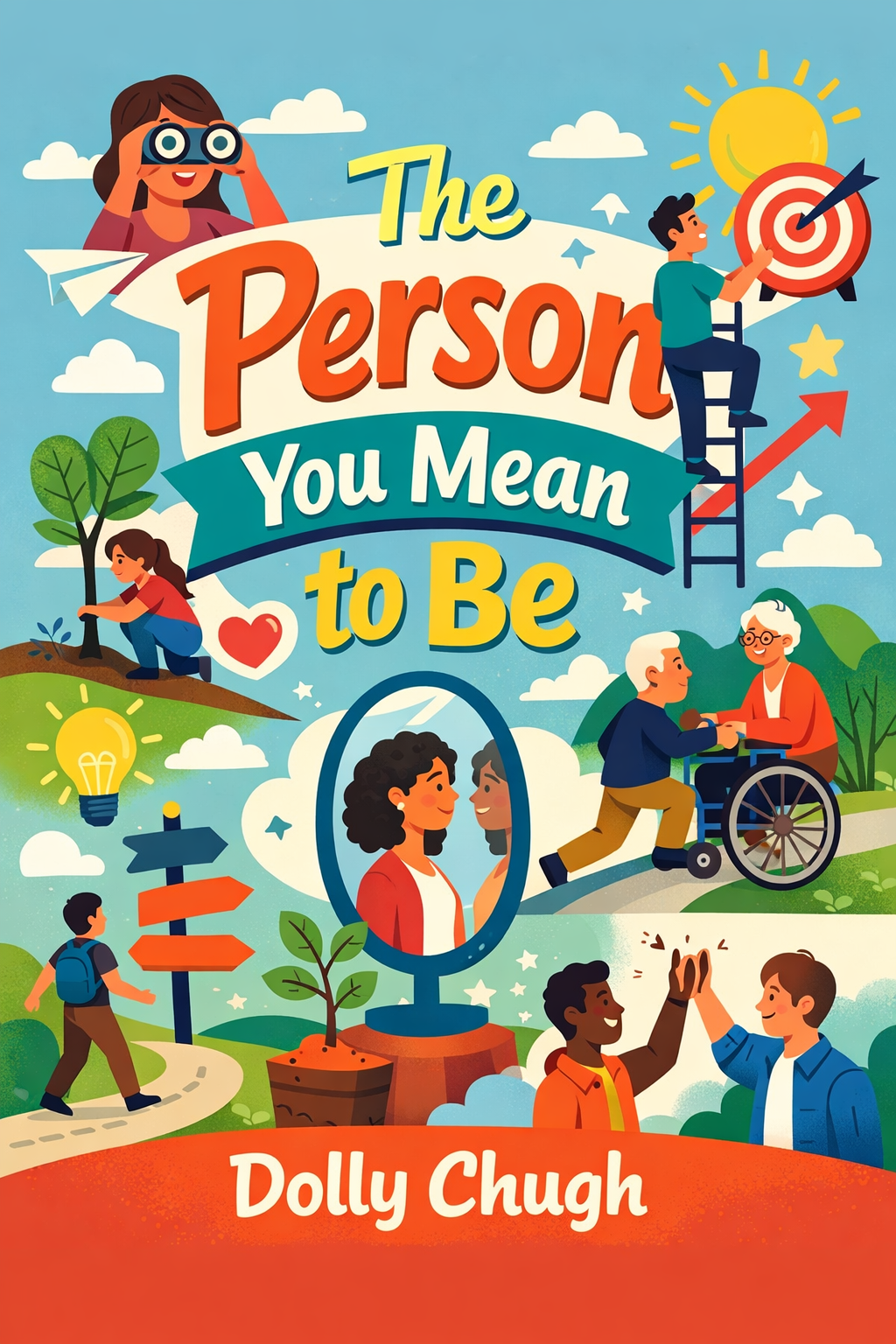
The path to becoming the person you mean to be is ongoing. It is not about achieving a state of perfect, bias-free enlightenment. Rather, it is about becoming a “builder”—someone who is consistently committed to learning, who accepts being imperfectly thoughtful, and who focuses on constructing more inclusive environments. It involves stumbling, apologizing, learning, and trying again. This book argues that the most powerful change starts from within, with the courageous examination of our own minds. By committing to this work, we do more than improve ourselves; we contribute to reshaping the world into a place where everyone has the opportunity to belong and thrive.