Description
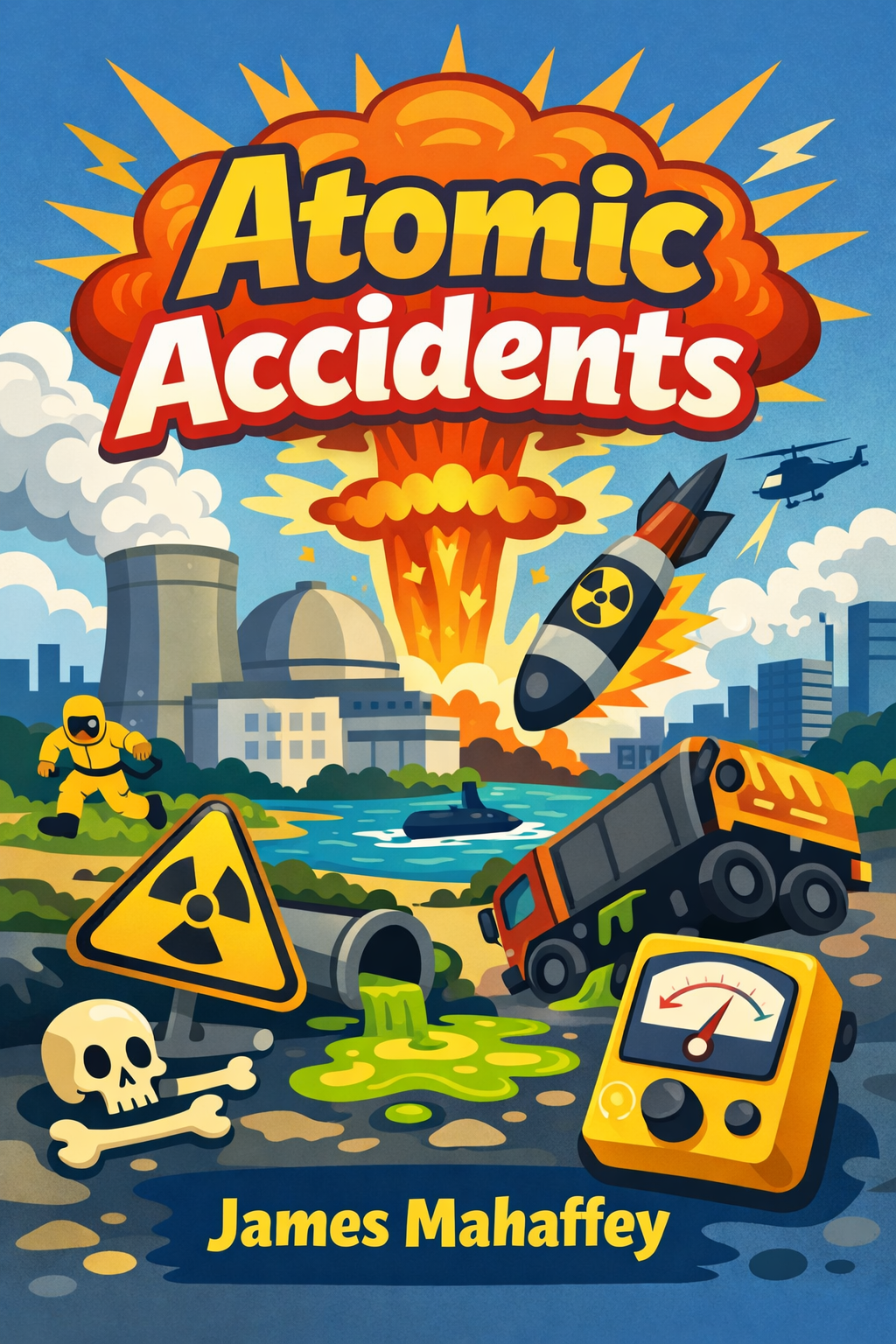
The story of atomic energy is not a simple tale of scientific triumph. It is a complex and often harrowing chronicle of ambition intertwined with peril, where groundbreaking discoveries have been shadowed by catastrophic failures. This journey begins not in a power plant or a weapons lab, but in the quiet experiments of the late 19th century, where pioneers like Nikola Tesla and Wilhelm Rontgen first unlocked the mysterious power of radiation. The initial excitement was palpable, leading to marvels like X-rays and radium therapy. Yet, this invisible force carried a hidden, deadly cost. The very scientists who championed it, including Pierre Curie, suffered from its effects, while entrepreneurs peddled radioactive “tonics” with tragic consequences, seeding a deep public fear that would linger for generations.
This fear was magnified exponentially by the race to weaponize the atom. The campaign to build the first nuclear bomb, driven by the urgency of World War II, became a massive and perilous experiment. In secret facilities in the United States and Germany, scientists pushed boundaries with incomplete knowledge, resulting in fatal accidents for researchers like Harry Daghlian. The ultimate demonstration of this destructive power in Hiroshima and Nagasaki revealed a force far more terrifying than even its creators had anticipated, unleashing not only immediate devastation but also long-term radioactive suffering. The postwar era did not bring perfect control. Surprisingly, the very weapons designed to cause ultimate destruction have been involved in numerous military accidents—crashes, mistaken drops, and close calls—revealing that human fallibility persists even in the most high-stakes custodianship. Thankfully, robust bomb design has prevented an accidental nuclear detonation, but these incidents underscore an inescapable truth: where humans and complex systems interact, mistakes are inevitable.
This truth found its most devastating expression in civilian nuclear power. For years, engineers believed they could design away the risk of a major reactor disaster. The Chernobyl catastrophe in 1986 shattered that confidence. A perfect storm of an inherently unstable reactor design, a culture of secrecy that isolated Soviet engineers from global safety knowledge, and a cascade of reckless human errors during a safety test led to an explosion that contaminated continents. It stood as a grim monument to technological hubris and institutional failure. For a time, it was seen as a unique product of a flawed system. Then, in 2011, the Fukushima disaster struck in one of the world’s most technologically advanced nations. Here, the primary culprits were known, ignored risks: the siting of an aging plant in a seismically active zone, inadequate tsunami defenses, and again, critical human intervention that overrode automated safety systems. Fukushima proved that no nation was immune to the old formula of poor planning, complacency, and error.
Yet, this history of accidents is not merely a indictment. It is, paradoxically, the foundation for a more hopeful atomic future. Each disaster has served as a brutal but effective teacher, forcing a complete re-evaluation of safety philosophy, reactor design, and operational protocols. The lessons are clear: prioritize passive safety systems that rely on natural laws like gravity and convection to cool a reactor in crisis, not on human operators or active pumps; design plants to withstand the most extreme foreseeable natural events; and cultivate a rigorous safety culture that encourages transparency and challenges authority. Modern reactor concepts, such as small modular reactors with meltdown-proof designs, are direct responses to these hard-learned lessons.
The legacy of atomic accidents is therefore dual. It is a sobering record of suffering and environmental harm, a necessary reminder of the profound responsibility that comes with harnessing the fundamental power of the universe. But it is also a roadmap, written in tragedy, pointing the way toward a potential future where nuclear energy, born from a history of fire and failure, can finally be tamed into a safe, reliable, and clean source of power. The path forward is not to abandon the atom, but to respect its lessons with unwavering vigilance, better design, and a humble acknowledgment of our own capacity for error.