Description
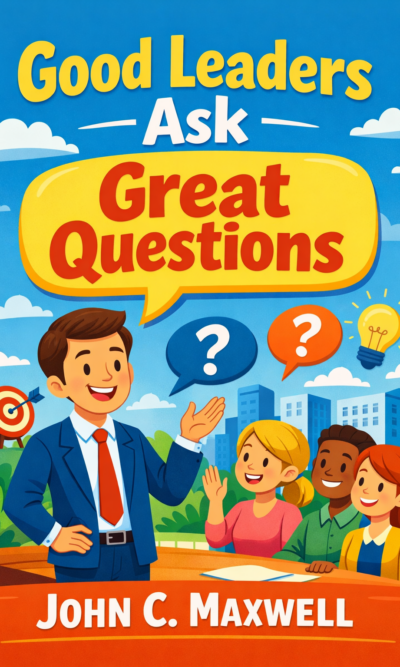
In a world that often prizes quick answers and definitive certainty, a more profound path to growth exists: learning to cherish the questions themselves. This journey begins by reclaiming our innate, childlike curiosity, a quality frequently diminished in adulthood. Our brains are wired to seek closure, a trait that served survival but can limit our potential in a complex modern landscape. By intentionally cultivating curiosity, we push against this instinct, opening ourselves to new perspectives and possibilities. True curiosity requires acknowledging what we don’t know, a stance exemplified by figures like Alexander Fleming, whose willingness to question a contaminated petri dish—rather than dismiss it—led to the discovery of penicillin. This power isn’t reserved for geniuses; it’s a muscle we can strengthen through daily habits, like reflective listening and ending each day by noting what we learned and how our perspective shifted.
When directed outward, thoughtful questions become powerful tools for connection. They build bridges of understanding and trust, signaling genuine interest in another person’s inner world. The quality of our questions directly shapes the depth of our relationships. While closed questions halt conversation, open-ended inquiries that begin with “how” or “what” invite storytelling and reflection, creating space for authentic sharing. This art transforms interactions, as demonstrated by oral historian Studs Terkel, who connected with thousands by making people feel profoundly seen through his authentic curiosity. We can apply this by shifting from a communication style based on statements and advice to one centered on inquiry, asking questions that help others explore their own experiences and feelings, thereby deepening every bond from family to colleagues.
Perhaps the most challenging yet rewarding application of inquiry is the inward turn. Asking ourselves thoughtful, probing questions is the pathway to genuine self-knowledge, helping us move beyond autopilot to examine our values, desires, and unconscious patterns. This practice of self-reflection requires courage, as it can lead to uncomfortable truths, but it is the bedrock of personal growth and alignment. Eleanor Roosevelt’s transformation from a shy woman to a formidable public force was fueled by such a practice—a relentless questioning of her own assumptions and limitations. By regularly asking ourselves what would make a day meaningful or by challenging our own rigid certainties, we gain the agency to shape a life that truly reflects who we are.
The professional sphere, which often seems to reward unwavering confidence, is ironically where a questioning mindset yields some of the greatest rewards. Innovation and successful collaboration thrive not on having all the answers, but on honoring uncertainty. Fear of appearing ignorant can stifle this, but reframing questions as tools for collective problem-solving changes everything. They uncover hidden assumptions, gather crucial information, and demonstrate deep engagement. Claude Shannon, the father of information theory, didn’t just seek to improve existing systems at Bell Labs; he asked fundamental questions about the very nature of information. This line of inquiry led to mathematical frameworks that birthed the digital age. In our own careers, we can adopt this by preparing thoughtful questions before meetings or using inquiry to understand a colleague’s challenges more deeply, thereby unlocking creativity and driving progress.
Ultimately, this is an invitation to live the questions, not just ask them. It is a philosophy that reshapes our relationship with the unknown, transforming it from a source of anxiety into a landscape of potential. This practice weaves curiosity into the fabric of daily life, creating a continuous cycle of learning and connection. By falling in love with the process of inquiry itself, we open doors to a more adaptable, empathetic, and insightful existence, where the journey of discovery becomes its own profound reward.