Description
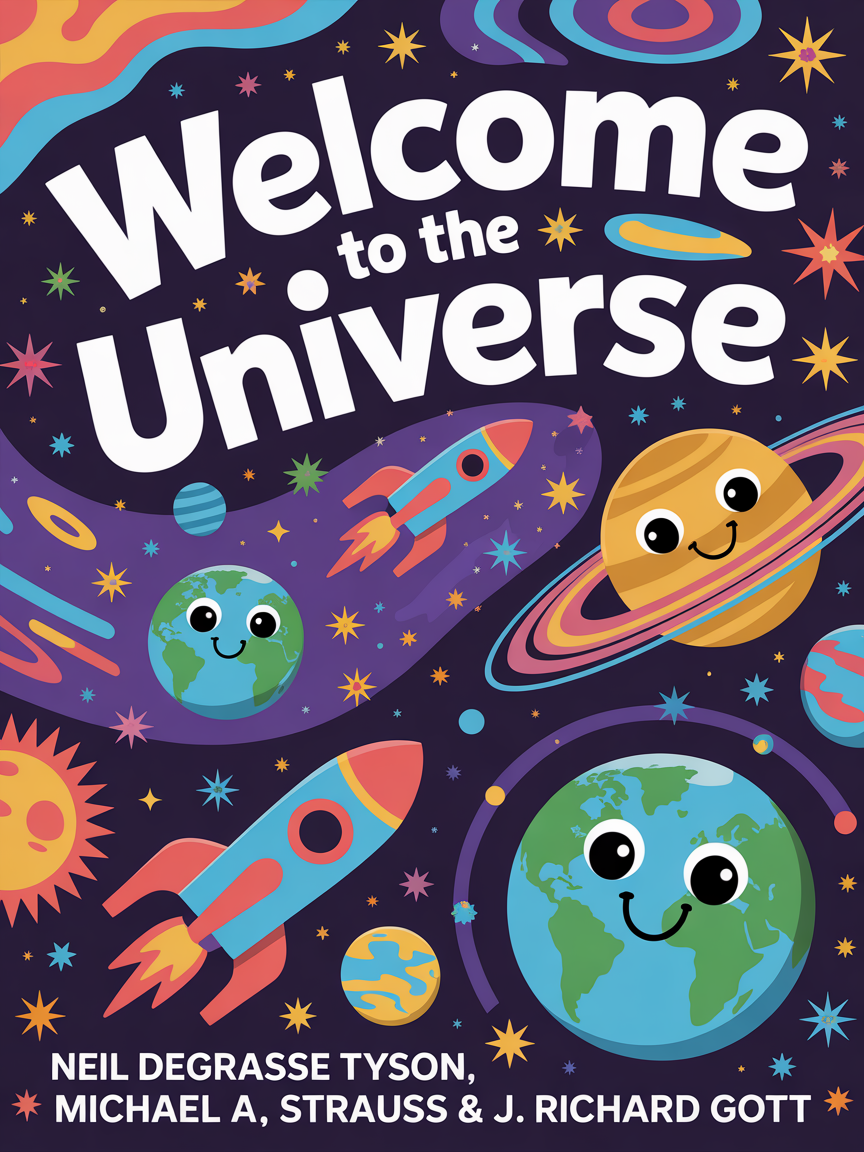
Our voyage begins with a humbling perspective shift. Viewed on the cosmic scale, all of human history is but the width of a single hair on a football field representing the universe’s 13.8-billion-year lifespan. We start by reacquainting ourselves with our home, Earth—a spaceship already hurtling through the void. Seen from space, a crucial truth emerges: our planet is perpetually half-lit by the sun, a constant balance of day and night dictated by its axial tilt. This simple orientation shapes everything we see in the sky, from the sun’s path to the constellations visible from our hemisphere, grounding us before we depart.
Our first destination is the sun, the heart of our system. Its white-hot furnace, far from being a simple fire, is a relentless thermonuclear engine where hydrogen fuses into helium, converting millions of tons of mass into energy every second. A star’s color reveals its temperature and destiny; blue giants burn fiercely and die young, while cooler, longer-lived stars like our sun have a more gradual fate. In billions of years, our sun will exhaust its core hydrogen, swell into a red giant, and ultimately shed its outer layers, leaving behind a dense, Earth-sized ember called a white dwarf. This stellar life cycle is the universe’s primary forge, creating the very elements that make up our world.
Leaving the sun, we survey our solar system’s families: the inner, rocky terrestrial planets and the outer, majestic gas giants. Here, we address Pluto’s poignant demotion, not as a dismissal but as a discovery. Pluto found its true family among the thousands of icy bodies in the Kuiper Belt, teaching us that classification evolves with understanding. As we gaze outward, we confront the deep cold of space—a remnant of the Big Bang—and the sobering forecast of cosmic heat death, where expansion leads to an eventual, silent fade of all starlight.
To comprehend the depths we are about to enter, we must understand light, our universe’s messenger. We measure the vast gulfs of space in light-years, meaning we see stars not as they are, but as they were. The twinkle of Alpha Centauri is a four-year-old postcard. Light itself is a spectrum of energy, from low-frequency radio waves to high-energy gamma rays, with visible light being only a tiny sliver perceptible to our eyes. This knowledge transforms the sky from a static painting into a dynamic, layered history book.
Venturing beyond, we encounter the universe’s grand structures: the glowing clouds of nebulas where new stars are born, and the majestic islands of stars called galaxies. Our Milky Way is but one among hundreds of billions. Here we meet the universe’s greatest mystery: dark matter. This invisible, unidentified substance, detectable only by its gravitational pull, forms the hidden skeleton of the cosmos, holding galaxies together. It is a profound reminder that most of the universe is made of stuff we cannot see.
We then approach the ultimate cosmic paradox: black holes. These are not vacuum cleaners but regions where matter is crushed to an infinite density, creating a gravity well so intense that not even light can escape. At the heart of most galaxies, including our own, lurks a supermassive black hole. Their existence stretches physics to its limits, warping space and time around them and challenging our fundamental notions of reality.
This leads to the grandest questions of all: What is the shape and fate of the entire universe? Is it flat, spherical, or saddle-shaped? Current evidence suggests a flat geometry, expanding at an accelerating rate driven by a mysterious force dubbed dark energy. This points toward a future of increasing isolation and cold. Yet, within the equations of general relativity, tantalizing possibilities like wormholes—theoretical bridges connecting distant points in spacetime—suggest shortcuts for the ultimate journey, though they remain firmly in the realm of theory.
Could we be alone? The search for life beyond Earth scans for biosignatures in alien atmospheres and listens for artificial signals. While the sheer number of planets makes life elsewhere seem statistically likely, the immense distances and timescales may forever make contact or confirmation a monumental challenge. It is a search that fundamentally asks what our place is in this grand narrative.
Our tour concludes not with a final answer, but with a renewed sense of awe. From the predictable rhythms of our solar system to the bizarre frontiers of black holes and the shape of spacetime itself, the universe is far stranger and more wonderful than everyday life suggests. This journey equips us not just with facts, but with a cosmic perspective—a profound understanding of our true, humble, and incredibly fortunate location in an astonishingly vast, dynamic, and mysterious cosmos.