Description
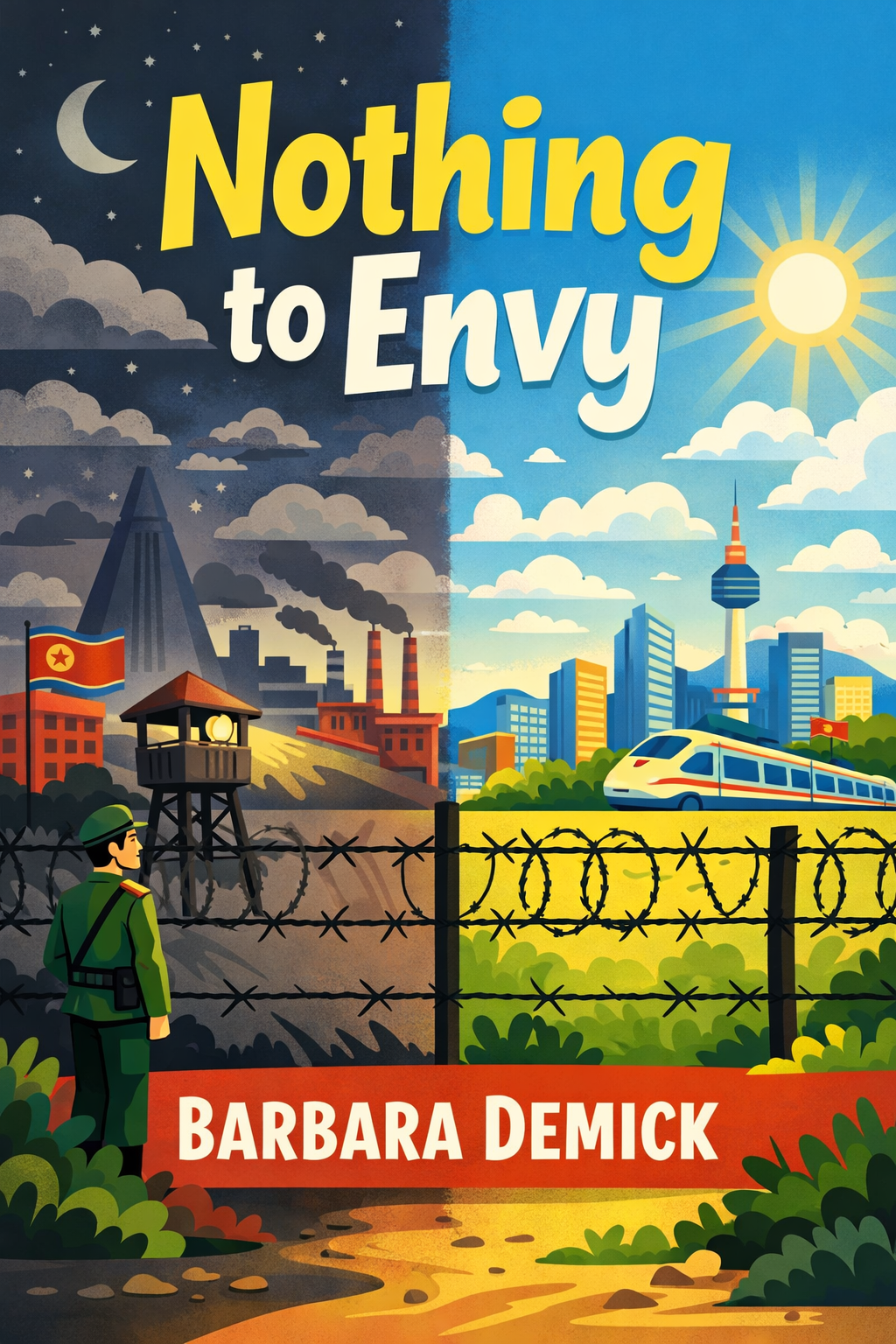
This book offers a rare and moving glimpse into the hidden world of North Korea, not through political analysis, but through the lives of its people. It weaves together personal narratives to create a tapestry of survival under one of the world’s most repressive regimes, tracing the arc from the state’s ideological zenith through a catastrophic famine and into a fragile, uncertain present.
The story begins with a fractured peninsula. In the aftermath of World War II, a hurried decision by American officials, who drew a line at the 38th parallel for administrative convenience, set the stage for permanent division. This arbitrary border would harden into a front line of the Cold War, leading to a devastating conflict that killed millions and left a legacy of bitter separation. From the ashes of war, Kim Il-sung built a new society, but it was one founded on absolute control. He instituted a hidden caste system, known as *songbun*, which classified every citizen based on perceived political loyalty. This rating, determined through exhaustive background checks, became an inescapable hereditary destiny, dictating one’s access to education, employment, housing, and even food. Your family’s past would forever dictate your future.
To cement his power, Kim Il-sung engineered a comprehensive system of thought control built on the philosophy of *juche*, or self-reliance. Daily life became an exercise in ideological training, with mandatory sessions at work and school designed to instill absolute loyalty. The state media presented a meticulously crafted reality where North Korea was a socialist paradise and the outside world, especially the South, was a pitiful, corrupt hellscape. This indoctrination was enforced by a pervasive network of surveillance, where neighbors in people’s groups were encouraged to report on one another, and mobile units could inspect homes without warning. Distrust was woven into the social fabric.
Alongside this control grew a personality cult of staggering proportions. Kim Il-sung and his son, Kim Jong-il, were elevated to god-like status. State mythology attributed supernatural events to their births and presence. Their portraits were mandatory in every home, treated with sacred reverence. Public life was a continuous performance of devotion, with weddings conducted before their statues and work presented as a gift to the leaders. This cult served as the spiritual engine of the state, demanding a religious fervor to replace all others.
This tightly controlled world began to unravel in the 1990s. The collapse of the Soviet Union, a key benefactor, severed the flow of subsidized fuel, machinery, and food. North Korea’s crippled economy, already strained by mismanagement and a focus on military might, went into freefall. Factories ground to a halt amid widespread power cuts. The public distribution system, upon which everyone relied for sustenance, broke down completely. This failure triggered a famine, known as the “Arduous March,” a silent catastrophe that killed hundreds of thousands, perhaps millions. People were reduced to scavenging for wild grasses, bark, and insects.
In this desperate vacuum, human ingenuity and survival instinct sparked a quiet revolution. Black markets, once brutally suppressed, began to sprout in alleyways and fields. These illegal markets, called *jangmadang*, became the de facto economy. People traded anything they had to buy food, creating a new class of small-scale merchants. The state, unable to feed its people, was forced to first tolerate and then gradually legalize this market activity. For many citizens, this was a first, visceral lesson in the failure of the state’s ideology—the system of *juche* could not fill their stomachs, but the forbidden market could.
As society fractured, some made the agonizing decision to leave. The book follows the perilous journeys of defectors, who risked everything to cross the northern border into China. This often involved relying on brokers and smugglers, facing the constant threat of capture and brutal repatriation. For those who made it to South Korea, freedom brought its own profound challenges. They entered a world of dizzying technology, competitive individualism, and complex politics, often struggling with guilt, trauma, and a deep sense of alienation. Integration programs aimed to help, but the psychological chasm was immense.
The narrative brings us to the present, where the fundamental dynamics of power remain unchanged under Kim Jong-un. While the markets have stabilized daily life for some, the regime’s control is maintained through a blend of modernized repression and the same old tools of surveillance and fear. The stories within this book are not tales of dramatic revolution, but of quiet endurance, shattered illusions, and the fragile, enduring spark of human resilience in a place designed to extinguish it. It reveals a country where the official slogan, “Nothing to Envy,” is a mandatory mantra, but where the deepest human longings—for truth, for connection, for a full belly—persist against all odds.