Description
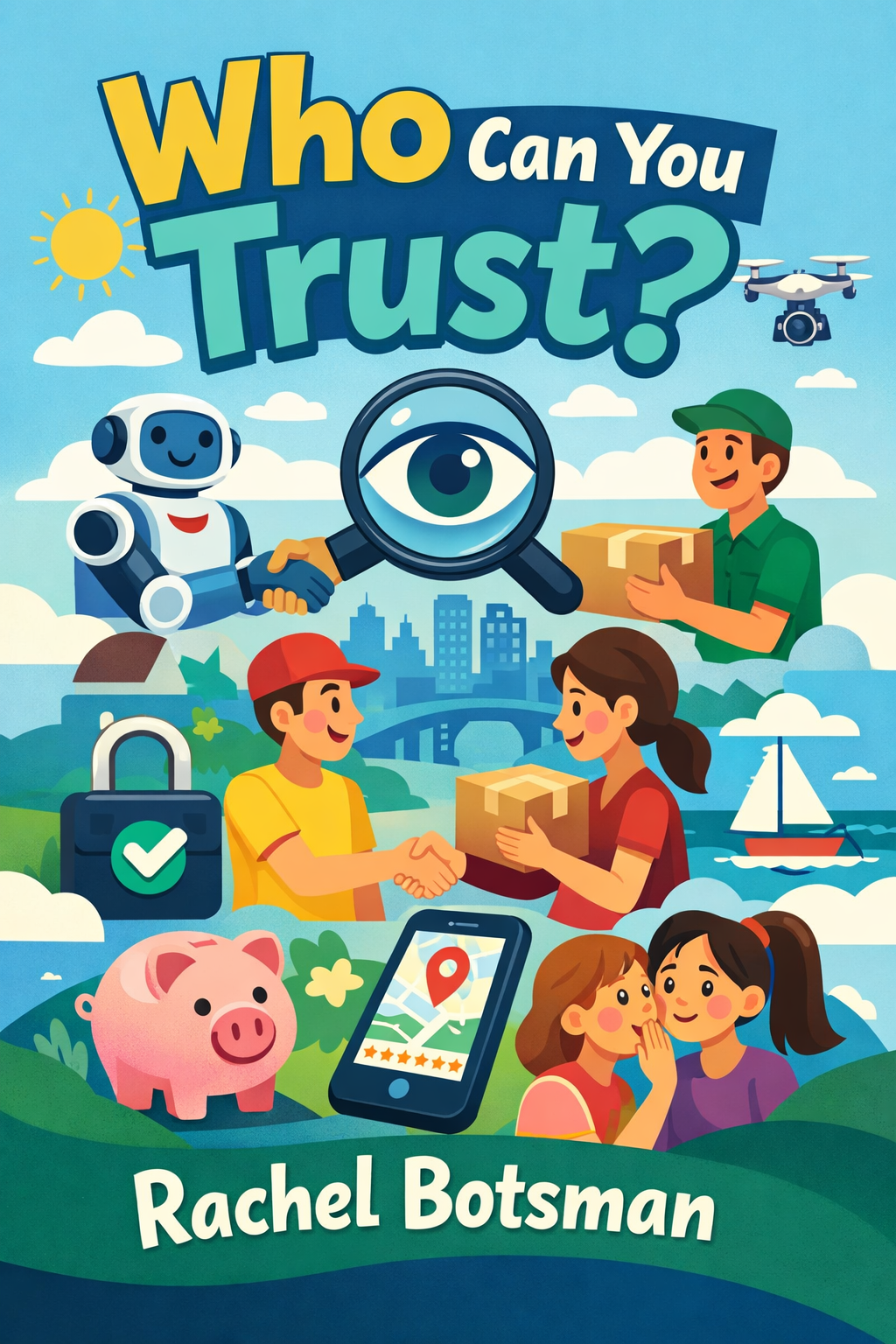
Trust is the invisible force that allows society to function, a fragile yet essential bridge between people. Historically, this trust was local and face-to-face, confined to small communities where everyone knew each other. The industrial revolution ushered in an era of institutional trust, where we placed our faith in large, centralized entities like banks, governments, and corporations to mediate our interactions and guarantee stability. Today, we are living through a profound third revolution: the shift to distributed trust. This new paradigm is not about trusting a single, powerful institution, but about relying on decentralized networks, peer reviews, and clever technological systems that enable us to confidently interact with complete strangers.
This revolution is fundamentally reshaping how we live and do business. The digital age has eroded our traditional faith in institutions, with financial crises and exposed scandals revealing their fallibility. Simultaneously, technology has provided the tools to bypass them. We now routinely get into cars driven by people we’ve never met, sleep in homes owned by strangers, and send money to vendors on the other side of the globe. This is the engine of the so-called sharing economy, but it’s more accurately described as a trust economy. Companies like Uber and Airbnb don’t own the assets they trade; they build platforms that foster trust between peers. Their genius lies in creating systems where our behavior is visible and has consequences, primarily through rating mechanisms. Knowing that every interaction will be scored makes both providers and users more trustworthy, creating a self-reinforcing cycle of accountability.
The implications of this shift are vast and extend far beyond ride-sharing or vacation rentals. In China, the concept is being pushed to a societal scale with plans for a national “social credit” system, aiming to numerically score citizens’ trustworthiness based on financial behavior, social conduct, and even online activity. While promising efficiency, such systems raise profound questions about surveillance, freedom, and who gets to define what “good” behavior is. Meanwhile, blockchain technology offers a different, decentralized vision for the future of trust. By creating tamper-proof, public ledgers for transactions, blockchain removes the need for a central authority to verify authenticity. It promises a world where contracts execute themselves, supply chains are fully transparent, and trust is baked into the code itself.
We stand at a crossroads. The move from institutional to distributed trust empowers individuals, unlocks economic potential, and fosters new forms of community. It allows for unprecedented transparency and peer-to-peer collaboration. Yet, it also brings new vulnerabilities. Our digital reputations become paramount, yet they can be hacked or unfairly tarnished. We trade institutional biases for algorithmic ones, often hidden within opaque platforms. The question “Who can you trust?” is no longer answered by looking to a known brand or authority, but by interpreting a constellation of star ratings, reading through review histories, and understanding the underlying systems that make these interactions possible. This new world requires a new literacy—a trust literacy—where we must learn to navigate, question, and shape the platforms and algorithms that are increasingly the bedrock of our social and economic lives.