Description
Have you ever stopped to wonder why your workspace looks the way it does? Most of us spend at least eight hours a day sitting at a desk, surrounded by walls or partitions, without ever thinking about how this setup came to be. We take the modern office for granted, but the truth is that the office is a relatively new invention. It has gone through many strange and interesting changes over the last two hundred years. Understanding this history helps us understand why we work the way we do today.
In the middle of the 1800s, the concept of an “office worker” was just beginning to take shape. Before the Industrial Revolution, most people worked on farms or in small shops. When businesses started to grow, they needed people to handle the paperwork. These people were called clerks. At first, these clerks didn’t have fancy buildings. They worked in “counting houses,” which were often just small, dark, and crowded rooms. In one instance in New York, ten people were packed into a space the size of a small bathroom. There were no windows, no fresh air, and very little comfort.
Despite the poor conditions, these early clerks were very close to their bosses. Because the offices were so small, the clerk often sat right next to the owner of the company. They became trusted partners and “right-hand men.” However, as the world changed, this close relationship started to fade. Business was getting bigger, and the gap between the people at the top and the people doing the paperwork began to grow.
By the late 1800s and early 1900s, technology started moving faster. The invention of the telegraph, the telephone, and the railroad meant that companies could sell products across the entire country. This meant more paperwork, more bills, and more records. Suddenly, a company didn’t just need five clerks; it needed five hundred. Offices became massive rooms filled with endless rows of desks. The quiet, personal atmosphere of the old counting house was replaced by the loud clacking of typewriters and the constant movement of messengers.
During this time, a man named Frederick Taylor introduced a new way of thinking called “Taylorism.” He treated office work like a science. He believed that every task should be broken down into tiny, simple steps. He even used stopwatches to time how long it took workers to do their jobs. The goal was pure efficiency. This made the office feel more like a factory. Workers were no longer individuals; they were just parts of a big machine designed to produce as much work as possible in the shortest amount of time.
As cities like New York and Chicago became more crowded, there was no more room to build outward. The only solution was to build upward. This led to the birth of the skyscraper. These massive buildings became symbols of success and power. Inside these towers, thousands of people were stacked on top of each other in different departments. To keep these workers happy and to make them feel “superior” to manual factory workers, companies began adding special perks. Some skyscrapers had their own libraries, barbershops, and even dentists inside the building. It was a way to make office workers feel like they were part of a special, professional class.
After World War II, the way we thought about office design shifted again, this time coming from Europe. In Germany, designers wanted to get away from the rigid, factory-like rows of desks. They created a concept called “Bürolandschaft,” which translates to “office landscape.” The idea was to make the office feel more natural and organic. Instead of straight lines, desks were grouped together based on how people actually talked to each other. They used plants and curved paths to create a sense of flow. They believed that if people could move and interact more freely, they would be more creative and productive.
This “landscape” idea eventually traveled to America. Designers tried to create the “Action Office.” This was a revolutionary idea that focused on the health of the worker. It encouraged people to both sit and stand while working. It used colorful walls and movable furniture so that the office could change as the work changed. The goal was to give workers privacy when they needed to focus, but also openness when they needed to collaborate. It was a beautiful dream of a flexible, human-centered workplace.
However, there was one big problem: the “Action Office” was expensive. While the designers wanted to help workers feel better and move more, the companies paying for the furniture mostly cared about saving money. Businesses realized they could take the idea of a “movable wall” and turn it into something much cheaper and smaller. Instead of a wide-open, beautiful landscape, they created small, fabric-covered boxes. This was the birth of the cubicle.
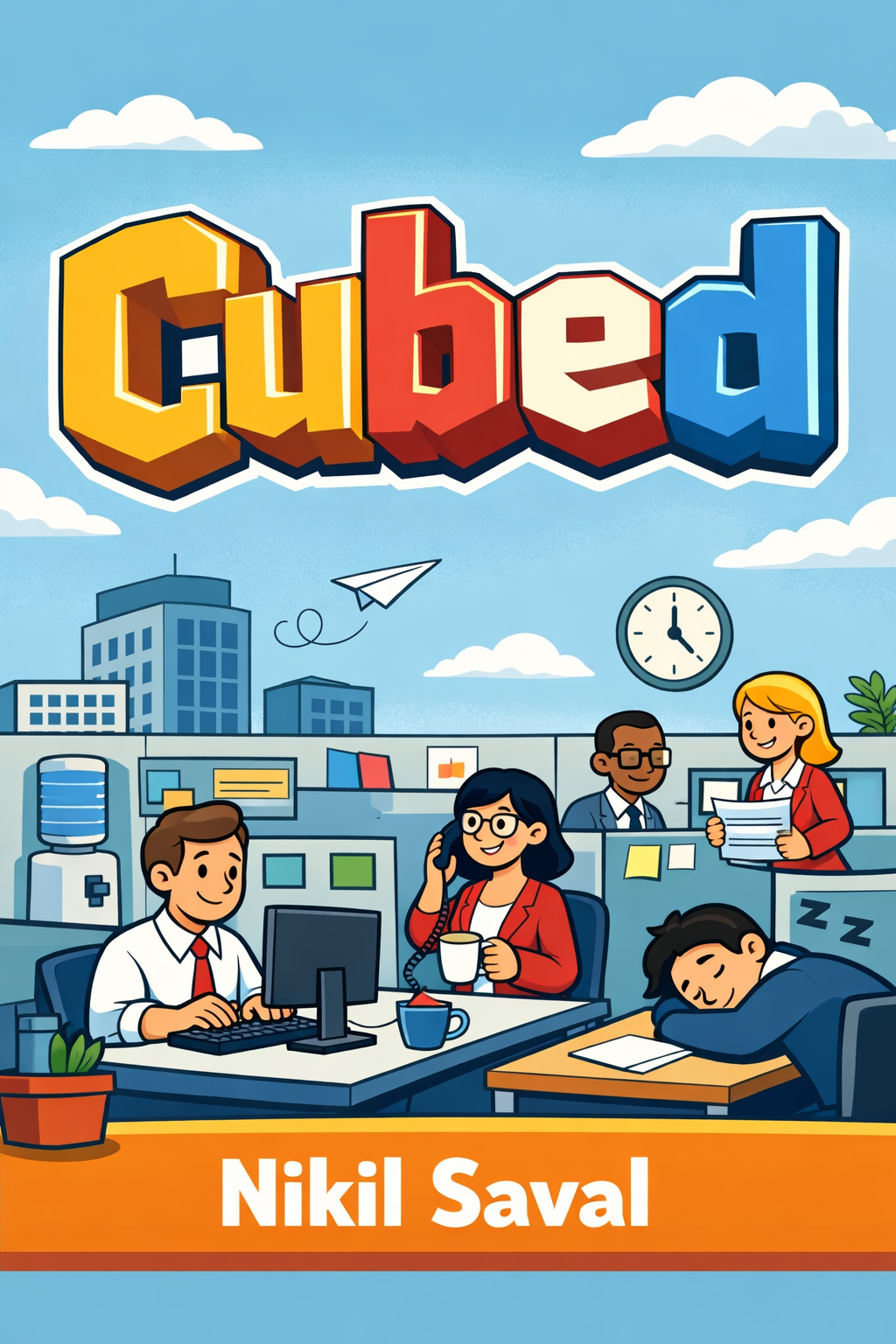
The cubicle became the standard for the modern office because it was the most “efficient” way to pack the most people into the smallest space for the least amount of money. It took the privacy of the old private offices and the density of the factory-style rows and smashed them together. For many people, the cubicle became a symbol of corporate boredom. It was a long way from the organic, flowing landscapes the German designers had imagined.
Looking back at this journey, we can see that the office has always been a reflection of our technology and our values. It started as a dark room for a few people, turned into a giant factory for paperwork, rose into the clouds as a symbol of status, and eventually settled into the cubicles we see today. The office isn’t just a place where we work; it is a story of how we have tried—and sometimes failed—to balance efficiency with our need to feel human. As we move into the future with remote work and new technology, the “office” will likely change again, continuing its long history of transformation.