Description
Imagine a world where you had to trade a cow for a new coat or a bag of salt for a haircut. This system, known as barter, worked fine in small villages where everyone knew each other, but it had a massive problem. If you had a pig and needed shoes, but the shoemaker only wanted chickens, you were stuck. To solve this, humans developed money. Money is simply a tool that everyone agrees has value, making it easier to trade with anyone, anywhere. Over thousands of years, we have used everything from sea shells to giant rocks as money, but the most successful forms of money shared one specific trait: they were hard to create or find in large amounts.
One of the most interesting examples of early money comes from the people of Yap Island, who used massive limestone disks called Rai stones. These stones were so heavy that they didn’t even move them when they were “spent”; the community just agreed that the ownership had changed. This worked perfectly as long as it was difficult to get new stones. However, when an outsider arrived with modern tools and ships to bring in thousands of new stones easily, the money lost its value. This teaches us a vital lesson: when the supply of money is easily increased, the value of that money eventually disappears. This is a recurring theme throughout human history.
Gold eventually became the world’s favorite form of money because it is nearly impossible to destroy and very difficult to find. You cannot just print more gold in a factory; you have to dig deep into the earth, which costs time and energy. This scarcity made gold “sound money.” For centuries, especially during the 1800s, the world operated on a gold standard. People used paper receipts that were backed by actual gold stored in bank vaults. This era was a time of massive global growth, invention, and peace because the money kept its value, and governments couldn’t simply create more of it out of thin air to fund projects or wars.
Everything changed in the early 20th century, specifically around the start of World War I. Governments realized that if they stayed on the gold standard, they would eventually run out of money to pay for the war. To solve this, they “unhooked” their paper money from gold. They started printing more paper bills than they had gold to back them up. While this gave them the cash they needed for the military, it destroyed the value of the savings held by regular citizens. This was the birth of “fiat money,” which is money that has value only because a government says it does. Unlike gold, fiat money can be printed in infinite amounts by central banks.
When money is “unsound”—meaning it can be printed easily—it changes how people think about the future. This is what economists call “time preference.” When you have sound money that gains value over time, you are encouraged to save and think about the long term. You delay buying things today so you can have more tomorrow. This leads to investment, better technology, and a stable society. However, when the government prints money and its value drops, people develop a high time preference. They want to spend their money as fast as possible before it loses value. This leads to a culture of debt, over-consumption, and economic bubbles that eventually pop, causing recessions.
Most of the economic problems we see today, from rising prices to massive government debt, can be traced back to the decision to move away from gold. In 1971, the United States officially ended the last link between the dollar and gold, meaning every currency in the world today is now fiat money. Because there is no limit to how much of this money can be created, we live in a cycle of “boom and bust.” Central banks try to manage the economy by changing interest rates and printing cash, but they often make things worse because they lack the information that a free market provides through natural prices.
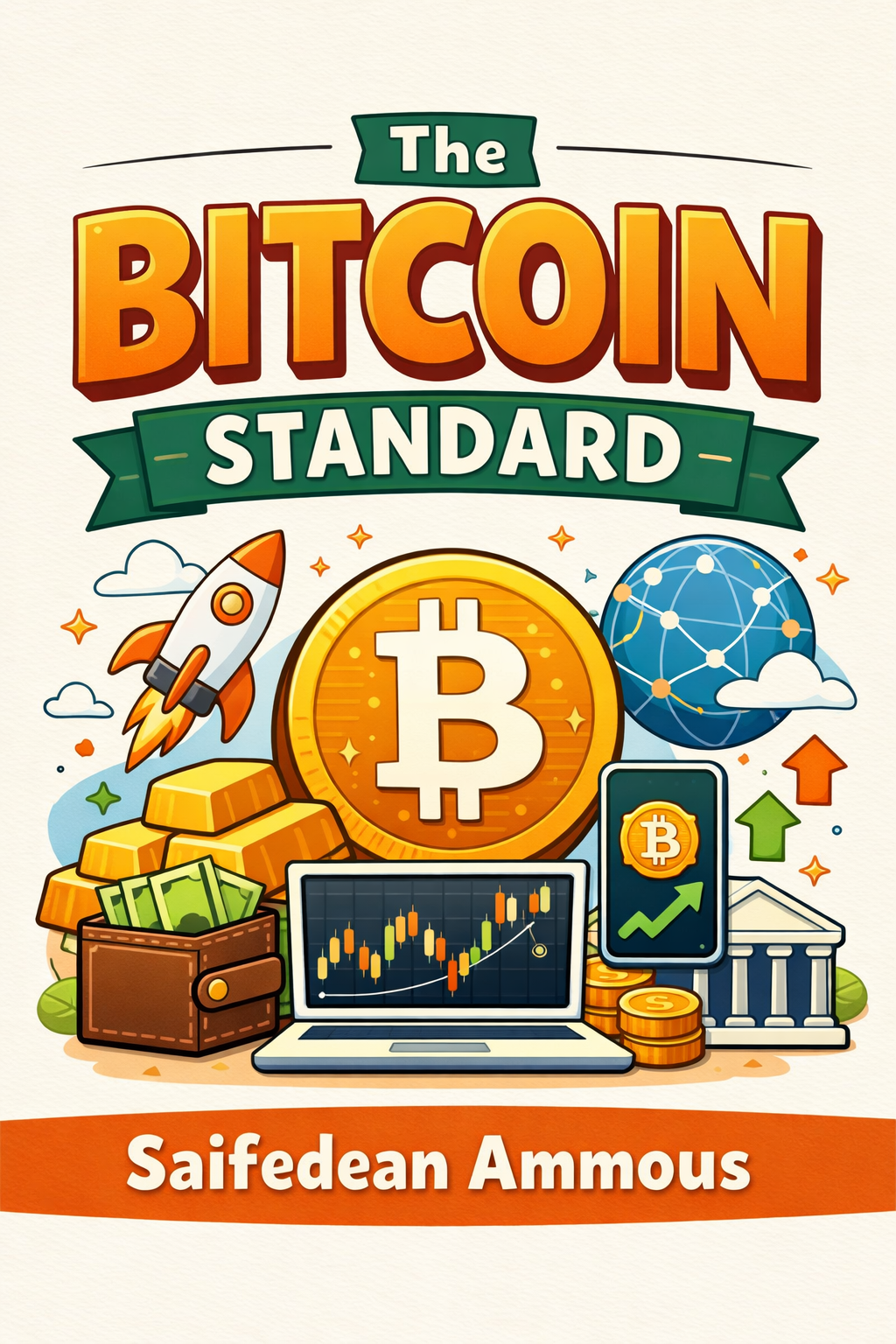
This brings us to the digital age and the invention of Bitcoin. Bitcoin was designed to be the digital version of gold. It is the first form of money in history that has a strictly limited supply. There will only ever be 21 million Bitcoins. No government, bank, or person can ever change that number. Because the rules of Bitcoin are written in code and managed by a global network of computers, it doesn’t require a central leader or a king to tell us what it’s worth. This makes it a potential “new standard” for a world that has become tired of inflation and falling currency values.
Bitcoin is unique because it is both scarce and highly secure. It uses a technology called the blockchain, which is like a digital ledger that everyone can see but no one can cheat. When a transaction happens, the entire network verifies it. To hack Bitcoin, you would have to take over more than half of all the computers in the world at the same time, which is practically impossible and would cost more than you could ever steal. This decentralized nature means that for the first time in history, we have a way to send value across the world instantly without needing a bank or a government to approve the transaction.
Of course, Bitcoin still faces challenges. Its price goes up and down very quickly, which can be scary for new users. However, the author argues that this is normal for a brand-new form of money that is still growing. As more people use it and its total value increases, it should become more stable. There is also the question of how it will scale to handle millions of transactions every day. While these are big hurdles, the underlying math of Bitcoin remains the same: it is the hardest, most predictable form of money ever invented.
In the end, the story of money is a story of trust. We used to trust gold because of the laws of chemistry. Today, we are forced to trust governments and central banks. Bitcoin offers a third option: trusting mathematics and code. If the world continues to struggle with debt and inflation, more people may look toward a system that no one can manipulate. Whether Bitcoin becomes the global standard or remains a digital alternative, it has reminded us that for an economy to truly thrive, it needs money that holds its value over time.