Description
In our busy, connected world, we often look at people who spend a lot of time alone with suspicion. We might think they are lonely, sad, or just strange. We are taught that being “healthy” means being social, always surrounded by friends, family, and colleagues. This book argues that this view is completely wrong. Solitude, or the state of being alone, is not a punishment or a problem. Instead, it is an immensely powerful and positive force. People who learn to embrace time by themselves can often be healthier, more relaxed, and more in touch with themselves than those who are constantly busy with others. This doesn’t mean you should abandon your friends and family for a life of isolation. It is all about finding a healthy, happy balance.
Why is being alone so beneficial? First, it gives you the space to boost your creativity and deepen your self-knowledge. When you are constantly around other people, you are also constantly influenced by their opinions, demands, and energy. It’s only when you are completely by yourself, free from all those outside influences, that you can truly listen to your own inner voice. This quiet allows you to discover who you really are and what you truly value. Many of the world’s most creative people have understood this power. The author Henry David Thoreau, for example, spent over two years alone in a cabin at Walden Pond. This time allowed him to re-evaluate his own life and the society he came from, leading to his famous book. Similarly, the writer Virginia Woolf argued that a “room of one’s own,” or a place of solitude, was essential for creativity. She believed many women in history were not lacking talent, but were simply lacking the quiet time alone needed for their creativity to grow.
Now that you know the benefits, you might wonder how to find this peaceful solitude. One of the best and most ancient methods is to escape the noise of the city and go into nature. By yourself. This is a key point—even bringing a dog can be a distraction. When you immerse yourself in a natural environment completely alone, you can begin to feel a deep sense of connection to the world around you. This experience can be so powerful that it feels almost mystical. People who have experienced this describe it as “transcendence,” a feeling of interacting with something bigger than your own conscious mind. Many cultures throughout history have used this practice. Monks and knights would spend time in a “vigil,” a period of solitude, before they were initiated into their new lives. This time alone was seen as a necessary step to prepare for a major life transition.
If being alone is so great, why does society often look down on it? It’s a strange contradiction. Our modern culture claims to love individualism—we celebrate unique fashion, bold lifestyle choices, and personal expression. Yet, if someone chooses a lifestyle of solitude, they are often seen as threatening or suspicious. Why is it okay to be an individual with tattoos, but not okay to be an individual who prefers to be alone? Part of the blame may lie in our evolution. For thousands of years, humans survived by sticking together in groups. Companionship meant safety and success. Because of this deep-seated history, our brains might have an inherent, built-in reaction that sees solitude as “unnatural” or dangerous. We also tend to worry that if someone is isolated and gets hurt, no one will be there to help them. While these fears are understandable, they create an unfair social stigma against people who are simply choosing a path that brings them happiness and freedom.
It’s not just society that judges us; we often have our own deep-seated fears of being alone. You might tell yourself that you want more time to yourself, but you never seem to find it. This could be a sign of a subconscious fear. You might even feel angry or critical when you see a friend who seems perfectly happy spending time by themselves. The first step is to recognize these fears. The second step is to overcome them by starting small. You don’t have to go live in a cave for 20 years like Anthony the Great, one of the founding fathers of monastic life. You can start by giving yourself small, manageable doses of alone time. Instead of taking a quick shower, try taking a long, lingering bath. Focus on the simple fact that you are alone and safe. You can even practice being “alone” in a crowd, by focusing on your own thoughts while riding a bus or sitting in a store. History shows us that solitude is not dangerous. Both Anthony the Great and a Tibetan Buddhist nun named Jetsunma Tenzin Palmo (who lived in a cave for 12 years) emerged from their long periods of isolation as perfectly healthy, mentally fit, and peaceful individuals.
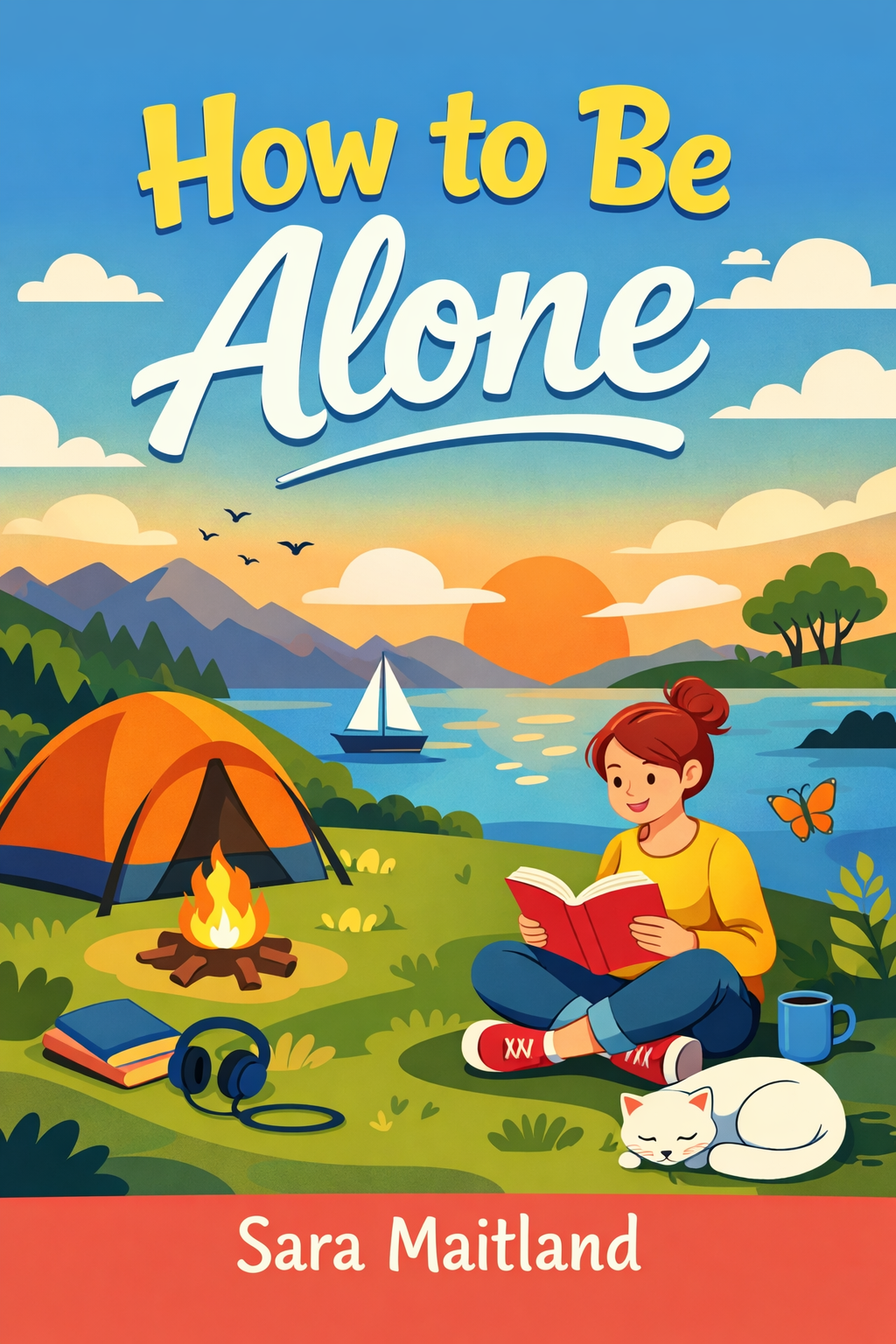
Once you are comfortable with small doses, you can begin to expand your periods of solitude. But there is an important difference between true solitude and simple distraction. Many activities we do “alone,” like reading a book, watching a movie, or listening to music, are not really true solitude. While these activities are wonderful and enriching, they keep us from ourselves. When you are reading, you are concentrating on the thoughts and words of another person. True solitude means spending time with your thoughts. A much better solution is to take solitary walks in nature. A quiet walk or a run can be a form of meditation, helping you get in tune with your own body, mind, and environment. When you are ready, you can challenge yourself with a “solo adventure.” This could be a simple camping trip, a weekend boat trip, or even a visit to a foreign country all by yourself. By learning to rely on yourself, you build a deep sense of fulfillment.
One of the greatest gifts of solitude is that it allows you to explore your own mind through “reverie,” or active imagination. Think back to your childhood. You could probably keep yourself entertained for hours with just your imagination. As infants, we are experts at this. A psychologist named Donald Winnicott explained that as long as our basic needs were met (like being fed), we felt safe and secure enough to be alone, happily exploring our surroundings. Unfortunately, as we grow up, school and social pressures can make us lose this ability. We lose that feeling of “safe alone time.” But we can get it back. The psychoanalyst Carl Jung used solitude to examine his own subconscious. He would spend time daydreaming, writing down his memories and dreams, and paying attention to which thoughts made him happy. He found that many of his happiest memories were related to the solitude he experienced as a child. He encouraged his patients to do the same: embrace solitude and reclaim that safe, happy, imaginative state from childhood.
Since this “safe alone time” is so important to our development, it is one of the greatest gifts you can give your own children. In today’s world, we are often more focused on teaching children about the dangers of being alone. While safety is important, this fear-based approach denies them the chance to learn the important benefits of solitude. We should focus on creating safe environments where children can be alone. Even infants can practice, by just being allowed to lie in their cots and explore the room with their eyes, without an adult constantly trying to engage them. You can give toddlers space in a park or in the woods to explore independently, while you supervise from a distance. It’s also important to let kids enjoy stories and fairy tales where the hero or heroine faces danger alone. Stories like The Snow Queen are popular for a reason: they teach children an important lesson, which is that even if they are alone, they have the inner strength to overcome great challenges.
So, how much alone time is the “right” amount? This is a common question, and many people think the answer depends on whether you are an “introvert” (shy) or an “extrovert” (outgoing). But this is far too simple. First, these labels are almost impossible to test. If you ask someone if they like parties, their answer will depend on the type of party and who is attending. Second, these categories are culturally biased. In some cultures, being quiet (introversion) is highly valued, while in others, being outgoing (extroversion) is seen as the ideal. The truth is, there are not just two types of people. Every person is a unique mix of traits. The same goes for solitude. There is no magic psychological theory that can tell you how many hours a week you need to be alone. You are the only one who can decide what works for you. The more you practice solitude and learn about yourself, the easier it will be to find your perfect balance.