Description
Many people believe you must have a perfect plan before you start a business. They spend months or even years trying to get every detail right. The author, Michael Masterson, a highly successful entrepreneur, challenges this idea. He tells a story about creating a business seminar. Instead of building the whole course first, he decided to sell tickets for it. He set a high price and a big sales goal. Only after he had sold all the tickets and made the money did he actually sit down to create the content for the seminar.
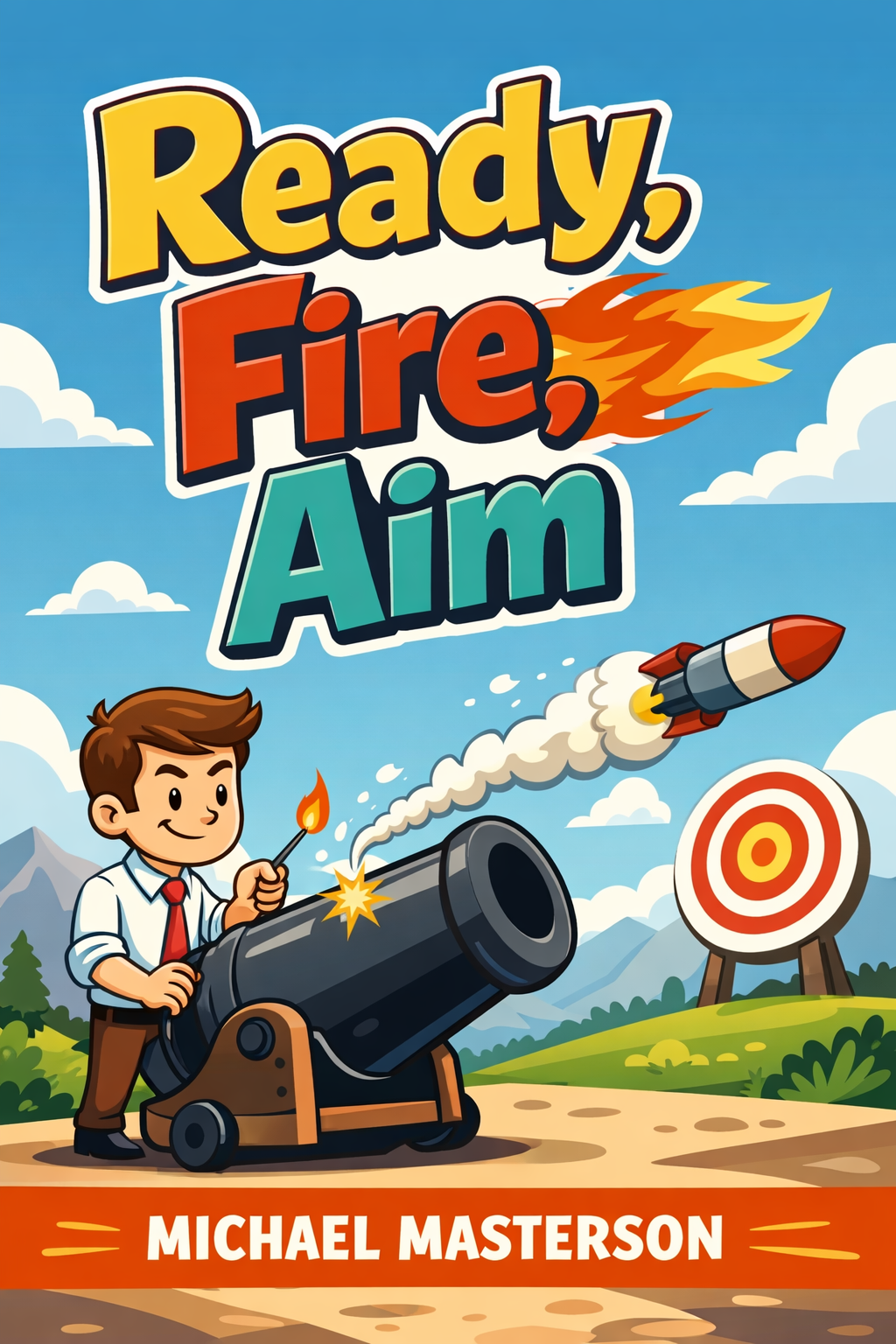
This approach might sound backward or risky to most people. But it is the heart of a powerful idea: sometimes, you have to “fire” before you “aim.” This book explains that growing a business is not one single challenge; it is a series of different challenges. The author found that all businesses go through four distinct stages of growth. To succeed, you must change your strategy and your own role as a leader at each stage. What works at one level will hold you back at the next.
The first stage is about getting from zero to your first million dollars in revenue. This is the startup phase, and it is all about one thing: sales. The author shares the example of a student who needed to make money fast. He had an idea for a website, but instead of spending months to make it perfect, he worked for just two days to create something that was “good enough.” Then, he immediately focused all his energy on selling. His business was a huge success.
This story teaches the most important lesson for stage one. The biggest mistake new entrepreneurs make is getting lost in planning. They try to perfect their product, believing that a perfect product will sell itself. This is almost never true. Nothing happens until you make a sale. The correct approach is to get your product to a basic, functional level—a “minimum viable product”—and then start selling it. You will learn more from your first ten customers than you ever will from six months of private planning. Customer feedback is what will show you how to aim and improve your product.
To do this, you need to ask a few simple questions. First, where is my audience? Look at where your competitors are finding their customers. Go there. Second, what is my basic, “good enough” product? Resist the urge to add features. Keep it simple. Third, what is the right price? It needs to be high enough to make a profit but low enough for people to try it. Finally, how will I sell it? You need a persuasive message to get your audience to act. In this early stage, speed is more important than perfection.
Once you reach the one-million-dollar mark, the rules change. The strategy that got you here—focusing on one product—is no longer enough. The main challenge of stage two, which takes you from one million to ten million dollars, is learning how to innovate. Your company now needs to become an “idea factory.” You must get very good at creating and launching multiple profitable products, and you must do it fast.
Your focus shifts from just selling to also creating. This means you need to build a company culture that values speed and new ideas. The author suggests that most of your growth in this stage will come directly from how fast you can create new things to sell. You need to develop new products that appeal to your existing customers and new products that attract new customers. This stops you from being too dependent on a single hit product and creates more ways to earn revenue.
To get a flow of good ideas, you need a system. This includes brainstorming in small, focused groups. Set a time limit and clear rules. Most importantly, when a good idea strikes, you must act on it within 24 hours. Even if it is just drafting a sales message or outlining the idea, you must capture the momentum. Then, you use the “Ready, Fire, Aim” loop again. “Ready” is asking: Is this a good idea? Can we afford to test it? “Fire” is launching it fast, without letting procrastination stop you. “Aim” is watching the market’s response. If it sells, you invest more. If it does not, you change it or move on.
As your company grows past ten million dollars, you will face a new kind of problem. The creative, chaotic energy that worked so well in stage two now starts to cause trouble. Things get missed. Customers might become unhappy. Processes break. This is a sign that you are entering stage three. This stage, from ten million to fifty million dollars, is all about bringing order to the chaos. You have to move from being a scrappy startup to being a scalable, professional company.
This requires a huge personal change for the founder. You can no longer be the person who does all the work. Your main job is to build systems and processes. You must learn to become a leader and a manager, not just a creator. This means you need to hire a layer of management. A key hire is often a Chief Operating Officer (COO), someone who can manage the day-to-day operations of the business. This frees you up to focus on the big picture.
Your role as the founder must evolve. You need to get excellent at communicating your vision so everyone in the company is working toward the same goal. You will spend more time networking with other companies to create partnerships. You will need to become a skilled negotiator. And your hiring will change. Instead of hiring “doers,” you will now be hiring “leaders” who can build their own teams. This is often the hardest transition for an entrepreneur, but it is necessary. You must learn to trust your team and your systems.
If you successfully build these systems, you will reach stage four, where your company is making over fifty million dollars. At this point, growth often slows down, and you, the founder, have some big choices to make. The company is no longer just a job; it is a valuable asset. The adventure is about deciding what to do with this asset and what you want your life to look like.
You have several options. You could sell the company and enjoy the wealth you have created. You could take the company public. Or, you could stay involved but in a new role, like the Chairman of the board. In this role, you are no longer managing daily operations. Instead, you act as the primary investor and advisor. You help guide the company’s major decisions, like acquiring other businesses, but you let your leadership team run the show.
This final stage is the reward for all the work you have done. By learning to “fire” before you had perfect aim, you gained the insights needed to grow. By adapting your style and focus through each of the four stages, you have built something that is bigger than yourself. The journey shows that success is not about having a perfect plan from the start. It is about having the courage to start, the speed to innovate, the wisdom to build systems, and the foresight to know when your role needs to change.