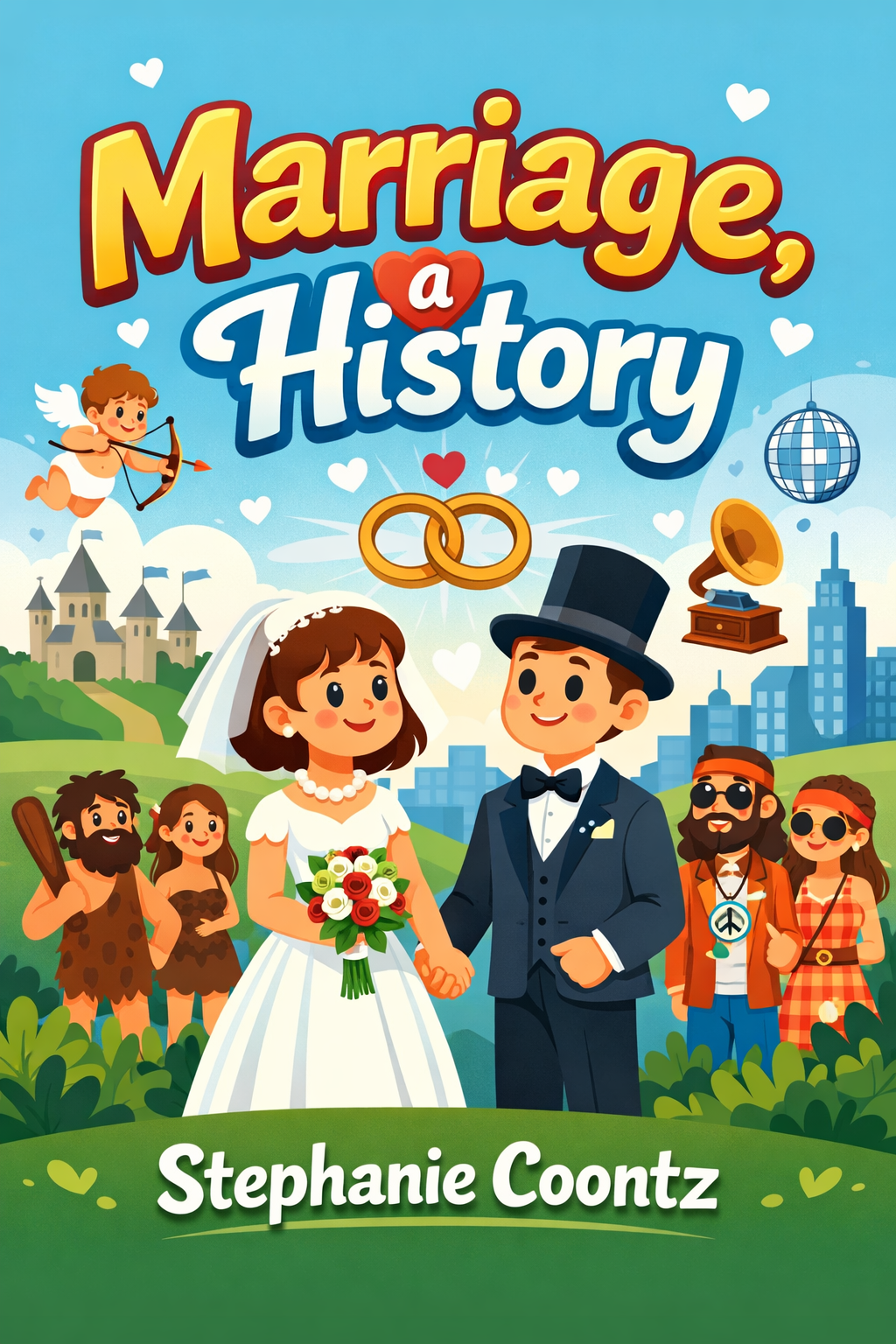
Description
We often think we know what “traditional marriage” means. We picture a husband who works, a wife who stays home, and their children. This image is powerful, but it is also surprisingly new. For most of human history, marriage looked very different and served completely different purposes. The idea that marriage should be based on romantic love is actually a very recent invention. This is the long, strange, and fascinating story of how this single institution has changed.
To begin, we have to go back to our earliest ancestors. For hunter-gatherer groups, life was dangerous. Meeting a new group of strangers was risky and could easily lead to violence. These groups needed a way to create stability and safety. Marriage was the solution. By marrying someone from another group, strangers became family. This alliance turned potential enemies into in-laws, creating a “peace weaver” (an old Anglo-Saxon word for “wife”) who guaranteed cooperation. This was a strategy for survival. Love was not part of the equation. In some cultures, falling in love was even seen as dangerous, a foolish emotion that could threaten the stability of the family.
This idea of marriage as a practical tool quickly expanded. If marriage could create peace, it could also create wealth and power. For centuries, the main goal of marriage was to grow the family, not out of affection, but to gain more in-laws. More in-laws meant more people to trade with, more allies in a fight, and a larger network for economic prosperity. This was so important that some native societies in the Pacific Northwest would “marry” one of their members to an object, like a dog or even someone’s foot, just to formally create the in-law relationship needed for trade. Later, in medieval and ancient times, marriage was a core part of politics. Royal families and aristocrats used it to seal treaties, combine armies, and expand their territory. The famous romance of Antony and Cleopatra, for example, was mostly a political and financial merger. He needed her money for his army, and she needed his Roman influence to secure her power in Egypt. Any affection they felt was just a bonus, not the reason for the partnership.
This way of thinking lasted for thousands of years. Parents, not individuals, arranged marriages. They made strategic choices based on what was best for the family’s social standing, finances, and power. The idea of letting a young person choose their own partner based on a feeling as unreliable as “love” was considered absurd. This all changed in the late 1700s. Two massive shifts happened at the same time: a cultural one and an economic one. The cultural shift was the Enlightenment. New ideas about individual rights and freedom spread through Europe and America. Thinkers argued that people had the right to pursue their own happiness. This radical idea inspired revolutions and led young people to believe they should be free to choose their own spouse.
But this new idea of freedom would not have mattered much if people were still economically trapped. Before this time, a person’s livelihood depended on the family farm or business. You could not support yourself without your family’s inheritance or land. This gave parents complete control. The economic shift that changed this was the rise of wage labor. As the market economy grew, a young man could move to a city, get a job for cash, and earn his own living. He was no longer dependent on his parents. For the first time, a couple could fall in love, support themselves, and build a life together, whether their families approved or not. Suddenly, love became the main reason to get married.
This new, love-based marriage created new expectations. In the Victorian era, during the 1800s, people began to see marriage as the primary source of emotional fulfillment. It was no longer just a practical arrangement; it was a deep, intimate, almost religious bond. Spouses expected to be best friends and deep spiritual partners. However, this new focus on emotion did not extend to sex. In fact, the Victorian era was famously repressed. Women were taught to be “pure” and to have no sexual desires. Men were seen as having animal urges, but they were instructed to restrain them. Sex in marriage was seen as a duty for having children, not for pleasure. This led to widespread sexual frustration. Women, in particular, suffered from what doctors at the time called “hysteria,” which was often treated with pelvic massage.
Fast forward to the mid-20th century. After the chaos of World War II, people in the West craved stability and family life. This led to the “Golden Age” of marriage in the 1950s and early 1960s. People married younger than ever before. Being single was viewed with suspicion, seen as “sick” or “immoral.” This era also perfected the “traditional” family model: the male breadwinner and the female homemaker. This model had been rare in the past. For most of history, women and men worked together on the farm or in the family shop. Even after wage labor began, most men did not earn enough to support a family alone, so their wives also had to work. But the massive economic boom of the 1950s made it possible for a single (male) income to support an entire family comfortably. For a brief moment, this model seemed like the perfect, final form of marriage.
That “perfect” model fell apart almost as soon as it was built. In the 1970s, the institution of marriage seemed to crumble. Divorce rates exploded—in the United States, one in every two marriages ended. People married later. Having children outside of marriage became more common. What caused this collapse? Ironically, it was the very thing that created modern marriage: love. When marriage is based only on love, it becomes fragile. If the love fades, there is no longer any reason to stay together. This was not the only reason. Practical barriers that had trapped people in marriages were removed. Most importantly, women gained economic freedom. As more women went to college and entered the workforce, they were no longer financially dependent on their husbands. A woman could now afford to leave an unhappy marriage. At the same time, cultural values shifted. New generations questioned traditional gender roles and valued personal self-expression over duty.
So, is marriage doomed? The evidence says no. It is just changing again. Today, the 1950s model is no longer the norm. Most marriages are dual-earner partnerships. In many families, the wife is the primary breadwinner. We are also seeing new, legally recognized partnerships that are not traditional marriages at all, such as arrangements between siblings or best friends who want to raise a child or share resources.
Despite these changes and the high divorce rates, marriage remains incredibly popular. Studies consistently show that, on average, married people are happier, healthier, and better able to handle life’s financial and emotional shocks. The institution that was once about survival, then power, and now love, has become more fulfilling—and more voluntary—than ever before. It has survived thousands of years of change, and while it continues to evolve, it is almost certainly here to stay.