Description
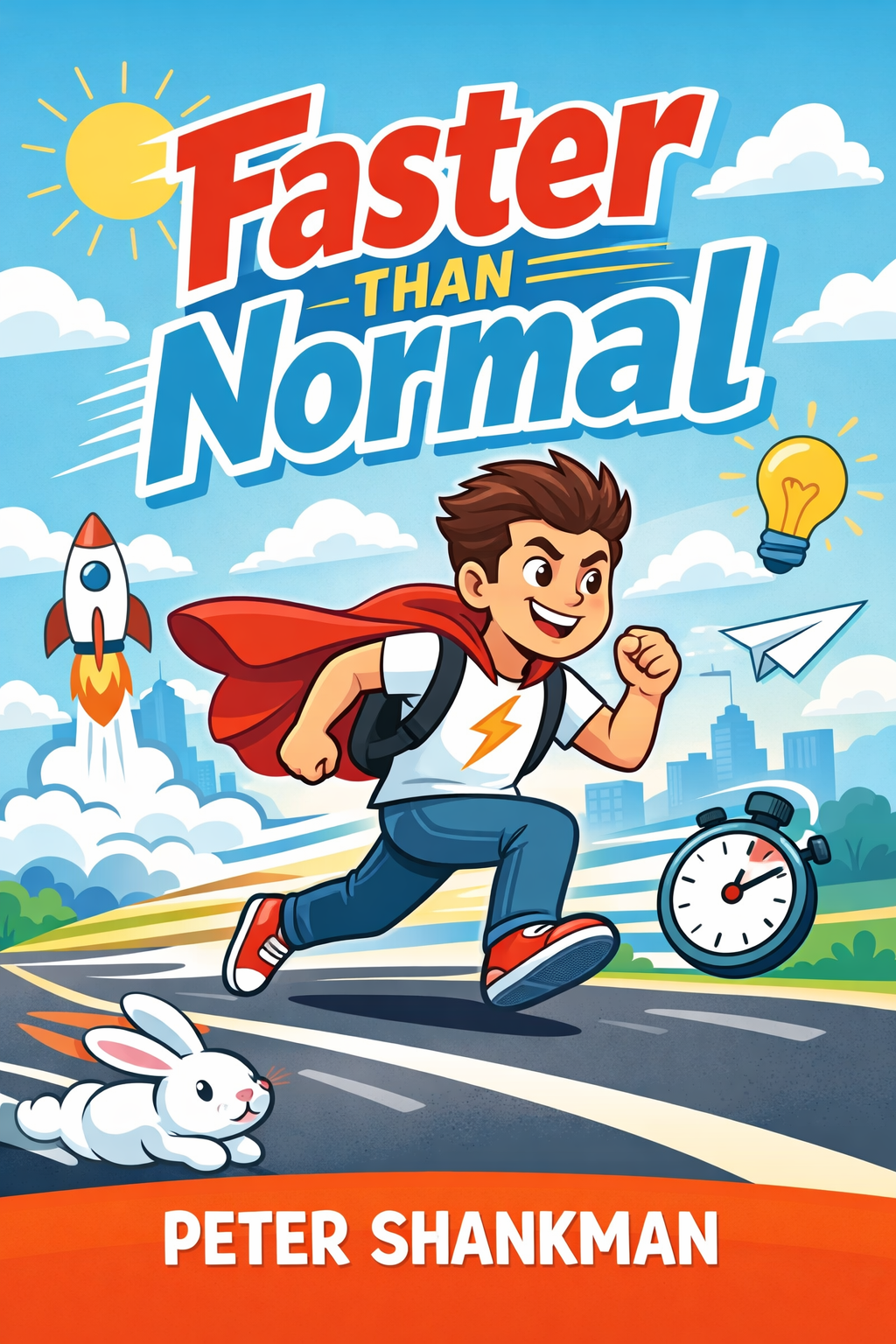
Many people view Attention Deficit Hyperactivity Disorder, or ADHD, as a problem. They see it as a disorder that makes it hard to focus, sit still, or finish tasks. But what if this view is wrong? This book presents a radical new perspective: ADHD is not a curse, it is a gift. It is a source of incredible power. The author, Peter Shankman, lives with ADHD and has learned to use its unique wiring to achieve amazing things, like writing an entire book during a single long-haul flight. He believes that others with ADHD can also learn to harness this power. Their brains simply work “faster than normal.”
Shankman’s journey to this realization was not easy. Growing up, he felt different. He was the kid who always blurted out the wrong thing at the wrong time, often getting him into trouble. He struggled with simple tasks like cleaning his room, yet would suddenly be overcome with a burst of energy and clean the entire house. He could focus intensely on a complex project for hours but would get lost in the middle of a simple one. This pattern continued into adulthood, leading to difficulties in his personal life. It was only during a therapy session that he was finally given an answer. His therapist introduced him to the book Delivered from Distraction, and for the first time, Shankman felt understood. He was not broken; his brain was just different.
This discovery changed everything. He began to see his ADHD as a feature, not a bug. People with ADHD are often highly creative, spontaneous, inventive, and daring. Their minds make connections that “normal” brains might miss. Some of history’s greatest thinkers and innovators, like Leonardo da Vinci or Albert Einstein, showed traits that strongly suggest they also had this type of mind. The biological reason for this difference is related to brain chemistry. People with ADHD often have lower levels of key chemicals like dopamine, serotonin, and adrenaline. These are the chemicals that help us focus, regulate mood, and feel happy. Because their brains are constantly seeking these chemicals, they can seem distracted or restless.
However, this power must be managed. If left unchecked, the same traits that fuel creativity can become destructive. The constant search for stimulation can lead to addiction, anxiety, and depression. A person with ADHD might be forgetful, unreliable, or unable to relax. The key is to create a system—a set of rules and routines—that channels the brain’s energy productively instead of letting it run wild. This book is about building that system.
The foundation of this system is rituals. Shankman makes a strong distinction between rituals and resolutions. Resolutions are just words, like a promise to “get more organized” that fades by February. Rituals are actions. They are concrete routines that you build into your life until they become automatic. The best way to build a ritual is to work backward. Do not focus on the difficult task, like waking up at 5:00 a.m. Instead, focus on the reason you are doing it—that amazing feeling of accomplishment you will have at the end of a productive day.
A core part of these rituals is the concept of eliminating choice. The ADHD brain can be easily overwhelmed by too many options. Shankman gives a personal example: when he speaks in Las Vegas, a city full of triggers, his contract states he will only be on the ground for a maximum of eight hours. He removes the choice to get into trouble by not giving himself any free time there. This can be applied in smaller, everyday ways. He eliminates wardrobe choices by wearing a “uniform” of jeans and a t-shirt for work days. He eliminates food choices by eating the same meals on a regular schedule and only eating within a specific time window each day. This frees up mental energy that would otherwise be spent on trivial decisions.
The brain’s chemistry is not fixed. It can be managed. Shankman emphasizes that exercise, sleep, and diet are not optional; they are essential medicine for the ADHD brain. These three activities directly help the body regulate its production of dopamine, serotonin, and adrenaline. He suggests starting with just 20 minutes of activity a day, ideally outdoors. He recommends cutting out late-night TV to gain more sleep. For eating, his simple rule is to eat real food, like vegetables, and avoid anything that is advertised on television. These physical rituals are the fuel for a high-performance brain.
Just as important as building good rituals is identifying and avoiding personal triggers. A trigger is anything that sets off your self-destructive behaviors. These are different for everyone. For Shankman, his addictive personality means he must avoid alcohol completely. He also knows that being late causes him immense stress, which shatters his focus. His solution is a simple rule: he lives his life 30 minutes early. Another trigger is a vague deadline. If you tell him to get something done “soon,” his brain will find a thousand other interesting things to do first. He protects himself by always insisting on hard, specific deadlines.
To manage all of this, Shankman uses a set of tools. He is a firm believer in tracking his habits. He uses apps to track his sleep, exercise, and food. Seeing the data gives him a sense of accomplishment, which is incredibly motivating for an ADHD mind. He organizes his entire life using digital tools like Google Calendar, which acts as an external brain, keeping his fast-moving thoughts in order. He also applies this to his physical space. Clutter is a huge distraction. He keeps his digital desktop and his physical workspace spotlessly clean. A clean space leads to a clear mind.
In the end, this book is a guide to reframing your relationship with your own mind. It teaches that ADHD is not a life sentence of distraction but a potential superpower. By understanding how your brain works, you can build a personalized system to support it. This system involves creating solid rituals, eliminating overwhelming choices, managing your physical health, avoiding your personal triggers, and using simple tools to stay organized. When you learn to harness the power of your “faster than normal” brain, you can unlock a life of creativity and extraordinary productivity.