Description
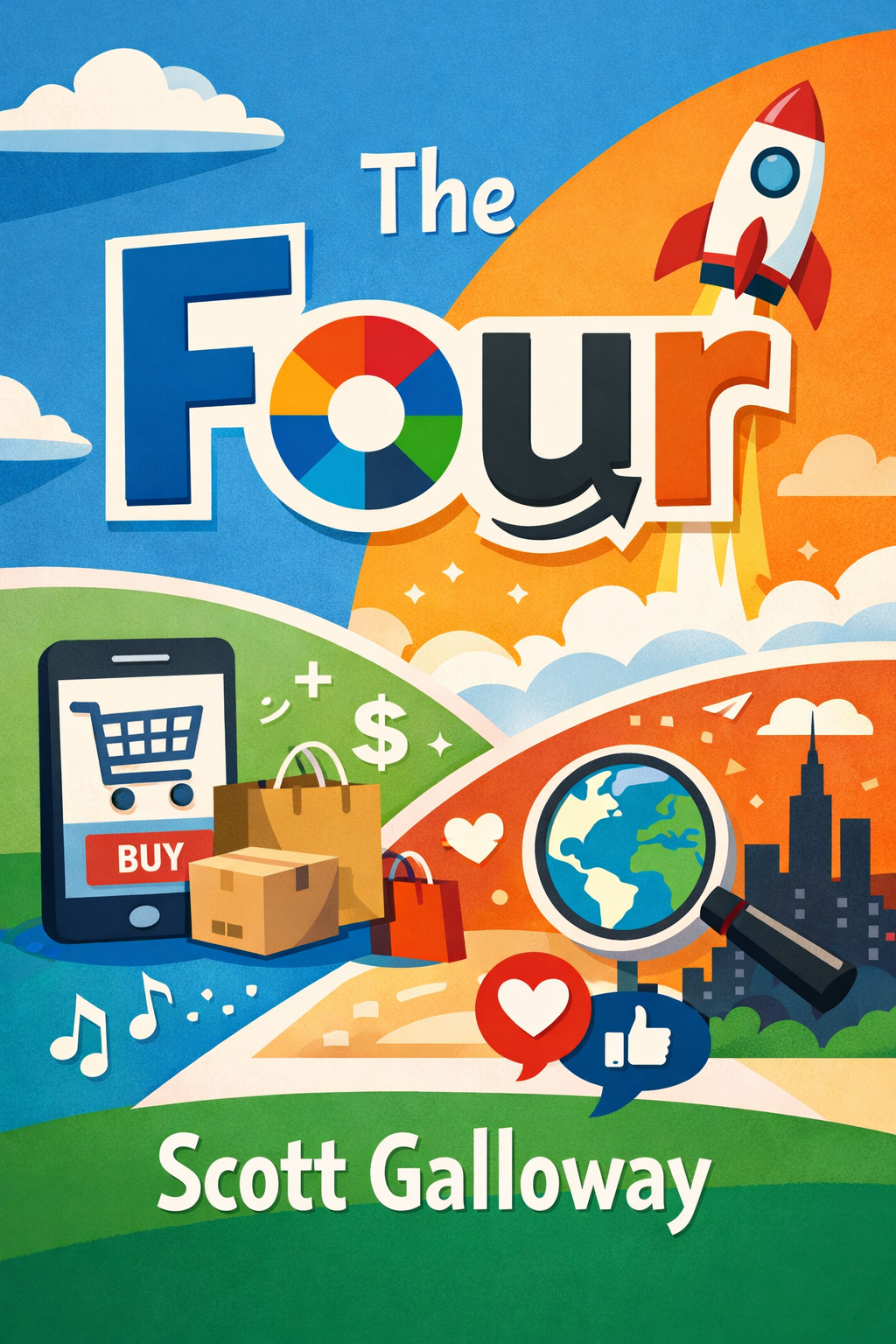
In our modern world, four colossal companies have woven themselves into the very fabric of our daily lives. We can think of them as the “Four Horsemen” of our age: Amazon, Apple, Facebook, and Google. Each one caters to a deep-seated human need that has existed for millennia. Google has become our new god, an all-knowing oracle we turn to for answers to every question, big or small. Facebook fulfills our need for love and connection, creating a digital space where one-sixth of the world’s population gathers daily. Apple targets our desire for sex appeal, offering products that are not just functional but are symbols of status, elegance, and desirability. And Amazon, the grand temple of consumption, appeals to our instinct to gather and acquire, promising to deliver anything our hearts desire directly to our doorstep. These companies have undoubtedly changed the world, but their story isn’t as purely benevolent as it may seem.
While we celebrate the convenience and innovation these giants provide, a closer look reveals a more complicated picture. The standard narrative is that they create jobs, improve our lives, and make the world a better place. However, behind the curtain, their practices are often questionable. Amazon has been criticized for its harsh treatment of warehouse employees and its aggressive tactics to avoid paying sales taxes. Apple, wrapping itself in a cloak of cool innovation, once defied a court order to help federal agents in a domestic terrorism investigation. Facebook harvests our most personal moments and information, packaging it up and selling it to the highest bidder. Meanwhile, Google spends vast sums on lobbying to fight against regulations that would challenge its anticompetitive behavior. These are not simply benevolent knights of progress; they are powerful empires with complex and sometimes troubling motives.
Amazon’s incredible success is rooted in its appeal to one of our oldest instincts: the drive to gather things. For most of human history, our survival depended on our ability to hunt and collect resources. This ancient urge to stockpile is now channeled into modern consumerism, and no company has capitalized on it better than Amazon. The ability to buy almost anything imaginable from your couch and have it appear at your door within a day is a powerful lure. The secret to this power is scale. By operating online, Amazon can reach nearly everyone and expand into almost any retail industry. But this immense growth comes at a steep price for others. Its sheer size allows it to undersell nearly all competitors, driving smaller businesses to close and destroying thousands of jobs. Furthermore, Amazon itself is not a great creator of human jobs; its warehouses are increasingly filled with robots, not people, as it relentlessly pursues automation and efficiency.
Apple’s dominance comes not from superior technology, but from its mastery of luxury branding. Its products are symbols of status, appealing to our deep desire to be special, attractive, and part of an elite group. When the FBI demanded Apple unlock an iPhone belonging to a terrorist, the company refused and, incredibly, won public support. This defiance illustrates how Apple operates by its own set of rules, elevated by the iconic status of its late founder, Steve Jobs. Apple’s products, like those of Porsche or Prada, are defined by their elegant design, premium pricing, and the powerful story of their visionary creator. It is this manufactured sexiness, this promise that owning an iPhone will make you as sleek and desirable as the device itself, that has made Apple the most profitable company in history.
Facebook, with a daily user base that rivals the number of followers of major world religions, taps into another fundamental human desire: the need for social connection. It nourishes our friendships, helps us reconnect with people from our past, and gives us a window into the lives of those we care about. This constant stream of social interaction is deeply satisfying. But the platform’s true purpose is not just to connect people; it is to gather data. Every like, share, click, and post is a piece of information that Facebook collects to build an astonishingly detailed profile of you. This data is then sold to advertisers, who can target you with customized ads based on your beliefs, interests, and habits. Facebook is able to do this so profitably because it classifies itself as a platform, not a media company, thereby avoiding responsibility for the content it spreads. This has a dangerous side effect: its algorithms tend to show us content that reinforces what we already believe, creating echo chambers that polarize society.
Google has become the modern god, an omniscient and trustworthy entity we turn to for everything. We no longer send our prayers to the heavens; we type our queries into a search bar. We confide in Google with our most private thoughts, health scares, and secret desires—information we would never share with our closest friends or family. Every search is a confession, and with 3.5 billion searches per day, Google is building a collective understanding of humanity that is unprecedented. This knowledge makes Google immensely powerful, especially in the world of advertising. It knows what we want, often before we do, and uses this insight to generate billions of dollars in revenue.
These four giants rose to power using similar strategies. They can be seen as cunning thieves who cleverly “borrowed” their way to the top. Apple famously took the idea for the mouse-driven desktop from Xerox. Google organizes the world’s information—which it does not own—and profits from it. Facebook allows users to create content for free and then sells the data derived from that content. Amazon invites sellers onto its platform only to study their success, copy their products, and sell cheaper versions under its own brand. Together, they appeal to our most important parts: the brain, the heart, and our primal desires. Google and Amazon cater to our logical brain, helping us make rational decisions. Facebook speaks to our heart’s need for connection. And Apple seduces our loins with the promise of making us more attractive and desirable.
With the Four so dominant, one has to wonder if a fifth horseman could ever emerge to challenge them and become the world’s first trillion-dollar company. Any contender would need a unique combination of eight attributes: a truly superior product, visionary leadership that attracts capital, global reach, a likable public image, control over its production and distribution, mastery of artificial intelligence, a reputation as a career accelerator, and proximity to a top university to recruit talent. Candidates like the Chinese e-commerce giant Alibaba, the ride-sharing platform Uber, or even older titans like Microsoft and Walmart all have some of these qualities, but each also has significant weaknesses, whether it’s a lack of global reach, a damaged public image, or an outdated business model.
In the world that the Four have built, succeeding requires a new approach. To thrive, individuals must cultivate emotional maturity to handle increasing responsibility, maintain a relentless curiosity to keep up with constant change, and take complete ownership of their work. Education is more critical than ever; a college degree or a professional certification is a vital credential. Success is also increasingly concentrated in cities, where the vast majority of new jobs and opportunities are created. Finally, in this digital age, it is essential to build a personal brand. Using platforms like LinkedIn, Instagram, and Twitter to showcase your skills and announce your value to the world is no longer an option but a necessity. The Four have shaped the rules of the game; understanding how they operate is the first step to making their world work for you.