Description
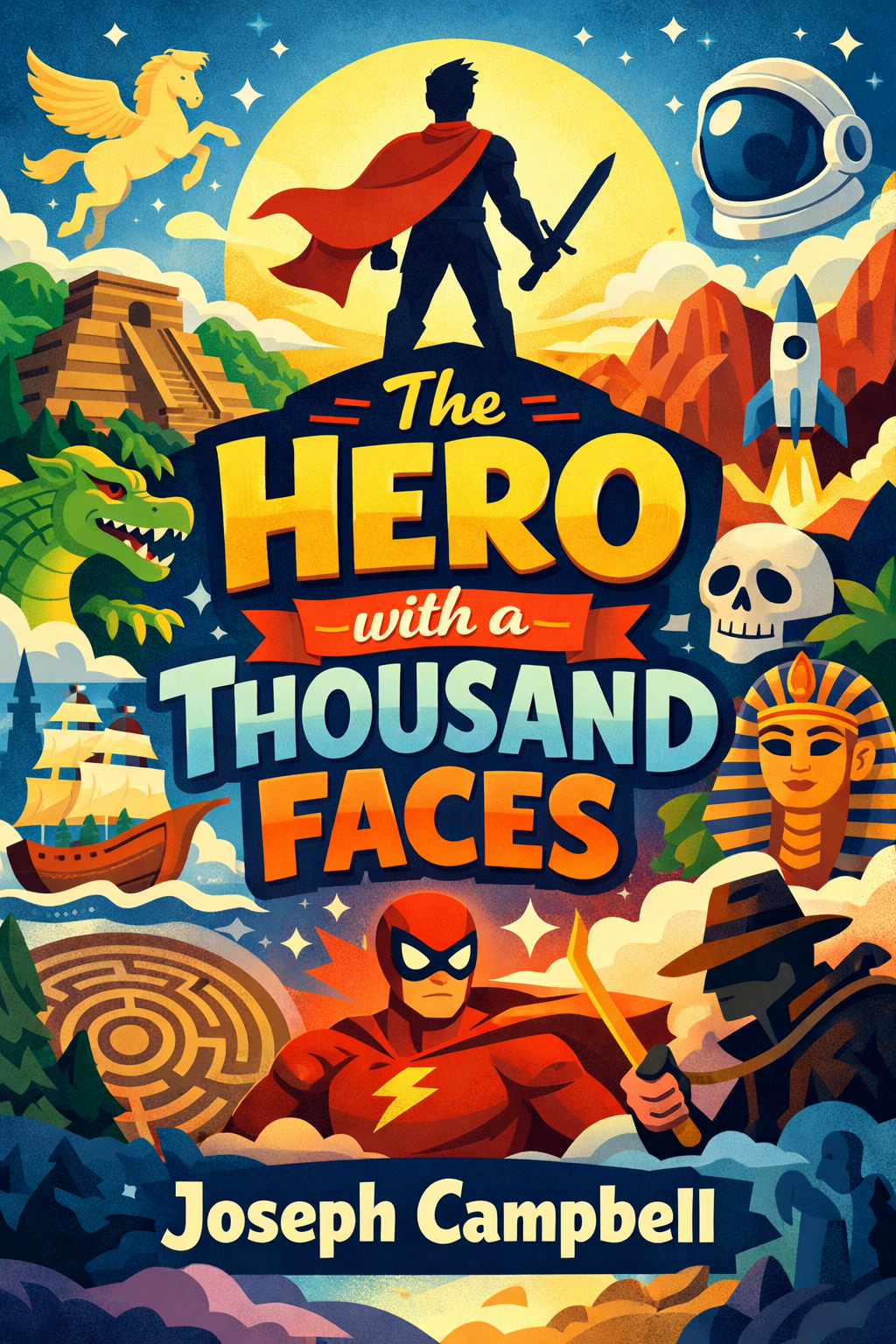
Joseph Campbell’s The Hero with a Thousand Faces is one of the most influential works on storytelling and human imagination. In this book, Campbell explains how myths, legends, and folktales from cultures all around the world share a single pattern. He called this pattern the “monomyth,” or the hero’s journey. At its heart, it is the story of transformation: a person is called away from ordinary life, faces trials and challenges, undergoes deep change, and eventually returns home with new wisdom to share.
Campbell discovered this structure while studying the myths of Asia, Africa, Europe, Polynesia, and Native America, and he noticed that they were far more similar than different. He saw that whether it was a Greek tale, a Hindu legend, or a Native American myth, heroes seemed to pass through three great stages: Departure, Initiation, and Return. This structure, though ancient, still shapes modern storytelling, from novels and plays to blockbuster films.
The hero’s journey begins with Departure. At this stage, the hero lives an ordinary life until something unusual calls them to adventure. This “call” might be a mysterious stranger, a sudden challenge, or an encounter that awakens something hidden within. The call is often frightening. Heroes are unsure if they want to leave their comfort zone, so many of them initially refuse. But soon, a mentor or supernatural guide appears. This figure provides encouragement, wisdom, or magical tools to help the hero begin. The mentor might be kind, stern, or even slightly dangerous, but their role is to prepare the hero for what lies ahead. Eventually, the hero crosses the first threshold into an unknown world. This passage is often guarded by fearsome beings or difficult trials, but once crossed, the hero has entered the realm of adventure. Here, the old life is symbolically left behind, often represented as a kind of death. The hero, swallowed by the “belly of the whale,” is reborn into a new stage of existence.
The second stage, Initiation, is where transformation takes place. The hero must pass through a road of trials—difficult challenges that test strength, courage, and wisdom. In many myths, helpers arrive at just the right moment, symbolizing the idea that perseverance and humility attract support. These trials gradually strip away the hero’s old self and force them to grow.
Along this path, the hero encounters powerful symbolic figures. One of the most important is the “Meeting with the Goddess.” She represents love, creation, and the totality of life. The goddess can be nurturing and kind, but also strict and demanding. She is both the mother and the mystery of existence itself. This meeting symbolizes the hero’s confrontation with the deep, creative power of life.
Soon after comes another challenge: temptation. The hero may be lured by pleasures, distractions, or comforts that threaten to pull them off their higher path. To progress, the hero must resist.
Then comes a deep encounter often called “Atonement with the Father.” This is about reconciling authority, facing inner conflicts, and letting go of old dependencies. It represents moving beyond fear of punishment or judgment and stepping into full maturity.
At the height of Initiation comes Apotheosis—a word that means becoming godlike. The hero achieves enlightenment, moving beyond fear, desire, and even the usual definitions of good and bad. In this state, the hero sees life clearly and feels at one with the universe. This ultimate understanding brings about the “Ultimate Boon,” the great reward or gift the hero set out to achieve. It could be wisdom, a magical treasure, or healing power. But whatever form it takes, it represents deep truth and fulfillment.
The third and final stage is Return. Having achieved enlightenment, the hero must now bring it back to others. This is not easy. Sometimes the hero doesn’t want to return at all, preferring to stay in bliss. Other times, powerful forces guard the boon, and the hero must escape in a daring “magic flight.” In some myths, outside help is needed to bring the hero home, a reminder that no one completes the journey entirely alone.
When the hero crosses the return threshold, they must face the challenge of reintegration. Having been transformed, they are no longer the same person who left. This can make them seem strange or even threatening to their community. But if the hero succeeds, they become the “Master of Two Worlds.” They can balance the ordinary and the extraordinary, the everyday and the transcendent. They embody wisdom in action, living without fear and sharing their gift with others.
The journey ends with “Freedom to Live.” Free from fear of death, pain, or loss, the hero is finally at peace. They know life is fleeting, but they also know that what they have shared will continue through others. In this way, the hero’s journey is not only about personal transformation but about contribution. The wisdom gained is meant to uplift the community and future generations.
What makes Campbell’s idea so powerful is that it is both a description of myth and a guide for real life. We may not slay literal dragons or travel to magical lands, but we all experience moments that call us beyond our comfort zones. We all face trials, temptations, and the need to grow. We all must eventually find ways to share our gifts with others.
The hero’s journey reminds us that change, loss, and struggle are not meaningless. They are part of a larger pattern that leads toward growth and contribution. It tells us that the wisdom we gain is not just for ourselves, but for our communities. And it shows that the greatest freedom comes not from avoiding challenges but from embracing them and emerging transformed.
In simple terms, The Hero with a Thousand Faces explains why humans have always told stories of heroes. They are reflections of our own inner struggles and possibilities. They help us see that every hardship can be a step toward wisdom. And they remind us that the journey of one person, when shared, becomes a gift for many.